How to view interstellar comet 3I/ATLAS closest approach to Earth December 2025? If you’re gazing up at the night sky this month, wondering about that rare cosmic wanderer zooming through our solar neighborhood, you’re not alone. This December, we’re getting a front-row seat—well, sort of—to one of the universe’s ultimate travelers: the interstellar comet 3I/ATLAS. Discovered just this year, this icy visitor from another star system is making its closest swing by Earth on December 19, 2025. Excited yet? You should be! It’s only the third confirmed interstellar object we’ve ever spotted, and spotting it yourself could be an unforgettable adventure.
Imagine a snowball hurled from a distant star, billions of years old, finally crashing our solar system’s party. That’s 3I/ATLAS in a nutshell. It won’t be a blazing streak across the sky like some comets, but with the right tools and a bit of know-how, you can catch a glimpse during its closest approach. Let’s dive into everything you need to know about how to view interstellar comet 3I/ATLAS closest approach to Earth December 2025—from what it is, why it’s special, and practical tips to spot it yourself.
What Is Interstellar Comet 3I/ATLAS?
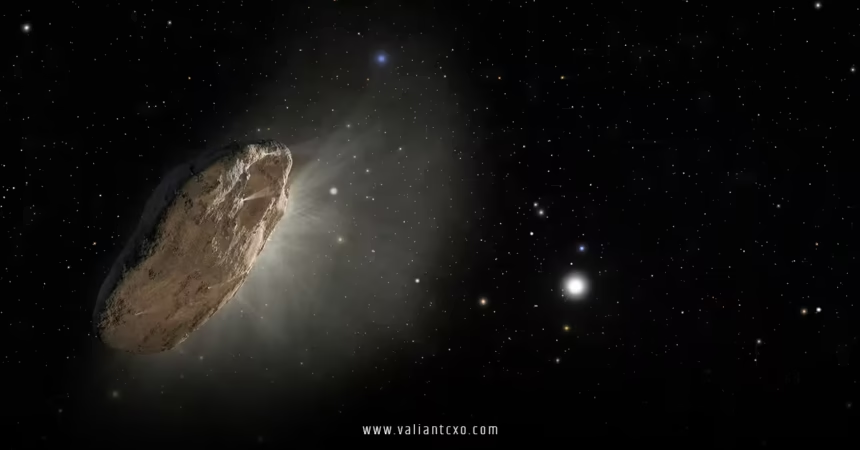
Ever wondered what it would be like if a comet from another planetary system dropped by for a visit? That’s exactly what 3I/ATLAS is. Unlike the comets we’re used to, which loop around our Sun in predictable orbits, this one is on a one-way hyperbolic path—meaning it’s just passing through and will never return.
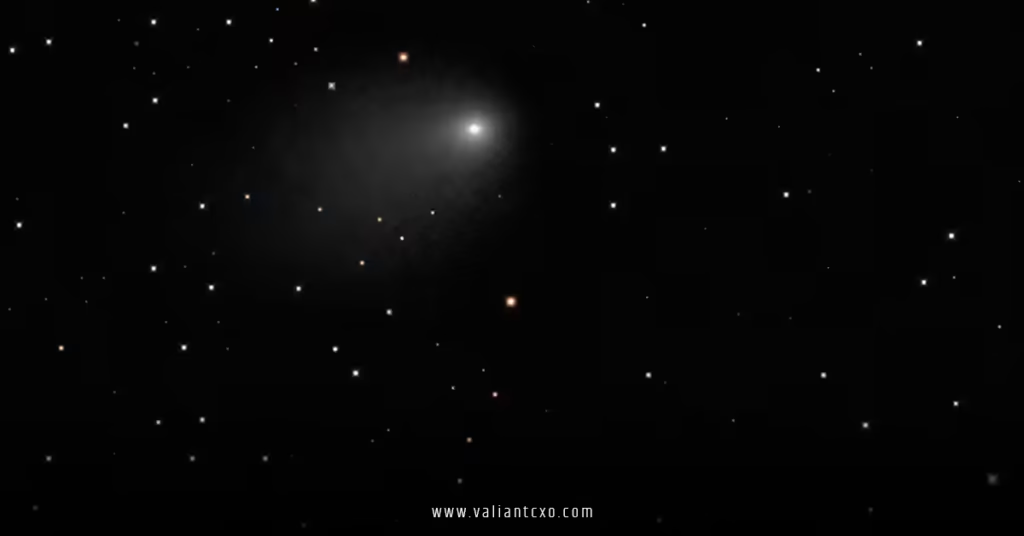
Discovered on July 1, 2025, by the ATLAS telescope in Chile, it quickly earned the designation “3I” as the third interstellar object confirmed (after ‘Oumuamua in 2017 and Borisov in 2019). Why “ATLAS”? That’s the survey system that first spotted it. This comet has been buzzing astronomers because it’s active, sporting a coma (that fuzzy envelope of gas and dust) and even hints of a tail, glowing with unusual colors like reddish dust early on and a greenish hue later.
Rushing in at over 50 km/s, it’s one of the fastest comets we’ve seen, carrying secrets from its home system—perhaps clues about how planets form around other stars. Isn’t that mind-blowing? It’s like receiving a postcard from the galaxy’s far reaches.
When and Where Is the Closest Approach to Earth in December 2025?
Timing is everything when learning how to view interstellar comet 3I/ATLAS closest approach to Earth December 2025. Mark your calendar for December 19, 2025—that’s when it reaches its nearest point to us, about 1.8 astronomical units away (roughly 168 million miles or 270 million kilometers). That’s safely distant—no collision worries here—but close enough for decent observations.
Around early morning hours UTC (late evening December 18 in some time zones), it’ll be at minimum distance. The comet will be in the constellation Leo during this period, rising in the predawn sky. Think of it as a holiday gift from the cosmos, arriving just in time for winter stargazing.
After this, it’ll fade as it heads outbound, crossing paths nearer to Jupiter later but forever leaving our solar system by the 2030s.
Why December 2025 Is Prime for Viewing 3I/ATLAS
December offers dark skies post-new moon, perfect for faint objects. The comet’s post-perihelion activity (after its October Sun closest pass) might make it brighter, with outgassing creating a more visible coma. If you’re asking how to view interstellar comet 3I/ATLAS closest approach to Earth December 2025, this timing boosts your chances.
How to View Interstellar Comet 3I/ATLAS Closest Approach to Earth December 2025: Step-by-Step Guide
Ready to hunt for this interstellar intruder? Here’s your practical roadmap for how to view interstellar comet 3I/ATLAS closest approach to Earth December 2025.
Best Equipment for Spotting 3I/ATLAS
Don’t expect a naked-eye spectacle—this comet peaks around magnitude 12-14, far too dim without help. You’ll need:
- A telescope with at least 8-inch (20 cm) aperture for a good view under dark skies.
- Binoculars? Powerful ones might hint at it, but a telescope is key.
- For beginners, smart telescopes like the Seestar can automate tracking.
Analogy time: It’s like trying to spot a firefly from across a football field—you need magnification to bring it into focus.
Finding the Comet in the Sky
Around December 19, look toward Leo in the early morning hours. Use apps like Stellarium or SkySafari to plot its exact position—it moves quickly against the stars.
- Best time: Predawn, when Leo is high.
- Location: Dark skies away from city lights. Head to rural spots or parks.
Pro tip: Star-hop from bright stars like Regulus in Leo.
Online Options If Weather or Location Isn’t Cooperative
Can’t get outside? No problem—livestreams make how to view interstellar comet 3I/ATLAS closest approach to Earth December 2025 accessible to everyone.
Projects like the Virtual Telescope often host free online sessions with professional scopes. Check sites like NASA’s solar system page or ESA’s comet updates for live feeds.
NASA’s Eyes on the Solar System app lets you simulate its path virtually—super fun for kids too!
Tips and Tricks for Successful Viewing of 3I/ATLAS in December 2025
Stargazing is as much art as science. Here are insider tips for mastering how to view interstellar comet 3I/ATLAS closest approach to Earth December 2025:
- Dark Adaptation: Spend 20-30 minutes letting your eyes adjust—no phone screens!
- Patience: Comets can be elusive; scan slowly.
- Photography: If you have a DSLR, try long exposures on a tracked mount for stunning shots of its coma.
- Weather Check: Clear skies are crucial; apps like Clear Outside help.
Rhetorical question: Have you ever seen something from another star system? This could be your chance!
Safety and Etiquette During Observation
Bundle up—December nights are chilly! Observe responsibly: no trespassing, and if in a group, minimize lights.
Why Observing 3I/ATLAS Matters: Scientific Insights
Beyond the thrill, spotting this comet contributes to science. Your observations (via apps or reports to astronomers) help track its brightness and activity. It’s teaching us about exoplanetary building blocks—different compositions hint at diverse star systems.
Hubble, Gemini, and even Mars orbiters have imaged it, revealing X-rays, green glows, and massive dust. Who knows what you’ll notice?
Conclusion
There you have it—a complete guide on how to view interstellar comet 3I/ATLAS closest approach to Earth December 2025. This rare visitor reminds us how vast and connected the universe is, a fleeting reminder that we’re all stardust sharing the galaxy. Whether through a telescope eyepiece or online stream, take the time to look up on December 19. You might just catch a piece of another world sailing by. Clear skies, and happy hunting—don’t miss this once-in-a-lifetime (literally) event!
FAQs
1. When exactly is the best time for how to view interstellar comet 3I/ATLAS closest approach to Earth December 2025?
The peak closeness is early December 19, 2025, but viewing windows span mid-to-late December in predawn skies.
2. Can I see interstellar comet 3I/ATLAS with the naked eye during its December 2025 Earth approach?
No, it’s too faint— you’ll need at least binoculars or a telescope for how to view interstellar comet 3I/ATLAS closest approach to Earth December 2025.
3. Is there any danger from interstellar comet 3I/ATLAS during its closest approach to Earth in December 2025?
Absolutely not—it’s over 168 million miles away, posing zero threat.
4. Where in the sky should I look for how to view interstellar comet 3I/ATLAS closest approach to Earth December 2025?
Primarily in Leo constellation during early mornings around December 19.
5. Are there online ways to watch how to view interstellar comet 3I/ATLAS closest approach to Earth December 2025 if I can’t go outside?
Yes, check professional observatory livestreams or NASA’s tools for virtual views.