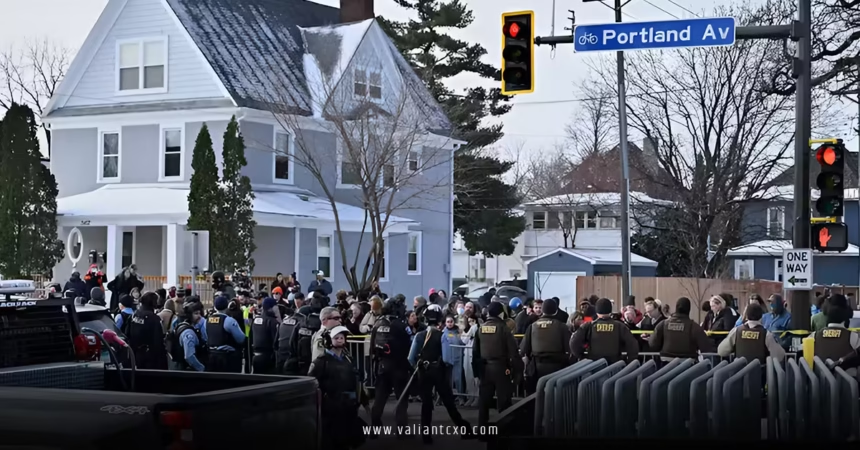
ICE shooting controversy Minneapolis exploded into national headlines on January 7, 2026, when a federal Immigration and Customs Enforcement agent fatally shot 37-year-old U.S. citizen Renee Nicole Good during a large-scale immigration raid in south Minneapolis. What began as a routine federal operation quickly spiraled into a heated debate over use of force, immigration policy, and public safety in sanctuary cities. As protests continue and investigations unfold, this incident has become a flashpoint in America’s ongoing immigration battles.
If you’ve been scrolling through news feeds or social media, you’ve likely seen the videos, the vigils, and the sharp divide in opinions. The ICE shooting controversy Minneapolis isn’t just about one tragic moment—it raises tough questions about how federal agents operate in local communities, especially in cities that limit cooperation with ICE. Let’s break it all down, step by step, so you can understand what really happened and why it matters.
The Incident: What Happened on Portland Avenue
On the morning of January 7, 2026, ICE agents were conducting one of the largest immigration enforcement actions in recent U.S. history, part of a renewed push under the current administration. Around 10:30 a.m., near Portland Avenue and East 34th Street in the Central neighborhood, agents approached several vehicles.
Renee Nicole Good was driving her SUV in the area. Bystander videos show her vehicle reversing, then moving forward. Seconds later, an ICE agent fired multiple shots into the driver’s side, striking Good fatally. She was pronounced dead at the scene.
According to federal officials, Good ignored commands and “weaponized” her vehicle, nearly striking an officer. Local leaders and eyewitnesses dispute this, arguing the footage shows her attempting to leave a chaotic scene rather than attack anyone. No officers were injured, and Good—a U.S. citizen—was not the target of the operation.
This single moment lies at the heart of the ICE shooting controversy Minneapolis. Was this justified self-defense in a high-risk situation, or an excessive use of lethal force against a civilian?
Why the Shooting Is So Controversial
The ICE shooting controversy Minneapolis hinges on two dramatically different interpretations of the same event.
Federal Perspective: DHS officials, including Secretary Kristi Noem, maintain the agent acted to protect himself and colleagues. They describe a rapidly escalating situation where a vehicle was used as a weapon—a scenario law enforcement trains for extensively.
Local and Community Perspective: Minneapolis Mayor Jacob Frey called the self-defense claim “bullshit,” citing video evidence that he says shows no imminent threat. Police Chief Brian O’Hara confirmed Good was not under investigation and was likely just in the wrong place at the wrong time. Community members and activists argue the shooting reflects a broader pattern of overreach in immigration enforcement.
Cellphone footage from multiple angles has gone viral, but interpretations vary widely. Some see a deliberate attempt to flee danger; others see a threatening maneuver. Without released bodycam footage (none has been confirmed), bystander videos remain the primary visual evidence fueling the debate.
Rhetorical question: When fear and split-second decisions collide, who gets the benefit of the doubt—the armed federal agent or the unarmed civilian?
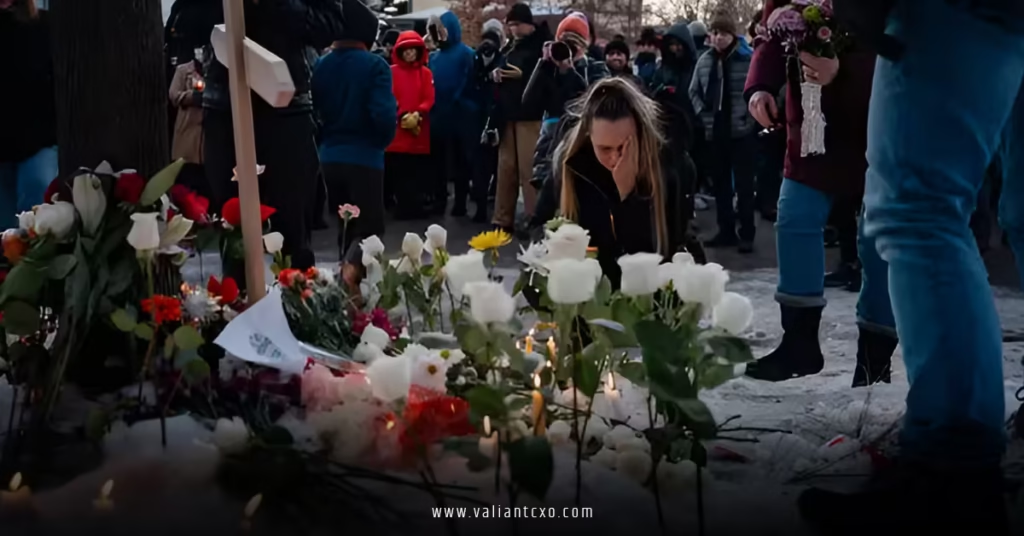
Community Reaction: Grief, Anger, and Protests
Minneapolis has not been quiet. On the evening of January 7, hundreds gathered for a candlelight vigil at the shooting site. By the next day, protests grew, with chants of “No justice, no peace” and calls to abolish ICE. Signs reading “Protect our neighbors” and “End the raids” reflected deep frustration in a city with large immigrant communities from Somalia, Latin America, and Southeast Asia.
The shooting reopened old wounds from the 2020 George Floyd protests. Many residents feel federal agents are operating with impunity in a city that prides itself on progressive policing reforms. Immigrant advocacy groups report increased fear—parents keeping kids home from school, workers skipping shifts.
For the most detailed coverage of the victim’s life and ongoing developments, check out our in-depth article on renee nicole good minneapolis latest updates.
Political Fallout: A Divided Response
The ICE shooting controversy Minneapolis has drawn sharp political reactions.
Local Democratic leaders—Mayor Frey, Governor Tim Walz, and Senator Tina Smith—condemned the shooting and demanded full transparency. Colorado Governor Jared Polis, noting Good’s ties to his state, called for an independent investigation.
Nationally, progressive voices labeled it an unjustified killing of a U.S. citizen, while some conservative commentators defended the agent, emphasizing the dangers of immigration enforcement and the need to support law enforcement.
The incident highlights the ongoing tension between federal authority and sanctuary cities. Minneapolis has policies limiting local cooperation with ICE, which federal officials have long criticized. This shooting has intensified calls from both sides—some demanding stricter oversight of federal operations, others pushing for full local compliance.
Broader Implications: ICE Operations in Urban America
This isn’t an isolated event. The January 2026 raids were part of a nationwide crackdown, with hundreds of arrests reported across multiple states. Critics argue such operations create unnecessary risk in residential neighborhoods. Supporters say they’re essential for enforcing immigration laws and public safety.
The ICE shooting controversy Minneapolis forces us to ask bigger questions:
- How should federal agents conduct operations in communities that don’t fully cooperate?
- What training and rules of engagement prevent tragic outcomes?
- When does protecting officers cross into endangering civilians?
Analogies abound: some compare it to no-knock warrants gone wrong, others to vehicle ramming attacks on police. Neither fully captures the complexity.
Investigation Status and What Comes Next
As of January 8, 2026, the FBI is leading the investigation into the officer-involved shooting. No charges have been filed against the agent, whose identity remains undisclosed. Calls continue for bodycam footage (if it exists), full video analysis, and potential state-level prosecution.
Community organizers are planning larger demonstrations, while city officials discuss emergency measures to restrict future federal raids.
Conclusion
ICE shooting controversy Minneapolis is more than a single tragic death—it’s a mirror reflecting America’s deep divisions on immigration, policing, and trust in institutions. Renee Nicole Good’s life ended in a moment that could have been avoided, and her story demands answers. Whether this leads to policy changes, greater oversight, or simply more polarization remains to be seen.
What’s clear is that real people—families, neighbors, communities—are affected by these policies. Conversations like this one are how change begins.
Frequently Asked Questions
What sparked the ICE shooting controversy Minneapolis?
A federal ICE agent fatally shot U.S. citizen Renee Nicole Good on January 7, 2026, during an immigration raid, leading to conflicting claims of self-defense versus excessive force.
Was the shooting justified according to officials?
Federal authorities claim the agent acted in self-defense against a vehicle threat. Local leaders strongly dispute this interpretation.
How has Minneapolis responded to the ICE shooting controversy?
Vigils, protests, and widespread calls for accountability have followed, with many residents expressing fear and anger.
Is the agent facing charges in the Minneapolis ICE shooting controversy?
As of January 8, 2026, no charges have been filed; the FBI investigation is ongoing.
Why is this ICE shooting controversy Minneapolis getting national attention?
It highlights tensions between federal immigration enforcement and sanctuary cities, plus questions about use of lethal force.