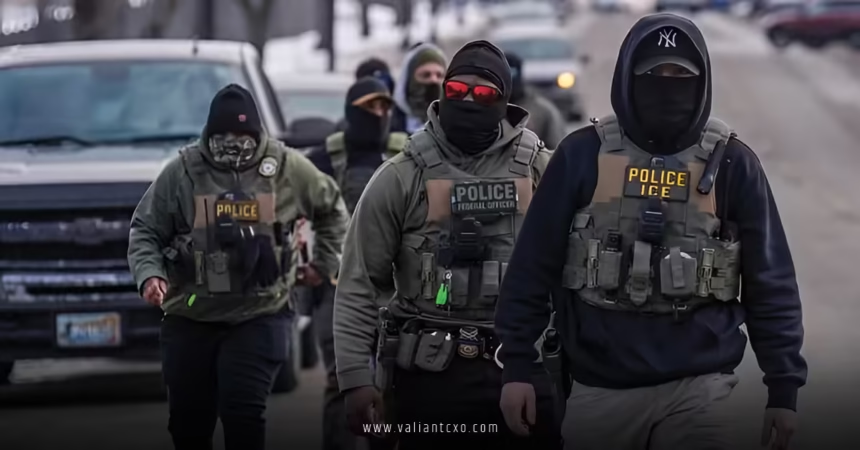
ICE training program cuts 2026, sparked largely by explosive testimony from a former insider. If you’re curious about how these changes could affect public safety, constitutional rights, and immigration enforcement, you’re in the right place. We’ll break it down step by step in plain language, drawing on recent developments and credible reports.
This article dives deep into the ICE training program cuts 2026, including the drastic reductions in hours, eliminated courses, and the whistleblower who brought it all to light. For a closer look at the congressional testimony that ignited this controversy, check out our in-depth piece on [Ryan Schwank whistleblower congressional hearing transcript analysis].
The Big Picture: Why ICE Training Changed in 2026
Let’s set the scene. In early 2026, the Trump administration ramped up its mass deportation efforts, aiming to dramatically increase ICE’s Enforcement and Removal Operations (ERO) workforce—from around 10,000 agents to over 22,000 in a short time. That’s a massive surge. To make it happen quickly, ICE compressed its Basic Immigration Enforcement Training Program at the academy in Glynco, Georgia.
Officials from the Department of Homeland Security (DHS) insist nothing essential was lost. They argue the program shifted to longer days (six days a week, up to 12 hours) while keeping total hours the same—just more efficient, with redundancies trimmed thanks to tech and streamlined lessons. New recruits now get about 56 days of academy training plus on-the-job follow-up.
But not everyone buys that story. Critics, including congressional Democrats and whistleblowers, say the reality is far different: real cuts to content, rushed pacing, and a program that’s no longer adequate for the job.
Key Details on the ICE Training Program Cuts 2026
Here’s where things get specific—and concerning. According to internal documents released in February 2026 and testimony from former ICE instructor Ryan Schwank, the program underwent major changes between mid-2025 and early 2026.
- Hours slashed dramatically: The original program ran about 584 hours over roughly 72 days (or five months). By February 2026, it dropped to around 344 hours (or 42-56 days, depending on how you count). That’s a loss of roughly 240 hours—more than 40% of the original content.
- Courses and exams eliminated: Over a dozen practical exams vanished. Think “judgment pistol shooting,” “criminal encounters,” and hands-on use-of-force simulations. Entire classes on constitutional law, limits of officer authority, lawful arrests, proper detention procedures, and protesters’ rights were either cut or drastically shortened. One example: a two-hour session on protesters’ rights got squeezed into a 10-minute blurb.
- Firearms and safety training hit hard: About 16 hours of critical firearms instruction—teaching safe handling and when deadly force is justified—disappeared. In a high-stakes job where officers carry weapons daily, skimping here raises serious red flags.
These aren’t minor tweaks. Schwank described the remaining program as a “dangerous husk”—bare-bones and insufficient for ensuring officers understand core legal and tactical skills.
The Whistleblower Who Exposed the ICE Training Program Cuts 2026
Much of what we know comes from Ryan Schwank, a former ICE attorney and academy instructor who resigned in protest on February 13, 2026. Just 10 days later, on February 23, he testified publicly at a bicameral forum hosted by Sen. Richard Blumenthal (D-CT) and Rep. Robert Garcia (D-CA).
Schwank didn’t hold back. He called the program “deficient, defective, and broken.” He accused leadership of misleading Congress and the public by claiming standards stayed intact. He also revealed receiving “secretive orders” to teach tactics that clashed with the Fourth Amendment, like entering homes without judicial warrants in some deportation scenarios.
His words carried weight because he was on the inside—training the very recruits now going through the shortened program. Documents he helped share (including 2025 and 2026 syllabi) backed up the claims, showing clear reductions in days, hours, and content.
For the full breakdown of his testimony, including direct quotes and implications, see our companion article: [Ryan Schwank whistleblower congressional hearing transcript analysis].
Official Response vs. Critic Concerns
DHS pushed back hard. In a February 23, 2026, statement, they emphasized no requirements were eliminated—just restructured for efficiency. They highlighted increased daily intensity and insisted recruits still get comprehensive firearms, de-escalation, and constitutional training, plus monitored on-the-job mentoring.
Yet Schwank and others counter that compressing everything into fewer weeks means less time to absorb complex topics. Cadets reportedly pass despite trainers’ worries about shaky grasp of tactics or law. With thousands graduating fast to meet aggressive targets, the fear is underprepared officers hitting the streets—potentially leading to mistakes, excessive force, or rights violations.
It’s like trying to teach someone to drive a truck by cramming lessons into half the time. You might cover the basics, but real-world judgment and muscle memory? Those take repetition and depth.

Why the ICE Training Program Cuts 2026 Matter to Everyone
This isn’t just an immigration issue—it’s about safety and accountability.
- For communities: Undertrained officers could escalate encounters unnecessarily, especially in high-stress raids or protests.
- For officers themselves: Poor preparation increases risks to their safety and exposes them to legal liability if they cross lines unknowingly.
- For constitutional principles: Cuts to rights-focused classes raise questions about whether agents fully understand limits on power—like warrants and use of force under cases like Graham v. Connor.
- Broader oversight: It highlights tensions between rapid policy goals and thorough preparation. Democrats call for restored hours, independent reviews, and stronger safeguards. Some urge blocking DHS funds until fixes happen.
In a polarized time, this debate reminds us that good enforcement needs solid training—not shortcuts.
What Could Happen Next?
Congressional pressure is building. Forums like the February 23 event spotlight these issues, and whistleblowers encourage more insiders to speak up. Possible reforms include reinstating cut courses, extending timelines, or adding external audits.
Until then, the ICE training program cuts 2026 remain a flashpoint. They show how quickly priorities can shift—and what gets sacrificed when speed trumps thoroughness.
In summary
the ICE training program cuts 2026 involve major reductions—from 584 to roughly 344 hours, eliminated exams and classes on critical topics like firearms, use of force, and constitutional limits—all amid a hiring surge for mass deportations. Whistleblower Ryan Schwank’s testimony exposed these changes, warning of unprepared officers and risks to safety and rights. While DHS defends the restructuring as efficient, evidence suggests real content loss. Stay informed, question official claims, and support calls for transparency. If we want effective, lawful enforcement, training can’t be the first thing on the chopping block.
For more on the testimony driving this discussion, read [Ryan Schwank whistleblower congressional hearing transcript analysis].
FAQs
What exactly changed in the ICE training program cuts 2026?
The program dropped from about 584 hours to 344, eliminating courses on firearms, use of force, constitutional limits, and over a dozen practical exams, compressing training into fewer weeks.
Who revealed the ICE training program cuts 2026 details?
Former ICE instructor Ryan Schwank testified publicly in February 2026, calling the program “deficient, defective, and broken” and sharing supporting documents.
Did DHS deny the ICE training program cuts 2026?
Yes—DHS stated no requirements were removed, just restructured with longer days for the same total hours, though critics point to evidence of real content reductions.
How do the ICE training program cuts 2026 link to hiring goals?
The changes aimed to graduate thousands of new officers quickly for deportation surges, but whistleblowers warn rushed training risks unprepared agents.
Where can I learn more about the testimony behind ICE training program cuts 2026?
Check the detailed [Ryan Schwank whistleblower congressional hearing transcript analysis] for quotes, context, and implications.