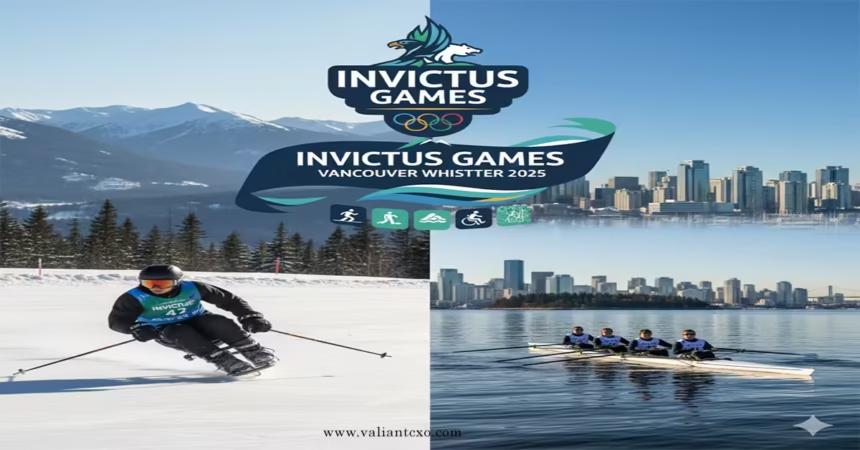
Invictus Games Vancouver Whistler 2025 marked a groundbreaking chapter in the history of adaptive sports, blending heart-pounding competition with stories of unbreakable spirit. Imagine warriors who have faced the unimaginable—wounded, injured, or ill from their service—taking to the slopes and arenas, proving that true strength lies within. This wasn’t just an event; it was a celebration of resilience that touched hearts worldwide.
You might wonder, what makes the Invictus Games Vancouver Whistler 2025 so special? Founded by Prince Harry, the Duke of Sussex, these Games have always championed recovery through sport. But this edition? It was the first to introduce winter adaptive disciplines, turning the stunning landscapes of British Columbia into a stage for triumph. Held from February 8 to 16, 2025, it brought together over 530 competitors from 23 nations, all showcasing that no obstacle is insurmountable.
What Are the Invictus Games?
Let’s start with the basics—because if you’re new to this, you’re in for an inspiring ride. The Invictus Games are an international adaptive sports event for wounded, injured, and sick servicemen and women, both active duty and veterans. “Invictus” means unconquered, a perfect nod to the fighting spirit these athletes embody.
Prince Harry launched the Games in 2014 after being moved by the Warrior Games in the U.S. He saw how sport could heal, rebuild confidence, and foster community. Fast forward, and the Invictus Games Vancouver Whistler 2025 became the seventh edition, returning to Canada for the second time after Toronto in 2017.
Why does this matter? In a world that often overlooks the hidden wounds of service—physical or mental—these Games shine a light on recovery. It’s not about pity; it’s about power. Athletes compete fiercely, laugh heartily, and support each other relentlessly. Have you ever watched someone push beyond limits you thought impossible? That’s the magic here.
Why Vancouver and Whistler for the Invictus Games Vancouver Whistler 2025?
Picture this: Snow-capped mountains meeting the ocean, vibrant city energy blending with serene wilderness. Vancouver and Whistler in British Columbia offered the ideal backdrop for the Invictus Games Vancouver Whistler 2025. Canada won the bid in 2022, partnering with First Nations to honor Indigenous lands—the traditional territories of the Lil’wat, Musqueam, Squamish, and Tsleil-Waututh Nations.
This was no ordinary host choice. Whistler, famous for the 2010 Winter Olympics, provided world-class venues for winter sports. Vancouver handled indoor events and ceremonies. Splitting across two locations? A first for the Games, adding logistical adventure but amplifying the experience.
The Invictus Games Vancouver Whistler 2025 emphasized reconciliation, incorporating Indigenous art in medals and protocols. It wasn’t just sport; it was cultural respect woven into every detail.
Key Highlights of the Invictus Games Vancouver Whistler 2025
The Invictus Games Vancouver Whistler 2025 delivered unforgettable moments. The Opening Ceremony at BC Place drew record crowds—over 40,000—with performances by Chris Martin of Coldplay, Katy Perry, and others. Prince Harry’s speech reminded everyone: these athletes inspire daily.
Competitions spanned nine days, with 11 sports. New winter events stole the show: athletes zooming down skeleton tracks or carving snowboards, defying gravity and doubt.
The Closing Ceremony featured Jelly Roll and Barenaked Ladies, wrapping up with emotional reflections. Economic impact? Over $81 million, plus legacies like funding for veteran programs.
What stood out most? The camaraderie. Families, supporters, and volunteers created a family atmosphere. One competitor said it best: sport saved their life.
The Historic Introduction of Winter Sports at Invictus Games Vancouver Whistler 2025
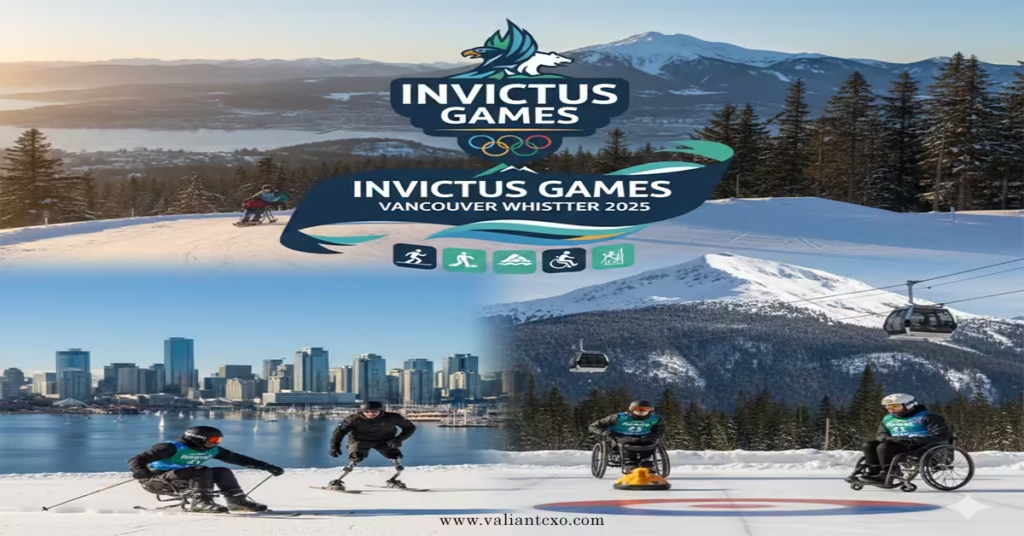
Here’s where the Invictus Games Vancouver Whistler 2025 truly innovated—a winter hybrid format. For the first time, winter adaptive sports joined the lineup:
- Alpine Skiing and Snowboarding
- Nordic Skiing and Biathlon
- Skeleton
- Wheelchair Curling
Core sports included Indoor Rowing, Sitting Volleyball, Swimming, Wheelchair Basketball, and Wheelchair Rugby.
Why add winter? To expand recovery options and spotlight adaptive winter disciplines. Athletes trained rigorously, some trying sit-skiing or skeleton for the first time. The thrill? Electric. The resilience? Off the charts.
Participating Nations and Competitors in the Invictus Games Vancouver Whistler 2025
Diversity defined the Invictus Games Vancouver Whistler 2025. Around 534 competitors from 23 nations participated, including newcomers like Brazil, Lithuania, and the Afghan Unconquered team.
Team Canada shone as hosts, with many locals cheering them on. Nations like the UK, USA, Australia, and Germany brought strong contingents. Each athlete had a unique story—overcoming PTSD, amputations, or illnesses through sport.
Families and friends played huge roles, turning the Games into a support network. It’s like a global family reunion, where shared experiences bond strangers instantly.
Venues and Events Schedule for Invictus Games Vancouver Whistler 2025
The Invictus Games Vancouver Whistler 2025 used iconic venues:
- Vancouver: Indoor sports at places like the Convention Centre and UBC Aquatic Centre.
- Whistler: Winter action at Whistler Blackcomb, Olympic Park, and Sliding Centre.
Free Invictus Villages in both locations offered entertainment, exhibits, and live screenings. Schedules minimized overlaps, letting fans catch multiple events.
Tickets sold out fast for ceremonies, but many outdoor events were free. Broadcasting reached millions, extending the inspiration.
The Lasting Impact and Legacy of the Invictus Games Vancouver Whistler 2025
Beyond medals, the Invictus Games Vancouver Whistler 2025 left profound legacies. A balanced budget with surpluses funded veteran support—$5.5 million for programs in adaptive sports, mental health, and employment.
It boosted awareness of invisible injuries and promoted inclusion. Volunteers gained skills, and knowledge-sharing tools like “Games in a Box” help future hosts.
Economically, it pumped millions into local communities. But the real win? Changed lives. Athletes reported renewed purpose; spectators left motivated.
Prince Harry called it life-saving. For many, it was.
Conclusion
The Invictus Games Vancouver Whistler 2025 wasn’t merely a sporting event—it was a testament to human spirit. From pioneering winter sports to fostering global unity on Indigenous lands, it redefined resilience. Over 500 athletes from dozens of nations proved that wounds heal stronger through community and competition.
If there’s one takeaway? You’re unconquered too. Whatever battles you face, channel that Invictus energy. Support veterans, try adaptive sports, or simply cheer louder next time. The Games may be over, but their spark endures. Who’s ready to feel inspired every day?
FAQs About the Invictus Games Vancouver Whistler 2025
What dates were the Invictus Games Vancouver Whistler 2025 held?
The Invictus Games Vancouver Whistler 2025 took place from February 8 to 16, 2025, spanning nine days of intense competition and ceremonies.
What new sports were introduced at the Invictus Games Vancouver Whistler 2025?
This edition pioneered winter adaptive sports, including alpine skiing, snowboarding, Nordic skiing, biathlon, skeleton, and wheelchair curling—making the Invictus Games Vancouver Whistler 2025 the first winter hybrid Games.
How many nations participated in the Invictus Games Vancouver Whistler 2025?
Around 23 nations sent competitors to the Invictus Games Vancouver Whistler 2025, with over 530 athletes showcasing their talents and stories.
Who founded the Invictus Games, and why is the Invictus Games Vancouver Whistler 2025 significant?
Prince Harry founded the Games in 2014. The Invictus Games Vancouver Whistler 2025 stands out as the first with winter sports and a return to Canada, emphasizing recovery and reconciliation.
What was the legacy of the Invictus Games Vancouver Whistler 2025?
The Invictus Games Vancouver Whistler 2025 generated economic boosts, funded veteran programs, and raised global awareness of adaptive sports’ healing power.