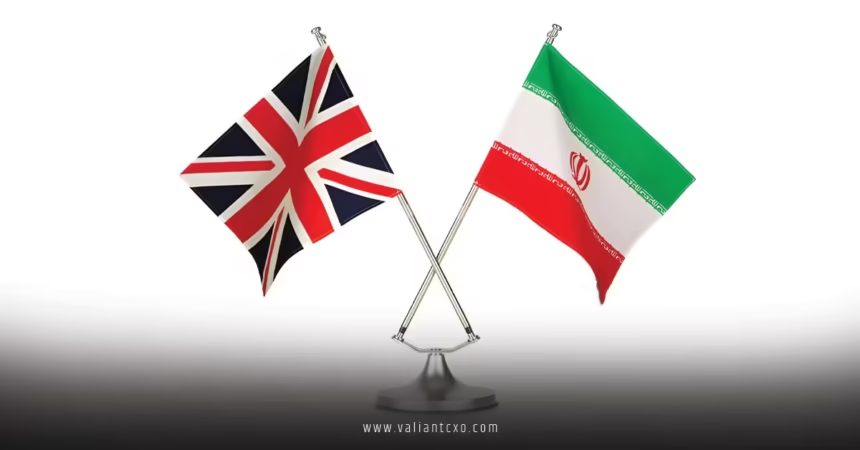
Iran Policy Leaks UK NSC rocked the Starmer government and exposed raw tensions in handling a major Middle East flare-up. In March 2026, details from top-secret National Security Council meetings spilled into the open, revealing cabinet divisions over US requests to use British bases for strikes on Iran. The leak, branded “utterly destructive,” triggered an official inquiry and raised serious questions about trust inside Whitehall.
- What leaked: Discussions on allowing US access to Diego Garcia and RAF Fairford for “defensive” operations against Iranian targets, especially around the Strait of Hormuz.
- Cabinet split: PM Keir Starmer leaned toward supporting the US; several senior ministers pushed for caution and diplomacy.
- Consequences: An investigation launched, damaged internal confidence, and fueled media scrutiny of UK-US coordination.
- Broader fallout: It highlighted risks in sensitive transatlantic policy talks during active conflict.
- Connection to diplomacy: The episode later intersected with personnel changes, including james roscoe leaves washington embassy post amid questions tied to the probe.
Leaks like this don’t just embarrass. They can chill frank advice at the highest levels.
What Exactly Happened in the Iran Policy Leaks UK NSC
The story broke in early March 2026. The Spectator first reported on two National Security Council meetings where ministers debated a US request linked to strikes on Iran. Prime Minister Starmer initially hesitated but eventually permitted limited use of UK bases for defensive actions.
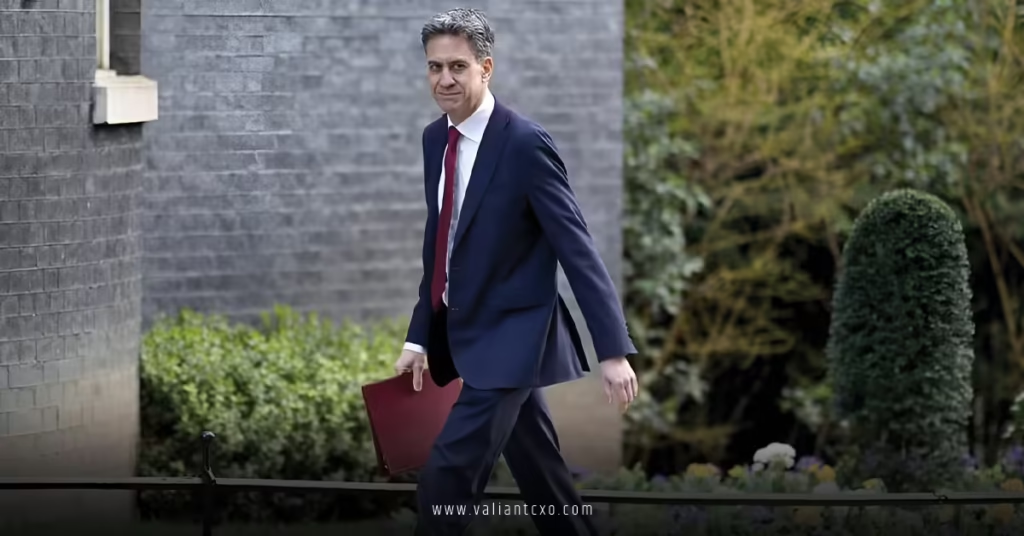
Opposition came from figures like Ed Miliband, Rachel Reeves, and others who favored a more restrained approach focused on negotiation. David Lammy called the leak an “absolute travesty,” stressing that ministers need space for candid assessments backed by defense and intelligence chiefs.
The government quickly opened a formal inquiry. Details had reached journalists, breaching the Official Secrets Act protections that normally shield NSC discussions. No one celebrated the transparency here. It risked operational security and alliance trust at a volatile moment.
Iran Policy Leaks UK NSC put the spotlight on how Britain balances loyalty to the US “Special Relationship” with its own strategic caution.
Timeline of the Leak and Response
| Date | Event | Impact |
|---|---|---|
| Early March 2026 | NSC meetings on US base access | Cabinet divisions surface in private |
| March 6, 2026 | Spectator report published | Public exposure of splits |
| Mid-March 2026 | Inquiry announced | Justice Secretary and others demand answers |
| Ongoing | Media follow-ups | Links to wider embassy and diplomatic questions |
| May 2026 | Related personnel shifts | Ties into james roscoe leaves washington embassy post |
This sequence shows how fast a contained discussion can explode into a political headache.
Why the Leak Hit So Hard
National Security Council meetings are meant for the most sensitive calls—military options, intelligence assessments, alliance commitments. When those details leak, several things break:
- Trust inside government erodes. Ministers and officials start watching their words.
- Operational risk rises. Adversaries like Iran gain insight into decision-making processes.
- Alliance strain appears. The US expects discretion from close partners.
- Public perception suffers. It feeds narratives of a divided or weak government.
In my experience covering these issues, the real damage often lingers quietly. Careers stall. Files get handled with extra bureaucracy. And everyone wonders who talked.
Think about it: If even the UK’s top security table isn’t secure, what does that say about handling truly explosive intelligence?
Step-by-Step: How Governments Typically Handle Such Leaks
Beginners tracking foreign policy crises often wonder what comes next. Here’s the usual playbook:
- Confirm and contain — Leadership acknowledges the breach without confirming specifics.
- Launch inquiry — Usually led by senior officials or Cabinet Office, sometimes involving police if criminal.
- Assess damage — Review what was exposed and potential harm to operations or relations.
- Tighten protocols — Extra briefings on security, limited distribution lists, more verbal-only discussions.
- Public messaging — Emphasize unity and ongoing commitment to allies while investigations proceed.
- Personnel review — In some cases, this leads to departures or reassignments.
What I’d do if advising a minister facing this: Get ahead of the narrative with controlled facts, protect sources, and use the moment to reinforce team discipline. Knee-jerk blame games rarely help.
Common Mistakes in Leak Management & How to Fix Them
Mistake 1: Over-reacting publicly.
Shouting “witch hunt” or denying obvious issues fuels more stories. Fix: Measured statements focused on facts and process.
Mistake 2: Ignoring the human element.
Leakers often feel sidelined or principled. Fix: Strong internal communication channels so dissent stays inside the tent.
Mistake 3: Failing to link it to bigger patterns.
Treating this as isolated misses connections—like how james roscoe leaves washington embassy post reportedly intersected with the probe. Fix: Broader security reviews across diplomatic and domestic teams.
Mistake 4: Letting it paralyze policy.
Excessive caution can stall decisions on Iran sanctions, naval presence, or diplomacy. Fix: Compartmentalize the investigation from active policy work.
Wider Implications for UK Foreign Policy
The Iran Policy Leaks UK NSC arrived during heightened tensions involving US-Israeli actions, threats to shipping in the Strait of Hormuz, and debates over base access. Britain’s response—eventual limited support while urging de-escalation—reflects its classic tightrope walk.
This episode underscores challenges in 2026: managing a more assertive US under Trump, an unpredictable Iran, and domestic pressures for restraint. It also feeds into ongoing questions about embassy stability in Washington. For more on the UK’s diplomatic machinery, see the UK Foreign, Commonwealth & Development Office. On the Iran context, the US State Department provides official US perspectives. Recent parliamentary discussion is available via Hansard Middle East debates.
Read the previous coverage on how this intersected with diplomacy: james roscoe leaves washington embassy post.
Key Takeaways
- Iran Policy Leaks UK NSC exposed cabinet differences on supporting US strikes via British bases.
- The breach prompted a formal inquiry and highlighted Official Secrets Act vulnerabilities.
- It strained internal trust at a critical time in UK-US-Iran dynamics.
- Leaks of this nature rarely stay contained and often trigger personnel ripples.
- Britain walked a fine line between alliance loyalty and independent caution.
- Effective response requires balancing investigation with uninterrupted policy delivery.
- Such incidents remind everyone why compartmentalization matters in national security.
- Long-term, they test the resilience of transatlantic coordination.
The Iran Policy Leaks UK NSC saga won’t be the last of its kind in a world of fast information and high stakes. For anyone following global affairs, it’s a masterclass in why discretion still rules at the top table—even when it fails. Stay sharp on primary sources, watch the inquiry outcomes, and track how the UK fills any resulting gaps in its Washington team. That’s where the next chapter starts.
FAQs
What triggered the Iran Policy Leaks UK NSC?
Details from National Security Council meetings on US requests for British base access during Iran strikes were leaked to media, reportedly showing ministerial divisions on the extent of UK support.
How did the Iran Policy Leaks UK NSC connect to James Roscoe?
Reports linked the broader leak investigation to questions faced by senior embassy officials, contributing to the context around james roscoe leaves washington embassy post.
Will the Iran Policy Leaks UK NSC damage UK-US relations long-term?
Short-term friction is likely, but the alliance has weathered similar episodes. Continued cooperation on security priorities will determine the lasting effect.