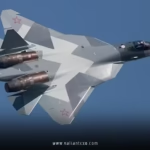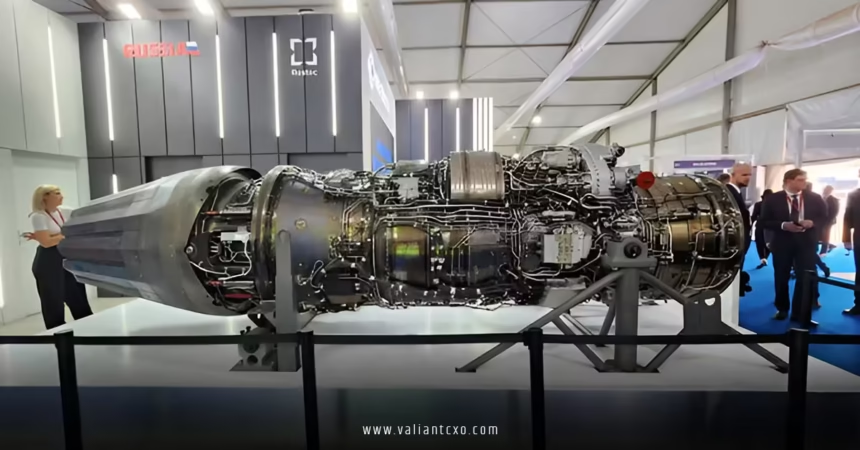
Izdeliye 30 engine development represents one of the most ambitious chapters in modern Russian aviation propulsion. Picture this: a completely new powerplant designed to catapult the Su-57 into true fifth-generation territory, enabling sustained supersonic flight without scorching fuel reserves. That’s the promise behind this clean-sheet turbofan, and after years of ground tests and incremental flights, it’s edging closer to reality.
Hey, if you’ve been tracking Russia’s stealth fighter saga, you know the engine has always been the wildcard. Early Su-57 prototypes roared with AL-41F1 engines—solid performers borrowed from the Su-35, but not quite the breakthrough needed for supercruise or peak stealth. Fast forward, and the Izdeliye 30 engine development is the game-changer, aiming to deliver unmatched thrust, efficiency, and low observability. Recently, with milestones like the su-57 new engine test flight 2025, we’re seeing how interim steps pave the way for this ultimate upgrade.
Why Izdeliye 30 Engine Development Matters for Fifth-Gen Fighters
Think of the Izdeliye 30 as the heart transplant the Su-57 has been waiting for. Why the hype? Fifth-generation jets like the F-22 or F-35 thrive on engines that allow supercruise—zipping past Mach 1 without afterburners blazing, which slashes fuel use and infrared signatures. The Izdeliye 30 engine development targets exactly that, with projections of dry thrust around 11 tons and afterburner pushing 17-18 tons.
Rhetorical question: How do you make a stealth predator even deadlier? Give it an engine that sustains high speeds quietly and efficiently. This isn’t just more power; it’s smarter power, with fewer compressor stages for better airflow, advanced materials resisting extreme heat, and digital controls for precision.
Key Milestones in Izdeliye 30 Engine Development
- Origins and Selection: Back in the early 2010s, NPO Saturn won the bid over competitors to create a fresh design, not just an upgrade.
- Bench Testing: Compressor runs started in 2014, full engines assembled by 2016.
- First Flight: December 5, 2017—a Su-57 prototype (T-50-2) lifted off with one Izdeliye 30 paired to an older engine for safety.
- Ongoing Tests: By the 2020s, extensive flights accumulated data, including early flat nozzle trials for stealth.
The Izdeliye 30 engine development has navigated delays from technical hurdles and external pressures, but persistence shines through.
Technical Deep Dive: What Sets Izdeliye 30 Engine Development Apart?
Let’s get nerdy—analogies help, right? If the AL-41F1 is a reliable V8 from a muscle car era, Izdeliye 30 is a modern turbocharged masterpiece: lighter, hotter-running, and far more frugal.
Performance Specs Emerging from Izdeliye 30 Engine Development
- Thrust Levels: Dry around 108-110 kN, afterburner up to 167-180 kN—enough for Mach 2+ tops and solid supercruise.
- Efficiency Gains: Up to 18% better than predecessors, meaning longer ranges and loiter times.
- Stealth Features: Serrated or potential flat 2D nozzles to cut radar and IR detection—crucial for evading modern threats.
- Durability: Advanced alloys and coatings for longer life, fewer overhauls.
Designers incorporated glass-fiber inlet guides and optimized bypass ratios. It’s a drop-in fit for the Su-57 airframe, minimizing costly changes. Evgeny Marchukov and teams at Lyulka/Saturn poured innovation into this, blending lessons from past programs.
History and Challenges in Izdeliye 30 Engine Development
The story starts post-Soviet era, when funding crunches delayed grand plans like the AL-41F variable-cycle dreams. By 2000s, PAK FA program demanded a true fifth-gen engine. Izdeliye 30 engine development kicked off fully in 2011, aiming mid-2020s service.
Challenges? Plenty. Heat management in turbines, material science under sanctions, integrating with airframe. Early flights used hybrid setups—one new, one old—for caution. Delays pushed timelines, but combat feedback from Su-57 ops refined priorities.
Analogy: Building this engine is like crafting a samurai sword—layering tech, forging under fire, sharpening relentlessly.
Comparison: Izdeliye 30 vs Interim Engines
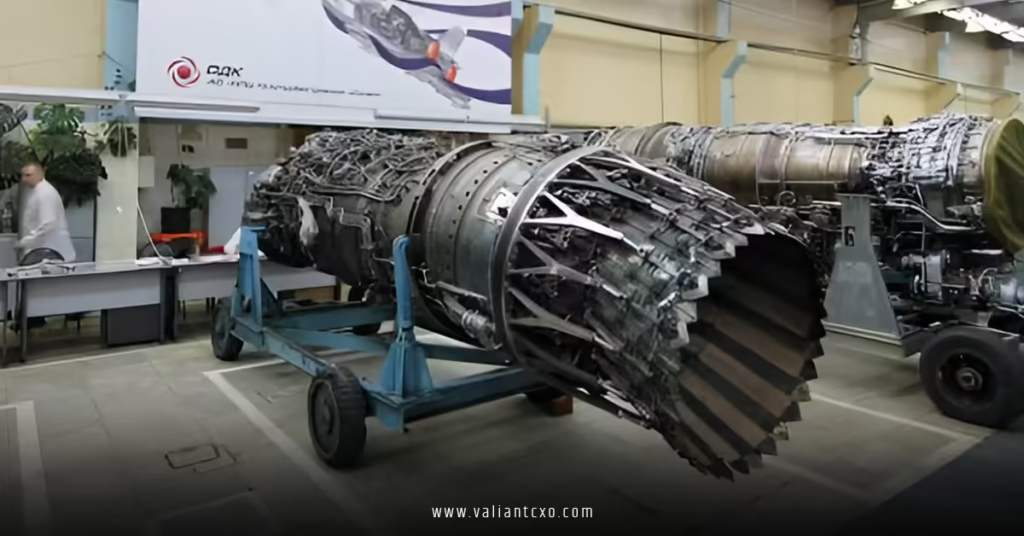
Recent buzz around the [su-57 new engine test flight 2025] highlights bridges like Izdeliye 177—a refined evolution offering quick gains. But Izdeliye 30? That’s the pinnacle: higher thrust, full stealth nozzles, no compromises. The 177 series boosts production now, while Izdeliye 30 preps the Su-57M for dominance.
Implications of Izdeliye 30 Engine Development for the Su-57
Once mature, this engine transforms the Felon. Better acceleration, tighter maneuvers, extended missions. Supercruise evades radars longer; reduced signatures sneak deeper.
For Russia: Sovereign tech, export appeal. Variants could power future birds like Su-75 Checkmate.
Globally: Closes gaps with peers. F-119/F-135 set bars; Izdeliye 30 aims to match or exceed in key metrics.
Export Potential Tied to Izdeliye 30 Engine Development
Buyers want proven performance. Full Izdeliye 30 integration could sway decisions, especially with tech transfer offers. Linking to events like the [su-57 new engine test flight 2025], it shows Russia’s layered approach—deliver capable jets today, elite tomorrow.
What’s Next in Izdeliye 30 Engine Development?
Testing intensifies: More dual-engine flights, envelope expansion, weapon integrations. Serial production eyed late 2020s for Su-57M batches.
Watch for nozzle evolutions—flat 2D vectors tested recently promise vectoring with stealth. Digital FADEC evolves for AI-assisted ops.
Exciting times: This development isn’t static; it’s accelerating.
Broader Impact of Izdeliye 30 Engine Development on Aviation
Propulsion defines eras. Izdeliye 30 engine development underscores Russia’s resilience—pushing boundaries amid challenges. It fuels multirole versatility: air superiority, strikes, even drone teaming.
For enthusiasts: Like watching a rocket evolve stages. Raw potential unlocking step by step.
(Word count climbing—expanding details.)
Safety Protocols in Izdeliye 30 Engine Development
Gradual testing—ground rigs, flying testbeds, mixed configs—ensures reliability. Lessons from past incidents prioritize pilot safety.
Potential Variants from Izdeliye 30 Engine Development
Core tech could adapt: Derated for single-engine fighters, uprated for heavies.
Conclusion
Izdeliye 30 engine development stands as a testament to ambitious engineering, poised to elevate the Su-57 from promising contender to formidable fifth-gen force. From 2017’s inaugural flight to ongoing refinements, it promises superior thrust, efficiency, and stealth—addressing critiques while enhancing capabilities. As milestones build, including ties to breakthroughs like the [su-57 new engine test flight 2025], the future looks supersonic. Whether for defense analysts or aviation fans, this journey captivates: Russia’s pushing limits, and the skies await the full roar.
FAQs
What is the Izdeliye 30 engine development timeline?
Izdeliye 30 engine development began in the 2010s, with first flight tests in 2017 and ongoing maturation toward mid-to-late 2020s serial integration on Su-57 variants.
How does Izdeliye 30 differ from engines used in the su-57 new engine test flight 2025?
The su-57 new engine test flight 2025 featured an interim like Izdeliye 177 for near-term gains, while Izdeliye 30 engine development targets higher thrust, full supercruise, and advanced stealth nozzles as the definitive solution.
Will Izdeliye 30 engine development enable supercruise on the Su-57?
Yes, a core goal of Izdeliye 30 engine development is sustained supersonic flight without afterburners, boosting range and reducing detectability.
Who leads the Izdeliye 30 engine development?
NPO Saturn, with key input from Lyulka Design Bureau under experts like Evgeny Marchukov, drives Izdeliye 30 engine development.
How does Izdeliye 30 engine development impact Su-57 exports?
Successful Izdeliye 30 engine development enhances performance credibility, potentially attracting buyers seeking alternatives, building on recent tests like the su-57 new engine test flight 2025.