Jonathan Ross media controversy explained – if you’ve ever stumbled across this phrase while scrolling through old headlines or chatting about British TV scandals, you’re probably curious about one of the biggest storms to hit the BBC in decades. Let’s dive right in and unpack what really happened, why it blew up so massively, and how it changed things forever.
Picture this: it’s 2008, and two of Britain’s edgiest comedians decide to push boundaries on live radio. What starts as a silly prank spirals into a national outrage that costs jobs, triggers resignations, and sparks debates about taste, decency, and celebrity power. If you’re wondering why the Jonathan Ross media controversy explained still pops up years later, it’s because this wasn’t just a silly mistake – it exposed cracks in broadcasting standards and public trust.
Who Is Jonathan Ross? A Quick Background
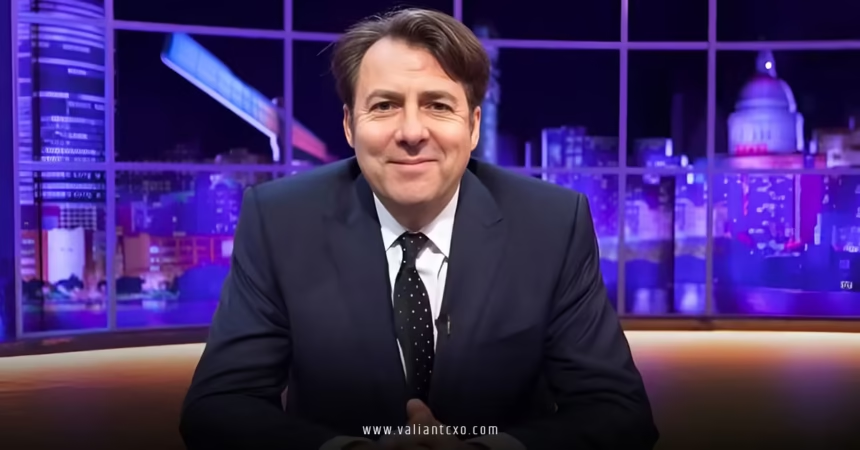
Before we get into the heart of the Jonathan Ross media controversy explained, let’s set the scene with who this guy actually is. Jonathan Ross, often nicknamed “Wossy” for his distinctive speech impediment, has been a staple of British entertainment for decades. Born in 1960, he exploded onto the scene in the 1980s with his cheeky, irreverent style on Channel 4’s The Last Resort. From there, he became the king of chat shows, hosting Friday Night with Jonathan Ross on BBC One, where he’d interview Hollywood A-listers with a mix of charm, wit, and occasional boundary-pushing humor.
Ross was – and still is – known for his quick tongue, love of films, and unapologetic flamboyance. He commanded massive salaries (reportedly £6 million a year at his peak), making him the BBC’s highest-paid star. But that fame came with a reputation for controversy. Have you ever noticed how some presenters toe the line while others dance all over it? Ross was definitely a dancer, often flirting with offense in the name of laughs.
The Partner in Crime: Russell Brand’s Role
You can’t talk about the Jonathan Ross media controversy explained without bringing in Russell Brand. In 2008, Brand was at the height of his wild-man phase – long hair, tight jeans, and a comedy style that blended sex, scandal, and shock. He hosted The Russell Brand Show on BBC Radio 2, a late-night slot perfect for his outrageous antics. Brand had previously dated Georgina Baillie, the granddaughter of legendary actor Andrew Sachs (famous for playing Manuel in Fawlty Towers). When Sachs was booked as a guest but couldn’t make it, things took a turn.
Jonathan Ross Media Controversy Explained: What Exactly Happened on That Radio Show?
Here’s where the Jonathan Ross media controversy explained really kicks off. On October 18, 2008, the show was pre-recorded. Brand and his guest, Jonathan Ross, decided to call Andrew Sachs live on air to apologize for Brand not being able to attend a prior event – or at least, that’s how it started.
What followed was a series of voicemail messages that escalated quickly. Brand admitted on air to having a sexual relationship with Baillie, boasting about it in graphic terms. Then Ross chimed in with the now-infamous line: “He fucked your granddaughter!” They sang crude songs, made jokes about Sachs potentially taking his own life out of shame, and left messages referencing condoms and sexual acts. Imagine being an elderly actor, picking up your phone to hear that from two national celebrities. Shocking, right?
The episode aired a week later on October 25. At first, only a couple of complaints trickled in. But then the media got hold of it.
The Timeline of the Prank Calls
To make the Jonathan Ross media controversy explained clearer, let’s break down the key moments:
- Brand calls Sachs, gets voicemail.
- He leaves a message admitting the fling and apologizing in a mocking song.
- Ross joins in, yelling explicit comments.
- They call again, leaving more lewd messages.
- The whole thing is broadcast unedited.
Why wasn’t it stopped? The producer apparently thought it was funny and in line with the show’s edgy tone. Big mistake.
How the Jonathan Ross Media Controversy Explained Escalated into a National Storm
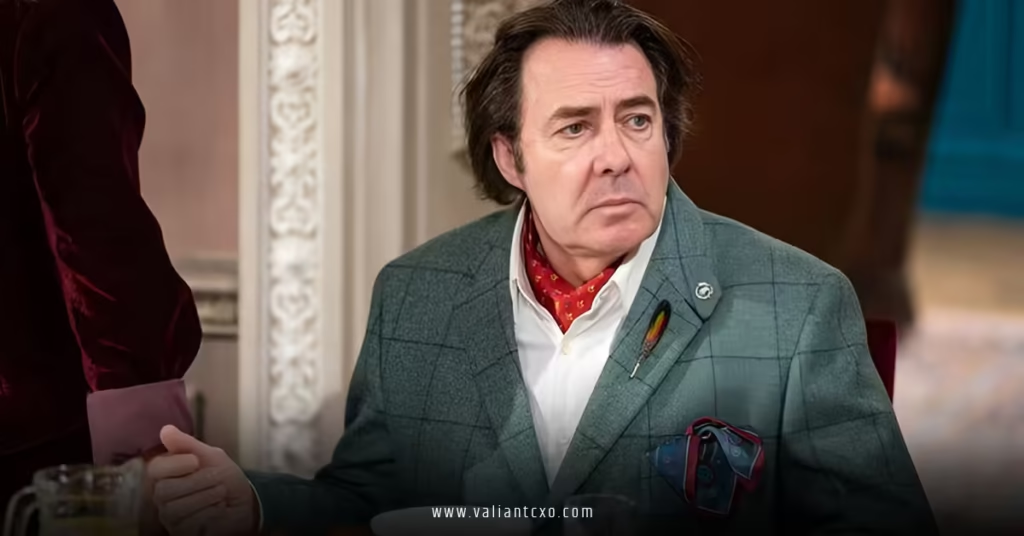
Initially, the broadcast flew under the radar. But on October 26, The Mail on Sunday ran a story highlighting the offensive content. That’s when all hell broke loose. Complaints flooded the BBC – starting with hundreds, then thousands, eventually topping 42,000. Prime Minister Gordon Brown weighed in, calling it “clearly inappropriate.” Even David Cameron, then opposition leader, slammed it.
Why did it explode so much? Timing played a role – this was post-phone hacking scandals emerging, and public trust in media was fragile. Plus, Andrew Sachs was a beloved figure, a national treasure at 78 years old. Targeting his family like that felt deeply personal and cruel. Rhetorical question: Would this have blown up the same way if it was two unknowns? Probably not – celebrity status amplified everything.
Public Reaction: Outrage, Defenses, and Everything In Between
The public was divided. Many were genuinely horrified, seeing it as bullying and invasive. Georgina Baillie herself spoke out, feeling humiliated. Others defended it as “lads banter” gone wrong, arguing comedy should push limits. But the sheer volume of complaints made it impossible to ignore.
Consequences: Fallout for Everyone Involved
The Jonathan Ross media controversy explained wouldn’t be complete without the repercussions, which were massive.
Jonathan Ross’s Punishment
Ross was suspended for 12 weeks without pay – a huge financial hit on his hefty salary. He issued a public apology, calling his behavior “juvenile and thoughtless.” His TV show was pulled temporarily.
Russell Brand’s Exit
Brand resigned almost immediately, saying he took full responsibility. He later reflected on it as a turning point in his career.
BBC Leadership Takes Hits
The controller of Radio 2 resigned. The BBC was fined £150,000 by Ofcom for breaching broadcasting standards. Director-General Mark Thompson apologized personally to Sachs.
This scandal led to tighter pre-broadcast checks and editorial guidelines across the BBC.
Jonathan Ross Media Controversy Explained: Broader Impact on UK Broadcasting
Think about it – one radio show changed how the entire industry operates. The Jonathan Ross media controversy explained highlighted risks of pre-recorded content and celebrity egos unchecked. It sparked debates on free speech versus decency. Analogies abound: like a wildfire started by a careless spark, it burned through reputations.
Post-scandal, Ross returned to Radio 2 in 2009 but faced more backlash. He eventually left the BBC in 2010 for ITV, citing a desire for new challenges (though many saw it as fallout lingering).
Other Controversies in Jonathan Ross’s Career
While Sachsgate (as it became known) is the big one in any Jonathan Ross media controversy explained, Ross has had others. At the Brit Awards, his jokes often ruffled feathers – like mocking politicians or celebrities. In 1991, he faced backlash for swearing on air. But nothing matched 2008’s scale.
Aftermath and Reflections Years Later
Fast forward, and both Ross and Brand have moved on. Ross hosts The Jonathan Ross Show on ITV, reviews films, and stays active in media. Brand has reinvented himself as a wellness guru and podcaster. Sachs sadly passed in 2016, but forgave them publicly.
The Jonathan Ross media controversy explained shows how quickly things can spiral in the digital age – even before social media fully exploded.
Lessons from the Jonathan Ross Media Controversy Explained
What can we take away? Responsibility matters, especially with a platform. Humor has limits, particularly when involving non-public figures. And apologies, while necessary, don’t always erase damage.
In conclusion, the Jonathan Ross media controversy explained remains a cautionary tale in broadcasting history. It cost careers, shook an institution, and reminded everyone that fame doesn’t excuse poor judgment. Whether you see it as overblown PC gone mad or rightful accountability, it shaped how we view celebrity antics today. Next time you hear a edgy joke on air, you’ll probably think twice – and that’s the lasting legacy.
FAQs
What sparked the Jonathan Ross media controversy explained in 2008?
The Jonathan Ross media controversy explained began with prank voicemail messages left by Ross and Russell Brand for actor Andrew Sachs, revealing explicit details about Brand’s relationship with Sachs’s granddaughter.
How many complaints did the BBC receive in the Jonathan Ross media controversy explained?
Over 42,000 complaints poured in, making the Jonathan Ross media controversy explained one of the most complained-about broadcasts in BBC history.
What were the main consequences of the Jonathan Ross media controversy explained?
Jonathan Ross was suspended without pay, Russell Brand resigned, a BBC executive quit, and the corporation faced a hefty fine in the aftermath of the Jonathan Ross media controversy explained.
Did Andrew Sachs forgive those involved in the Jonathan Ross media controversy explained?
Yes, Sachs publicly accepted apologies, though his granddaughter Georgina Baillie expressed lasting hurt from the Jonathan Ross media controversy explained.
How did the Jonathan Ross media controversy explained affect BBC policies?
It led to stricter editorial controls and compliance procedures, ensuring similar incidents are prevented in future broadcasts related to any potential Jonathan Ross media controversy explained scenarios.