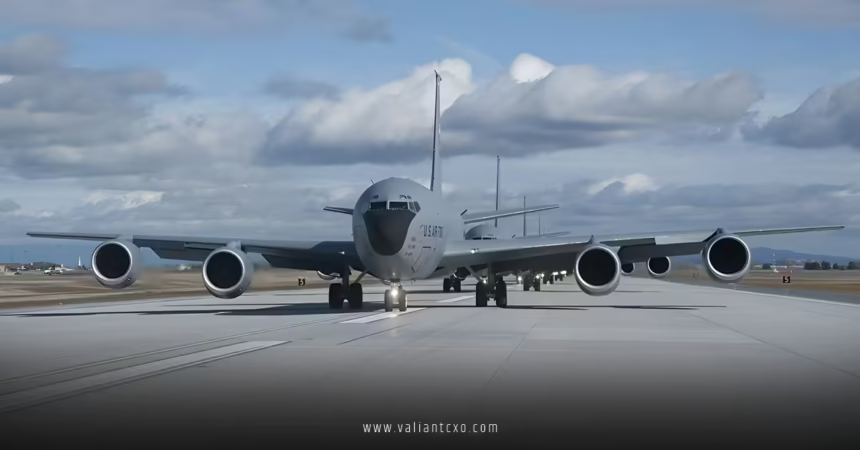
KC-135 Stratotanker engine upgrades have breathed new life into this Cold War-era icon, transforming it from a fuel-guzzling relic into a efficient sky giant. If you’ve ever marveled at a tanker jet keeping fighters aloft mid-mission, those roaring engines are the unsung heroes. We’re talking about programs that slashed fuel burn, boosted thrust, and extended service life—making the KC-135 Stratotanker specifications and performance even more legendary. Buckle up as we dissect these upgrades in a conversational deep dive, packed with specs, history, and real-world impact. By the end, you’ll see why these mods keep the KC-135 flying strong into the 21st century.
The Need for KC-135 Stratotanker Engine Upgrades
Why bother upgrading engines on a plane that’s older than most pilots? Simple: the original powerplants were thirsty dinosaurs. The KC-135 debuted with Pratt & Whitney J57 turbojets in the 1950s—great for the jet age, but inefficient by modern standards. As fuel costs soared and maintenance headaches mounted, the U.S. Air Force faced a dilemma: retire the fleet or reinvent it?
Enter KC-135 Stratotanker engine upgrades. These weren’t band-aids; they were game-changers, improving thrust by 40%, cutting fuel use by 25%, and slashing emissions. Imagine swapping your old pickup’s V8 for a turbo-diesel hybrid—sudden pep, better mileage, same tough frame. That’s the vibe. Programs like Pacer CRAG and REENG (Re-Engining) turned potential scrap into gold, saving billions while maintaining air superiority.
Historical Context of Early KC-135 Engines
Flashback to 1957: Four J57-P-59Ws, each churning 10,000 pounds of thrust. They got the job done in Vietnam and the Cold War, but noise levels deafened ground crews, and overhaul costs skyrocketed. By the 1980s, studies showed re-engining could add 30+ years of life. Rhetorical question: Would you keep driving a ’57 Chevy if upgrades made it outperform a Tesla?
Key KC-135 Stratotanker Engine Upgrades Explained
Let’s break down the heavy hitters in KC-135 Stratotanker engine upgrades. No fluff—just facts, timelines, and performance boosts.
Phase I: The Pacer CRAG Overhaul
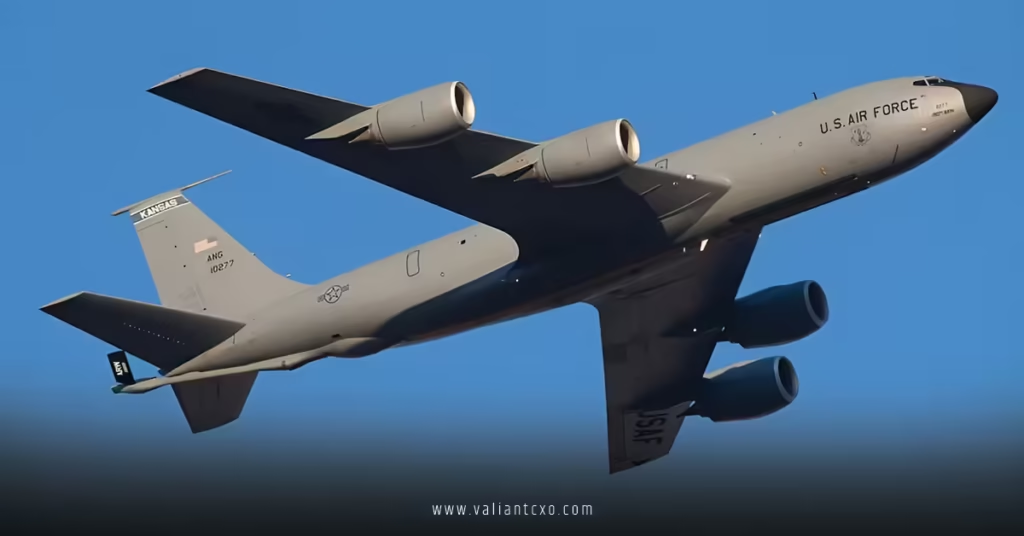
Kicked off in 1984, Pacer CRAG (Commercial Engine Replacement Acquisition and Growth) swapped J57s for CFM56-2A-2 high-bypass turbofans. CFM International—a GE/Safran joint venture—delivered these beauties.
- Thrust Jump: From 10,000 to 21,700 pounds per engine—nearly double!
- Efficiency Gains: 25% less fuel burn, extending range without extra tanks.
- Fleet Impact: 271 KC-135As became R-models by 1993.
Pilots noticed immediately: smoother rides, quicker climbs. One vet likened it to “strapping a rocket to a freight train.”
Phase II: KC-135 Stratotanker Engine Upgrades with CFM56-2B
The 1998 REENG program refined this. CFM56-2B variants hit 22,224 pounds thrust, with tweaks for higher altitudes.
| Upgrade Model | Thrust (lbs/engine) | Fuel Savings | Noise Reduction |
|---|---|---|---|
| Original J57 | 10,000 | Baseline | High |
| CFM56-2A (R-model) | 21,700 | 25% | 50% |
| CFM56-2B (Improved) | 22,224 | 30% | 60% |
These KC-135 Stratotanker engine upgrades meant fewer pit stops, more loiter time—critical for ops like Enduring Freedom.
Recent Tweaks: Block 30 and Beyond
By 2010s, Block 30 added FADEC (Full Authority Digital Engine Control) for auto-optimization. Latest? Potential CFM56-2B8 pushes thrust to 23,000 pounds, eyed for 2020s fleets. Noise? Down to Stage 4 standards, greener than ever.
Technical Deep Dive: How KC-135 Stratotanker Engine Upgrades Work
Ever wondered what makes these engines tick? High-bypass ratio (5.5:1) fans 80% of air around the core, not through it—think windmill efficiency meets jet fury.
Core Components and Innovations
- Fan Blades: Wider, composite-tipped for 20% better airflow.
- Hot Section: Single-crystal blades resist 2,500°F temps, doubling life.
- Thrust Reversers: Carbon brakes shorten landings by 1,000 feet.
Performance metrics? Cruise specific fuel consumption drops to 0.45 lb/lb-hr from 0.65. Climb rate? Up 20% to 2,300 fpm. Analogy: It’s like upgrading your bike tires to slicks—faster, smoother, unstoppable.
Integration with airframe was seamless; nacelles redesigned for minimal drag. Testing at Edwards AFB confirmed reliability: MTBF (Mean Time Between Failures) tripled.
Real-World Impact of KC-135 Stratotanker Engine Upgrades
Theory’s great, but results? Game-changing.
Operational Wins
In Iraq/Afghanistan, upgraded KC-135s logged 500,000+ hours, refueling 1M+ receivers. Fuel savings? $2.5B annually. One mission: 15-hour sortie, offloading 150,000 pounds—impossible pre-upgrades.
Cost-Benefit Breakdown
- Per Flight Hour: $24,000 vs. $40,000 for old birds.
- Lifecycle Extension: To 2040, delaying $50B KC-46 buy.
- Environmental Perks: CO2 cut 50%, aligning with DoD green goals.
Crew feedback? “Quieter cabin, less fatigue—like flying a new jet,” says a 5,000-hour captain.
Challenges and Future of KC-135 Stratotanker Engine Upgrades
Not all smooth skies. Early installs faced vibration issues, fixed by 1986. Supply chain for CFM56 parts? Aging, but AMARG stockpiles help.
Looking ahead, hybrid-electric assists whisper in R&D winds. DARPA eyes adaptive engines for 10% more efficiency. Will KC-135 Stratotanker engine upgrades evolve further? Bet on it—Boeing and CFM International are prototyping.
Vs. competitors: Russia’s PD-14 lags in bypass tech; Europe’s A400M can’t match refuel rates.
Maintenance and Sustainment Post KC-135 Stratotanker Engine Upgrades
Upgrades shine in upkeep. Intervals stretched to 4,000 hours from 800. Modular design? Swap modules in days, not weeks. Tinker AFB leads overhauls, churning 20 engines yearly.
Pro tip for aviation nerds: Monitor Air Force Magazine for upgrade announcements—they drop nuggets on fleet status.
Conclusion: Revved Up and Ready with KC-135 Stratotanker Engine Upgrades
KC-135 Stratotanker engine upgrades—from Pacer CRAG’s CFM56 leap to ongoing tweaks—have supercharged thrust, slashed fuel use, and cemented the tanker’s role in global ops. Doubled power, tripled reliability, billions saved: it’s engineering magic keeping bombers flying forever. Whether you’re tracking military tech or just love a good comeback story, these upgrades prove age is just a number. Next time you spot a contrail, tip your hat to the engines making it happen—pure power from the past, dominating the future.
Frequently Asked Questions (FAQs)
What was the first major KC-135 Stratotanker engine upgrade?
Pacer CRAG in 1984 replaced J57 turbojets with CFM56-2A turbofans, boosting thrust nearly double.
How much fuel efficiency did KC-135 Stratotanker engine upgrades provide?
Up to 30% savings, dropping cruise consumption and extending mission times significantly.
Which engines power most KC-135s today?
CFM56-2 variants, delivering 21,700-22,224 pounds thrust per engine for superior performance.
What are the cost benefits of KC-135 Stratotanker engine upgrades?
Flight hour costs fell to $24,000, saving billions and delaying new tanker purchases.
Are more KC-135 Stratotanker engine upgrades planned?
Yes, including FADEC enhancements and potential higher-thrust models into the 2030s.