Kuiper Belt objects explained simply? They’re the leftover building blocks of the solar system, frozen in place since the beginning. Billions of them orbit out past Neptune, and most will never get a name, let alone a mission. That’s the strange part — this region shapes planetary science constantly, yet barely anyone outside astronomy circles can name five objects in it.
Here’s the fast version before we go deep:
- What they are: Icy, rocky bodies orbiting the Sun beyond Neptune, in a donut-shaped region called the Kuiper Belt.
- How many exist: Estimates run into the hundreds of thousands larger than 100 km, plus billions of smaller chunks.
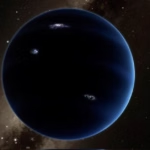
- Famous examples: Pluto, Eris, Makemake, Haumea, and newer finds like the recently flagged new dwarf planet 2026 ED138 discovered beyond Neptune by Vera Rubin Observatory.
- Why they matter: They’re basically time capsules from the solar system’s formation, 4.5 billion years ago.
- Who studies them: NASA, the IAU’s Minor Planet Center, and now the Vera Rubin Observatory’s long-term sky survey.
So What Exactly Is the Kuiper Belt?
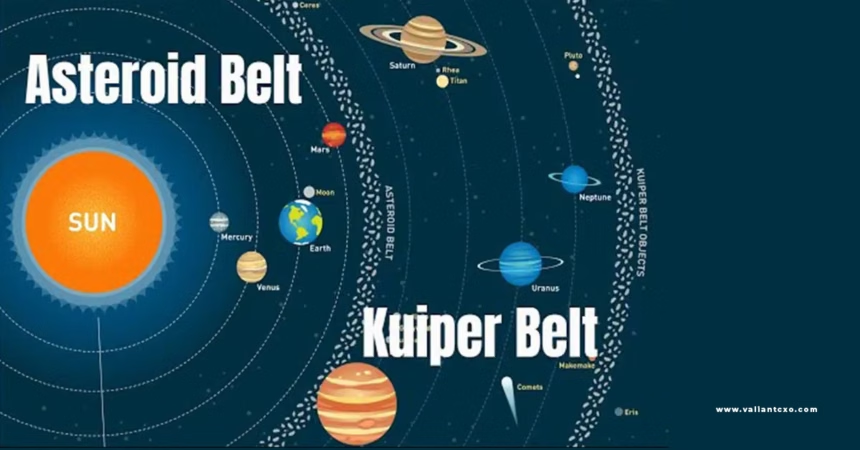
Picture the asteroid belt between Mars and Jupiter. Now stretch that idea out, past Neptune, and make it twenty times wider and far more massive.
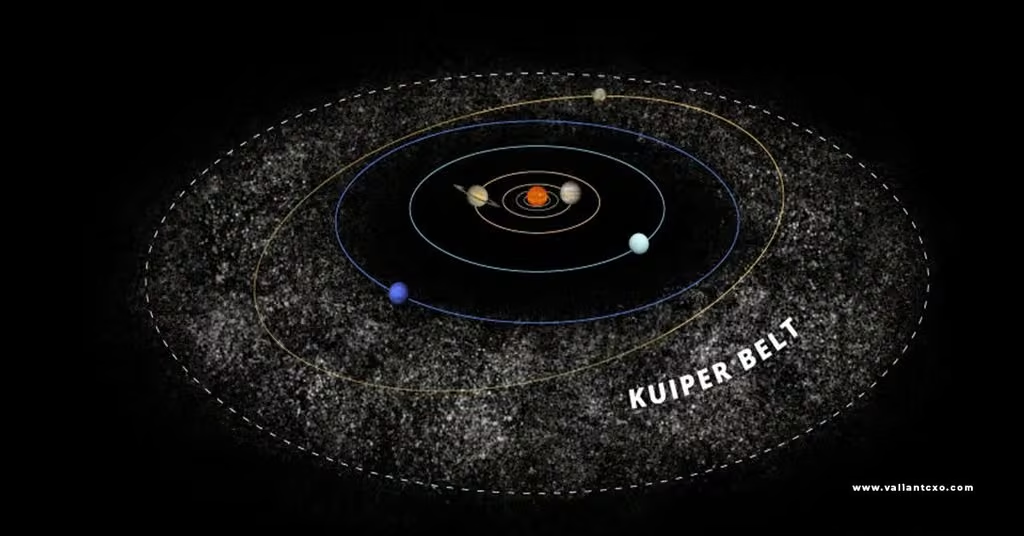
That’s the Kuiper Belt. It starts around 30 AU from the Sun — roughly where Neptune orbits — and extends out past 50 AU. Pluto lives inside it. So does Eris. So, almost certainly, does ED138.
Gerard Kuiper didn’t actually discover the region named after him. Astronomer Kenneth Edgeworth proposed something similar even earlier. But Kuiper’s 1951 theoretical paper got the credit, and the name stuck.
What usually surprises beginners is the scale. NASA describes the Kuiper Belt as home to hundreds of thousands of icy bodies larger than 62 miles (100 km) across, alongside an estimated trillion or more comets.
Types of Kuiper Belt Objects, Broken Down
Not every object out there behaves the same way. Astronomers sort them into rough categories based on orbit shape and behavior.
Classical Kuiper Belt Objects
These follow fairly circular, stable orbits. They sit in the “main belt” zone without much drama. Many formed roughly where they still orbit today.
Resonant Objects
These move in lockstep with Neptune’s gravity — like Pluto, which completes two orbits for every three Neptune makes. That 3:2 resonance is why Pluto never collides with Neptune, despite crossing its path.
Scattered Disk Objects
Here’s where things get wild. Scattered disk objects got flung into steep, elongated, tilted orbits by gravitational encounters billions of years ago. Eris belongs here. So does the newly flagged dwarf planet candidate.
Which brings us back to the headline-grabber of 2026.
Where the New Dwarf Planet 2026 ED138 Discovered Beyond Neptune by Vera Rubin Observatory Fits In
ED138 isn’t a random blip. It’s classified as a “hot-classical” Kuiper Belt object — tilted roughly 25 degrees off the solar system’s flat plane, likely nudged there by Neptune’s gravity long ago.
That detail matters for understanding the belt as a whole. The new dwarf planet 2026 ED138 discovered beyond Neptune by Vera Rubin Observatory shows exactly how chaotic this region’s history really was. Objects didn’t just form and stay put. Neptune’s migration billions of years ago scattered them like billiard balls, some into tight resonances, others into wide, tilted loops.
In my experience explaining this to beginners, the easiest way to picture it: imagine shuffling a deck of cards, then freezing it mid-shuffle. That’s the Kuiper Belt’s orbital layout today — a snapshot of leftover chaos, not a tidy, finished structure.
Why the ED138 Discovery Changes the Conversation
Before Rubin Observatory’s announcement, most casual science readers assumed the big Kuiper Belt objects had already been found. Pluto in 1930. Eris in 2005. Haumea and Makemake not long after.
The new dwarf planet 2026 ED138 discovered beyond Neptune by Vera Rubin Observatory proves that assumption wrong. Big, previously unseen worlds are still hiding out there — not because they’re impossibly small, but because the right telescope hadn’t looked the right way yet.
Kuiper Belt Objects Compared: A Quick Reference
| Object | Classification | Distance from Sun (AU) | Diameter | Status |
|---|---|---|---|---|
| Pluto | Resonant KBO (3:2 with Neptune) | ~39.5 | 2,377 km | Confirmed dwarf planet |
| Eris | Scattered disk object | ~68 | 2,326 km | Confirmed dwarf planet |
| Makemake | Classical KBO | ~45.8 | 1,430 km | Confirmed dwarf planet |
| Haumea | Resonant/classical KBO | ~43 | ~1,632 km (elongated) | Confirmed dwarf planet |
| 2026 ED138 | Hot-classical KBO | ~46 | 600–1,500 km | Candidate (unconfirmed) |
Data compiled from NASA’s Solar System Exploration resources and the IAU Minor Planet Center.
Step-by-Step: How Astronomers Actually Find a Kuiper Belt Object
Beginners often assume these discoveries happen by accident. They don’t. Here’s roughly how it works:
- Repeated imaging. Telescopes like Rubin photograph the same patch of sky over and over, sometimes nightly.
- Motion detection. Software flags anything that shifts position against the fixed background of distant stars.
- Orbit calculation. Once a moving object is confirmed, astronomers calculate a preliminary orbit from multiple observations.
- Provisional designation. The Minor Planet Center assigns a temporary code — that’s where “2026 ED138” came from.
- Follow-up observation. Other observatories, sometimes including infrared instruments, confirm size, brightness, and composition.
- Formal classification. The IAU eventually decides whether an object qualifies as a dwarf planet, a minor planet, or something else entirely.
That’s genuinely the whole pipeline. It’s patient, methodical work — nothing flashy about it until the headline hits.
Common Mistakes & How to Fix Them
Mistake 1: Assuming the Kuiper Belt is basically empty space with a few rocks. It’s dense with material — just spread across an enormous volume. Fix: think “sparse but vast,” not “empty.”
Mistake 2: Confusing the Kuiper Belt with the Oort Cloud. They’re different regions entirely. The Oort Cloud sits much farther out, possibly thousands of AU away. Fix: Kuiper Belt is closer and flatter; Oort Cloud is a distant, spherical shell.
Mistake 3: Thinking every Kuiper Belt object gets a cool name eventually. Most never will. Only a tiny fraction get formally named; the rest stay as catalog numbers forever. Fix: expect designations, not names, for most future finds.
Mistake 4: Believing dwarf planets are “failed planets.” They’re not failures — they’re just smaller bodies that didn’t clear their orbital neighborhood of debris, per the IAU’s own definition. Fix: treat “dwarf planet” as a legitimate category, not a demotion.
Why This Region Still Matters for Future Discoveries
Here’s a sharp question worth sitting with: if a world up to 1,500 km across stayed hidden until 2026, what else is still out there?
The Vera Rubin Observatory just started a ten-year survey of the entire southern sky. Objects like the new dwarf planet 2026 ED138 discovered beyond Neptune by Vera Rubin Observatory are likely just the opening act. Rubin’s design specifically targets faint, slow-moving objects that older surveys couldn’t catch efficiently.
What I’d watch for next: more hot-classical and scattered disk objects turning up in crowded sky regions near the galactic plane, exactly where ED138 was hiding.
Key Takeaways
- Kuiper Belt objects are icy, rocky bodies orbiting beyond Neptune, left over from solar system formation.
- The region holds hundreds of thousands of large objects and likely a trillion or more comets.
- Objects split into classical, resonant, and scattered disk categories based on orbital behavior.
- Pluto, Eris, Makemake, and Haumea are the confirmed dwarf planets living in this region.
- The new dwarf planet 2026 ED138 discovered beyond Neptune by Vera Rubin Observatory is the newest candidate, pending full confirmation.
- Neptune’s gravity shaped much of the belt’s chaotic orbital layout billions of years ago.
- Rubin Observatory’s ten-year sky survey will likely uncover more hidden Kuiper Belt worlds.
The Kuiper Belt isn’t some finished, fully-mapped archive. It’s an active research frontier, and 2026 proved it. Every confirmed object out there adds another piece to how the solar system actually formed — not how textbooks simplified it decades ago. Keep tracking announcements from NASA and the IAU’s Minor Planet Center; the next big find could already be sitting in an old image, waiting for someone to notice it.
FAQs
What’s the difference between the Kuiper Belt and the asteroid belt?
The asteroid belt sits between Mars and Jupiter and is made mostly of rock and metal, while the Kuiper Belt lies far beyond Neptune and consists largely of icy bodies, including dwarf planets like Pluto.
Could there be more dwarf planets hiding in the Kuiper Belt?
Very likely. The new dwarf planet 2026 ED138 discovered beyond Neptune by Vera Rubin Observatory suggests large, unseen worlds still exist, and ongoing surveys are expected to find more in the coming years.
Do all Kuiper Belt objects eventually get studied up close?
No — most never will. Only a handful, like Pluto via NASA’s New Horizons mission, have received direct spacecraft visits; the vast majority remain known only through telescope observations.