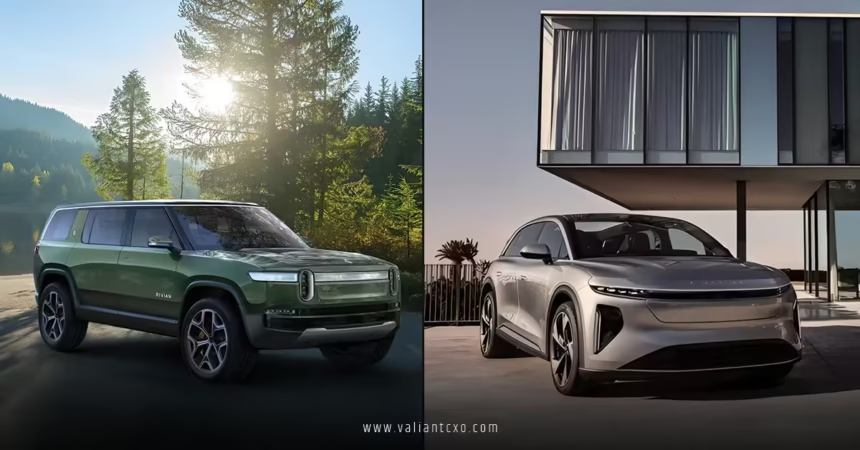
When you’re shopping for a premium electric three-row SUV, the Lucid Gravity vs Rivian R1S comparison often comes down to a classic showdown: luxury efficiency versus rugged adventure spirit. Both vehicles pack serious performance, impressive tech, and family-friendly space, but they appeal to different drivers.
Curious which one might suit your lifestyle better? Let’s break it down head-to-head, from range and acceleration to interior vibes and real-world usability. (For a deeper look at the Lucid side, check our full 2026 Lucid Gravity Grand Touring review and range breakdown.)
Pricing: Where Your Money Goes
Pricing sets the tone right away. The 2026 Lucid Gravity starts around $81,550 for the Touring trim and jumps to about $94,900–$96,550 for the Grand Touring (before options and fees). Fully loaded configs can push past $140,000 if you add extras like advanced driver assists or premium wheels.
The Rivian R1S (2026 model year) begins lower, from roughly $76,990–$78,790 for base Dual-Motor versions, scaling up to $123,000–$131,000+ for high-end Tri-Motor or Quad-Motor variants with Max battery packs.
In many cross-shops, the Gravity feels pricier at equivalent performance levels, but it often justifies the tag with superior efficiency and charging perks. Rivian edges out on entry-level accessibility, especially if you’re eyeing adventure-focused trims.
Performance: Acceleration, Handling, and Driving Feel
Both deliver jaw-dropping speed for family haulers weighing over 6,000 pounds.
The Lucid Gravity Grand Touring unleashes 828 horsepower and 909 lb-ft of torque from dual motors, hitting 0-60 mph in about 3.4 seconds. Higher trims (like Dream Edition) dip into the low 3s. What stands out? The Gravity drives like a sports sedan—smooth air suspension, precise steering, and optional rear-axle steering make it feel agile and planted. Real-world tests praise its composure on highways and twisty roads; it’s quieter and more refined overall.
Rivian R1S counters with multiple configs: Dual-Motor setups around 533–665 hp, Tri-Motor at 850 hp, and Quad-Motor topping 1,025–1,205 hp with 0-60 in as quick as 2.6 seconds. Torque often exceeds 1,100 lb-ft in top versions. The R1S feels more truck-like—playful, with a bit more body roll but excellent off-road modes and torque vectoring. In straight-line drags, Rivian sometimes edges ahead initially, but Gravity often pulls away in longer runs or handling sections.
If you crave luxury poise, Gravity wins. For raw grins and occasional trails, R1S shines.
Range and Efficiency: The Real-World Story
Range remains a huge decider in the Lucid Gravity vs Rivian R1S comparison.
Lucid Gravity Grand Touring claims up to 450 miles EPA (two-row config with efficient wheels), dropping to 386–437 miles with third row or larger wheels. Its 123 kWh battery and 900V+ architecture enable ultra-fast charging—adding 200 miles in under 11–15 minutes on high-power stations. Real-world highway tests often hit 400+ miles in ideal conditions, thanks to aerodynamic design and efficiency.
Rivian R1S tops out around 410 miles EPA on Max Pack configs (often 371–410 miles depending on wheels and powertrain). Dual-Motor versions land 258–329 miles. Charging peaks lower than Lucid’s, but Rivian’s NACS access (Tesla Superchargers) helps. Real-world figures prove reliable, with many owners reporting consistent 350–400-mile trips.
Gravity generally pulls ahead on max range and charging speed—ideal for long hauls. R1S holds its own, especially if efficiency isn’t your top priority.
Interior, Space, and Practicality
Step inside, and personalities diverge sharply.
Lucid Gravity offers a futuristic cabin: sweeping 34-inch OLED display, premium Nappa leather options, massaging seats, and serene quietness. Cargo impresses—up to 111–120 cubic feet max (seats folded), around 21 cubic feet behind the third row, plus frunk. Third row suits adults better on shorter trips; second row feels expansive. It’s luxury-first—think quiet, plush, tech-forward.
Rivian R1S leans adventure-ready: durable materials built for longevity, clever storage (including under-floor bins), and a split tailgate perfect for picnics or quick changes. Cargo behind third row hovers ~17–18 cubic feet, maxing ~104 cubic feet folded, plus larger frunk (~11 cubic feet). Third row feels tighter for adults; seats are bulkier but practical. Software feels more polished currently, with responsive infotainment.
Gravity edges out on passenger comfort and max cargo volume; R1S wins for rugged usability and thoughtful family features.
Off-Road and Towing Capability
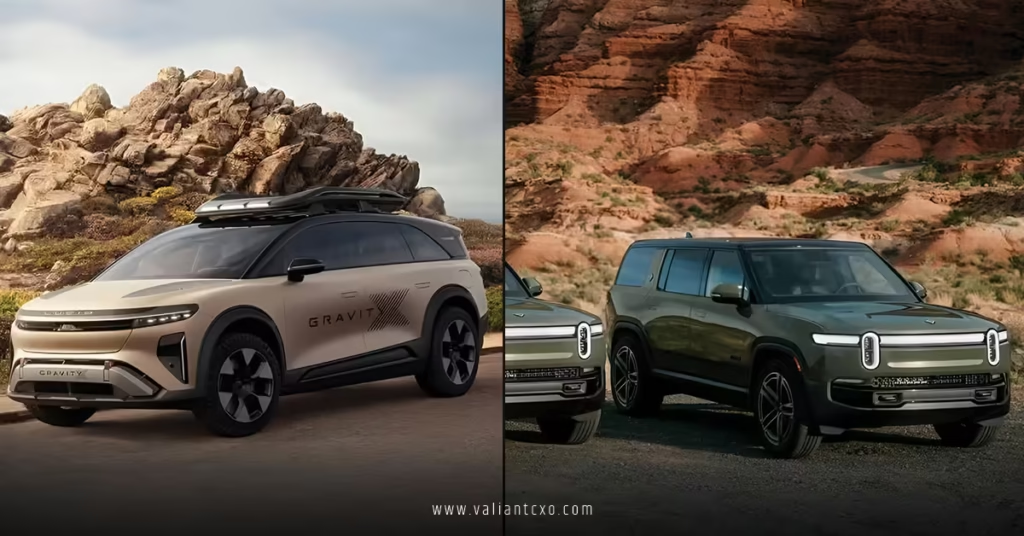
Rivian dominates here. With adjustable air suspension, off-road modes, and higher ground clearance, R1S tackles trails confidently—many owners swear by its adventure creds.
Gravity handles light gravel or dirt roads well but prioritizes on-road refinement over hardcore off-roading. Towing? Gravity up to 6,000 pounds in top trims; R1S matches or exceeds in higher configs.
Charging, Tech, and Ownership
Both support NACS for Tesla Superchargers. Lucid’s 900V+ system charges faster on compatible stations. Rivian’s ecosystem (app, community) feels more mature; Lucid improves via OTA updates but trails slightly in polish.
Pros and Cons at a Glance
Lucid Gravity Pros:
- Superior range potential (up to 450 miles)
- Blistering yet refined performance
- Luxurious, quiet interior
- Faster charging
Lucid Gravity Cons:
- Higher starting price for equivalent power
- Less off-road focus
- Some early build quirks noted
Rivian R1S Pros:
- Lower entry price
- Adventure-ready with strong off-road chops
- Practical family features
- Proven reliability track record
Rivian R1S Cons:
- Slightly lower max range
- Truckier ride
- Slower peak charging
Which One Should You Choose?
The Lucid Gravity vs Rivian R1S comparison boils down to priorities. Crave maximum range, silky-smooth driving, and premium luxury for highway miles and family comfort? Go Gravity—especially if you’ve read our 2026 Lucid Gravity Grand Touring review and range and love the efficiency story.
Prefer rugged versatility, playful dynamics, and better value with off-road potential? Rivian R1S delivers daily joy and adventure cred.
Test drive both. These aren’t just EVs—they’re statements. One might pull you in like gravity; the other might ignite your explorer side.
For more details, explore these trusted sources:
- Edmunds Lucid Gravity vs Rivian R1S Comparison
- Rivian Official R1S Page
- Lucid Motors Gravity Overview
FAQ :
Which has better range: Lucid Gravity or Rivian R1S?
Lucid Gravity generally wins with up to 450 miles EPA (Grand Touring), while Rivian R1S tops out around 410 miles on Max Pack versions.
Is the Lucid Gravity faster than the Rivian R1S?
Both are very quick. Gravity Grand Touring hits 0-60 mph in ~3.4 seconds; top Rivian R1S Quad-Motor variants can do it in ~2.5–2.6 seconds, giving Rivian a slight edge in raw acceleration.
Which is more luxurious inside: Lucid Gravity or Rivian R1S?
Lucid Gravity feels more premium and serene with its massive OLED display, Nappa leather, and quieter cabin. Rivian R1S prioritizes durable, adventure-ready materials over outright luxury
Can both tow 6,000 pounds?
Yes — both the Lucid Gravity and Rivian R1S are rated to tow up to 6,000 pounds in their higher trims, making them suitable for boats, trailers, or campers.
Which charges faster: Lucid Gravity or Rivian R1S?
Lucid Gravity has the advantage with its 900V+ architecture, adding ~200 miles in under 15 minutes on high-power chargers. Rivian charges respectably but peaks slower than Lucid’s system.