Mars Sample Return Mission Updates :
The ambitious plan to fetch Perseverance’s carefully collected Martian rocks and bring them home for lab study? Officially on ice. Congress pulled funding in early 2026, ending the NASA-ESA joint effort as we knew it. Yet the story isn’t over. Samples sit waiting on the Red Planet while new ideas bubble up.
Here’s the no-BS breakdown:
- Current status: Traditional MSR architecture cancelled in January 2026 budget decisions.
- Why it matters: Over 30 sealed tubes hold potential clues to ancient life, including standout finds like Cheyava Falls.
- What’s next: Push for cheaper, faster commercial or alternative approaches.
- Timeline shift: Original 2030s return now uncertain; China eyes its own sample return lead.
- The big question: Will politics strand these samples forever, or spark smarter innovation?
Mars Sample Return Mission Updates reflect a harsh reality check on costs and complexity. But they also open doors to fresh thinking.
Why Mars Sample Return Got Scrapped
Perseverance rover has been nailing its job since 2021. It collected dozens of rock cores, regolith, and even an atmosphere sample in Jezero Crater. These aren’t random grabs. Scientists picked spots with high habitability potential.
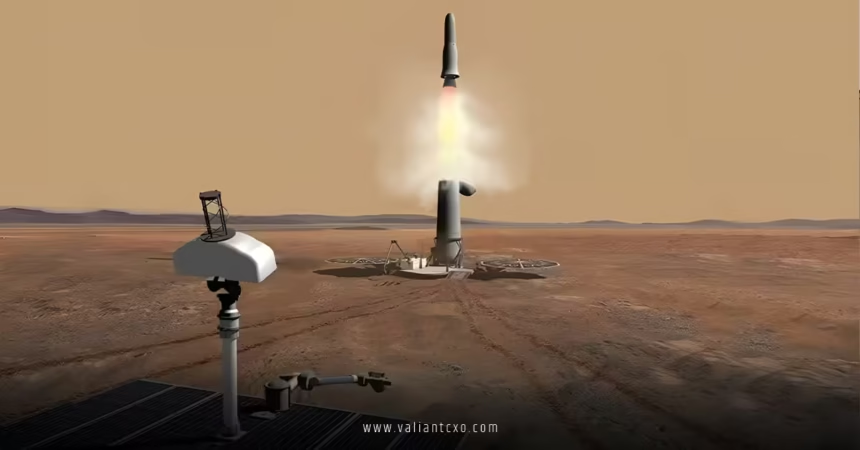
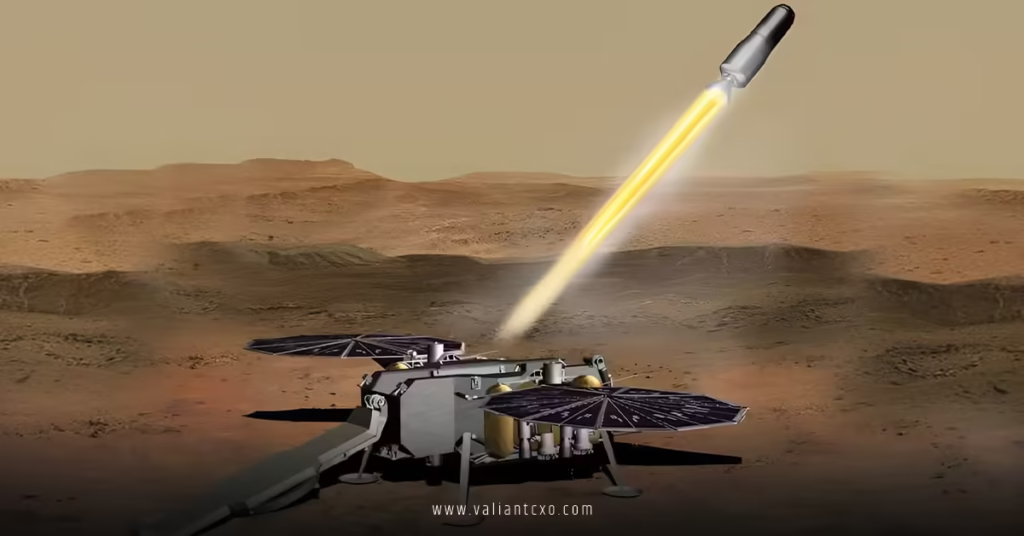
The original plan involved a fetch rover, ascent vehicle, and Earth return orbiter. Price tag ballooned past $11 billion with arrival pushed to 2040.
In May 2025, the administration proposed killing it. Congress agreed in January 2026. No more funding for the existing setup.
The kicker? Planetary scientists call this the top priority for understanding Mars. Without return, advanced Earth instruments can’t do the deep dives needed.
Mars Sample Return Mission Updates now center on damage control and reinvention rather than execution.
The Samples at Stake
Perseverance cached samples in titanium tubes on the surface and onboard. As of mid-2025, it had over 30 filled.
One stands out: the Perseverance rover Cheyava Falls potential biosignature 2026. That rock from an ancient river channel shows organic molecules, leopard-spot mineral patterns, and chemical hints that scream “possible microbial history.”
Without return, we stay stuck with rover data alone. Earth labs could use mass specs and isotope work to settle the biosignature debate once and for all.
| Aspect | Original MSR Plan | 2026 Reality | Impact on Science |
|---|---|---|---|
| Cost | ~$11B+ | Funding cut to near zero | Delays or cheaper alternatives |
| Sample Return Date | 2030s | Uncertain / 2040s+ | Lost momentum |
| Number of Samples | 30+ from Perseverance | Still on Mars | Key finds like Cheyava Falls stuck |
| International Partners | Strong ESA involvement | ESA rethinking Mars strategy | Potential US-only or new partners |
| Alternatives | Limited | Commercial landers, new architectures | Innovation opportunity |
This table shows the gap between ambition and current roadblocks.
What Happens to the Samples Now?
NASA isn’t abandoning the rocks entirely. Teams explore commercial landing systems and simpler retrieval ideas. Some experts push for human Mars missions eventually carrying samples back.
The Planetary Society and others lobby hard. They argue these samples represent decades of investment. Stranding them wastes that.
In my experience covering space programs, big cancellations create weird opportunities. What usually happens is smarter, leaner designs emerge after the dust settles. I’d focus efforts on rapid prototype testing for sample ascent vehicles right now.
Step-by-Step: How to Stay Updated on Mars Sample Return
Beginners, don’t get overwhelmed. Follow this playbook:
- Bookmark NASA.gov – Check the Mars Sample Return page weekly for official statements.
- Track congressional budgets – Appropriations bills decide real futures.
- Read The Planetary Society – They break down politics and science cleanly.
- Follow Perseverance updates – New samples and images keep coming.
- Watch for commercial bids – Companies may propose game-changing approaches.
- Cross-reference multiple sources – Avoid echo chambers.
Do this and you’ll cut through the noise fast.
Common Mistakes When Following Space Mission News
Rookie error number one: Believing every headline means game over. Fix: Dig into primary sources. Budget language often leaves wiggle room.
Another trap? Assuming science stops without return. Fix: Rover data still delivers huge value. Combine it with orbital observations.
Over-focusing on one mission kills perspective too. Fix: Look at the bigger Mars exploration roadmap, including private players.
Future Paths for Bringing Mars Home
Mars Sample Return Mission Updates in 2026 point toward competition and creativity. NASA solicited commercial ideas. Some concepts use simpler landers or even Starship-style returns down the road.
Europe adjusts its Mars plans without the big joint project. China pushes Tianwen-3 for a 2031 return—potentially scooping the first samples if the US stays sidelined.
The payoff? Confirming ancient life. Or ruling it out. Either answer rewrites textbooks. Those Cheyava Falls-style finds need Earth labs to shine.
Imagine cracking open a tube and finding chemical fossils that change how we see life’s origins. That’s the prize.
Key Takeaways
- Mars Sample Return Mission Updates 2026 confirm the original NASA-ESA plan is cancelled due to costs.
- Perseverance’s samples, including high-interest targets, remain on Mars awaiting new retrieval strategies.
- Budget decisions prioritized other goals, but advocacy continues for alternatives.
- Commercial innovation could deliver faster, cheaper returns.
- International dynamics shift, with China potentially leading sample return.
- Scientific value of returned rocks remains unmatched for astrobiology.
- Public engagement matters—follow reliable sources and make your voice heard.
- The search for Martian life isn’t ending; it’s evolving.
Mars Sample Return Mission Updates sting right now. But space exploration rarely follows straight lines. These samples represent humanity’s best shot at answering whether we’re alone.
Next move? Dive into NASA’s latest Mars pages and support smart policy. The Red Planet’s secrets won’t wait forever.
FAQs
What caused the cancellation in Mars Sample Return Mission Updates 2026?
Rising costs and schedule slips led the administration and Congress to defund the existing architecture in the FY2026 budget.
Will the Perseverance rover Cheyava Falls potential biosignature 2026 ever reach Earth?
It’s uncertain. New commercial or simplified missions could still retrieve it, but no firm timeline exists.
Are there any active plans in current Mars Sample Return Mission Updates?
Yes—NASA explores alternative architectures and commercial partnerships while samples stay cached on Mars.