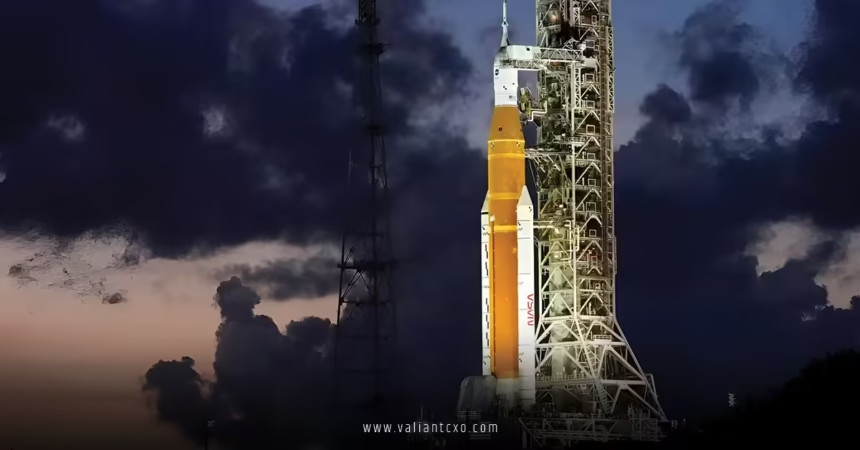
NASA Artemis program is the blueprint for America’s return to the Moon. It outlines everything from lunar orbit stations to surface habitats. But what makes Artemis different from Apollo? Sustainability. This isn’t a one-off landing. It’s infrastructure for decades of human presence.
Quick Breakdown: Artemis in 5 Bullets
- Artemis I (completed 2022): Uncrewed test of Space Launch System (SLS) and Orion spacecraft—validated deep space capability.
- Artemis II (2025): First crewed Orion mission orbiting the Moon, testing life support and abort systems.
- Artemis III (2026–2027): First human lunar landing since 1972, using SpaceX Starship as lander.
- Gateway Station: Lunar orbit outpost for crew staging, science, and lander operations.
- Sustained Presence: Annual missions building toward lunar base by 2030s.
The Big Picture: Why Artemis Exists
NASA launched Artemis to reestablish lunar capability. China and private companies are accelerating their own programs. America needs a foothold.
Artemis architecture emphasizes partnerships. NASA isn’t building everything alone. SpaceX handles landers. Lockheed Martin develops key components. International partners contribute Gateway modules.
The timeline compressed recently. Political pressure. Budget constraints. Technical realities. What used to be 2024 landings slipped to 2026–2027. That’s normal in aerospace. Schedules flex, but the architecture holds.
Core Mission Architecture Explained
Think of Artemis like a supply chain:
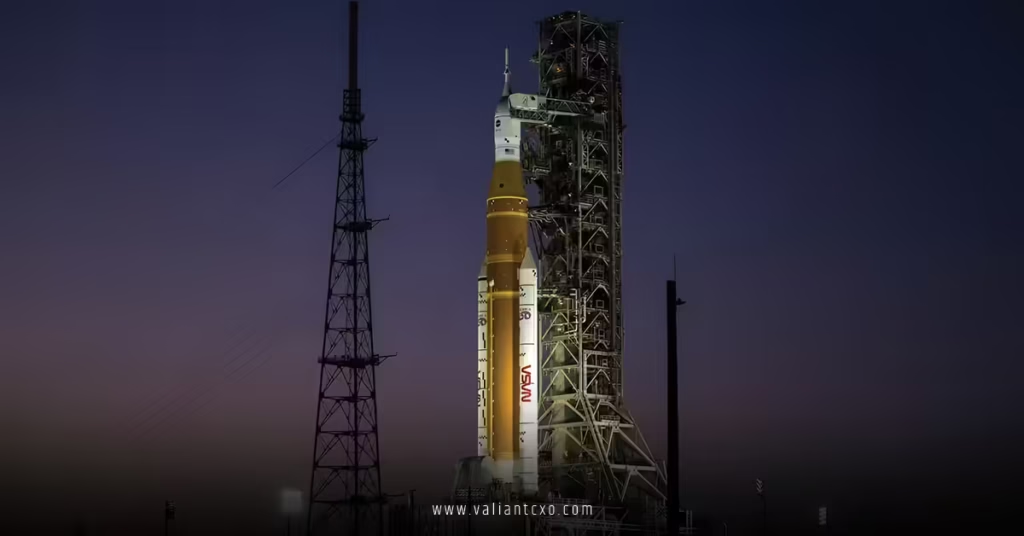
- Launch: SLS rocket sends Orion crew capsule from Kennedy Space Center
- Transit: Orion travels to lunar orbit (3–4 days)
- Gateway: Crew docks at the lunar station for rest, resupply, science
- Lander: Human Landing System (HLS) transfers crew to surface
- Surface Ops: Moonwalks, experiments, sample collection (up to 7 days)
- Ascent: Lander returns crew to Gateway
- Return: Orion splashes down in Pacific
Each element has redundancies. No single point of failure.
Detailed NASA Artemis Program Timeline
NASA publishes official timelines. They evolve with funding and technical progress. Here’s the 2026 reality check:
| Mission | Launch Window | Key Objectives | Crew Size | Landing Site |
|---|---|---|---|---|
| Artemis I | Nov 2022 (complete) | SLS/Orion uncrewed test | 0 | N/A |
| Artemis II | Sep–Oct 2025 | Crewed lunar flyby | 4 | N/A |
| Artemis III | Mid–Late 2026 | First crewed landing | 4 | South Pole |
| Artemis IV | 2028 | Gateway assembly | 4 | South Pole |
| Artemis V | 2029 | Sustained ops, cargo | 4 | Variable |
South Pole focus matters. Permanent water ice. Scientific goldmine.
Post-Artemis III, cadence ramps to annual missions. Gateway becomes operational hub.
Gateway: The Lunar Orbit Game-Changer
Gateway isn’t just a station. It’s the nerve center.
- Orbit: Near-rectilinear halo orbit (stable, fuel-efficient)
- Modules: Power and Propulsion Element (PPE), Habitation and Logistics Outpost (HALO)
- Partners: ESA, JAXA, CSA, UAE contributing hardware
- Capacity: Supports 4 crew for 30 days; docking ports for multiple landers
- Science: Radiation studies, lunar telescopes, deep space comms relay
Gateway enables flexibility. Different landers. Different missions. No more Earth-to-surface round trips.
Lockheed Martin plays a pivotal role here, providing precision avionics and docking systems. For the latest on their contributions, check out Lockheed Martin Lunar Lander NASA Contracts 2026 Updates.
Human Landing System (HLS): The Surface Bridge
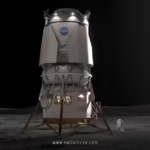
This is where missions get real. NASA selected SpaceX Starship for Artemis III. But the architecture allows alternatives.
HLS Requirements:
- Cargo: 5,000+ kg to surface
- Crew: 4 astronauts + gear
- Reusability: Refuel in orbit, multiple landings
- Precision: Land within 100m of target
NASA split HLS contracts. SpaceX leads crewed landers. Others compete for cargo variants. Competition keeps costs down, innovation up.
Step-by-Step: How NASA Manages Artemis Timeline
Beginners often ask: how does a program this complex stay on track?
- Annual budget cycles: Congress approves funding. NASA allocates across missions.
- Milestone gates: Contractors hit technical reviews. Miss one, timeline slips.
- Integration testing: Hardware comes together at Kennedy, JSC, Marshall.
- Risk boards: Weekly meetings identify issues early.
- Contingency planning: Backup landers, delay windows built in.
- Public accountability: NASA publishes progress reports, congressional briefings.
In my experience, the secret is ruthless prioritization. Artemis isn’t trying to do everything at once. Focus on landing humans first, then scale.
Common Pitfalls in Lunar Mission Architecture
Aerospace veterans know the traps:
Pitfall 1: Timeline optimism
- Fix: NASA now uses “no earlier than” dates. Realistic padding.
Pitfall 2: Single-vendor dependency
- Fix: Multiple lander providers, international Gateway contributions.
Pitfall 3: Underestimating lunar environment
- Fix: Extensive analog testing (Hawaii volcanoes, Antarctica) plus orbital demos.
Pitfall 4: Budget creep
- Fix: Fixed-price contracts where possible; cost caps per milestone.
Pitfall 5: Scope expansion
- Fix: Baseline architecture frozen early; new features as add-ons.
NASA’s learned from SLS delays. Artemis architecture emphasizes modularity. Swap components without redesigning everything.
Science and Exploration Goals
Artemis isn’t just boots on ground. It’s data collection.
- Water ice mapping: Confirm resources for fuel, life support
- Geology: Volcanic history, mantle samples
- Heliophysics: Solar wind studies from lunar surface
- Astrobiology: Ancient organics preserved in craters
- Tech demos: In-situ resource utilization (ISRU), 3D printing
South Pole sites offer 24/7 sunlight peaks for power. Shadowed craters hold ice.
International and Commercial Partnerships
Artemis thrives on collaboration.
International:
- ESA: Service Module for Orion
- JAXA: Lunar rover concepts
- CSA: Robotics arm for Gateway
Commercial:
- SpaceX: Starship HLS
- Blue Origin: Cargo landers, BE-4 engines
- Axiom Space: Private missions to Gateway
This ecosystem reduces NASA’s burden. Private capital accelerates development.
Budget Reality: Funding the Timeline
Artemis costs ~$4–5 billion annually. SLS/Orion: $2B+. HLS contracts: $1B+. Gateway: $500M+.
Congressional support solid but scrutinized. GAO reports highlight cost growth. NASA counters with milestones achieved.
What I’d do if leading Artemis: Double down on commercial partnerships. Let private sector handle routine cargo. NASA focuses on science, humans.
2026 Milestones: What to Watch
Current year brings crunch time:
- Artemis II crew assignment: Finalized Q2 2026
- SLS Block 1B test: Core stage with solid boosters
- Gateway PPE launch: First module to lunar orbit
- HLS demo: SpaceX orbital refueling test
- Lander prototypes: Ground tests ramp up
Slips here cascade. But progress is real. Hardware exists.
Key Takeaways
- Artemis timeline targets first lunar landing in 2026–2027, following crewed flyby in 2025.
- Gateway station enables sustained operations, serving as crew staging and science platform.
- Modular architecture allows competition across landers, rockets, habitats.
- South Pole focus unlocks water ice for fuel production and science.
- Partnerships with SpaceX, Lockheed Martin, international agencies distribute risk and cost.
- Annual missions post-Artemis III build toward lunar base infrastructure.
- Budget discipline through milestones keeps program accountable.
- Science drives everything: Resources, geology, heliophysics from lunar vantage.
Frequently Asked Questions
Q1: What’s the biggest risk to the Artemis timeline?
Technical integration and budget approval. SLS development took longer than expected. HLS refueling demos remain unproven at scale. NASA mitigates with parallel testing paths.
Q2: How does Artemis differ from Apollo architecturally?
Apollo was Earth-to-surface direct. Artemis uses Gateway for orbital staging, enabling reusability and sustained presence. Multiple lander options vs. single Lunar Module design.
Q3: When will we see a permanent lunar base?
NASA targets routine operations by 2030, base elements by mid-2030s. Artemis lays foundation; commercial partners accelerate buildout.