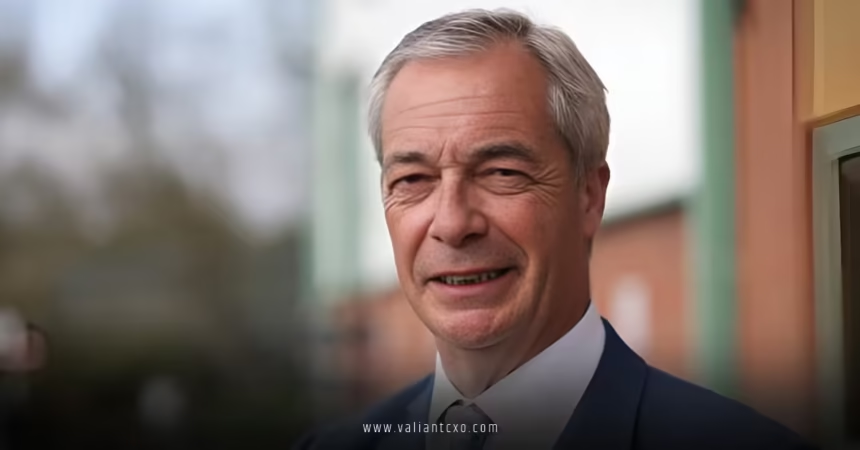
Nigel Farage Leadership Style has defined British politics for over a decade. Charismatic, combative, and laser-focused on the issues that rile up his base, Farage turns frustration into votes like few others.
Yet that same style—centralised, personal, and protest-first—creates friction as Reform UK tries to mature into a governing force. The Rupert Lowe Reform UK bullying allegations and resulting split threw this tension into sharp relief in 2025.
- Master communicator: Farage reads the room (and the pub) better than most. He frames complex issues in plain English that lands with working-class voters.
- Resilience king: Multiple assassination attempts, party collapses, and media pile-ons. He keeps coming back stronger.
- One-man brand risk: Heavy reliance on his persona makes delegation tough and internal challenges explosive.
- Strategic opportunist: Spots cultural pressure points early—immigration, net zero costs, elite disconnect—and hammers them relentlessly.
- Why it matters in 2026: Reform leads polls in places, but turning protest energy into disciplined power demands evolution.
Core traits that power Nigel Farage’s leadership style
Farage operates like a seasoned pub landlord who doubles as a general. He walks into rooms, cracks a joke, then drops hard truths on immigration or taxes. No jargon. No corporate polish. Just straight talk that feels authentic.
This directness built Brexit momentum and now fuels Reform UK’s surge. Supporters love the everyman vibe. Critics call it performative populism. Either way, it works for mobilisation.
The kicker is his stamina. Surviving what would bury most politicians shows real grit. In my experience advising political comms, that kind of personal brand loyalty is rare—and dangerous when it becomes the entire party infrastructure.
Strengths that make Farage a formidable force
Farage excels at agenda-setting. He forces Labour and the Tories to respond on migration, grooming gangs, and free speech. Polls regularly show him as the leader who best “understands the problems facing Britain.”
He builds energy through rallies that feel more American than traditional British politics. MAGA-style events, targeted social media, and relentless visibility keep momentum when traditional coverage turns hostile.
Another strength? Timing. He knows when to pivot, when to double down, and when to let controversies breathe. This instinct helped Reform climb from fringe to poll-topper in record time.
Weaknesses and criticisms of his approach
Critics inside and outside Reform point to a “messianic” centralisation. Everything routes through Farage. Delegation comes slowly. This created visible cracks when Rupert Lowe publicly questioned whether Farage’s style could scale into government.
The resulting feud—tied directly to the Rupert Lowe Reform UK bullying allegations—exposed raw nerves. Lowe called for a more structured party with proper frontbench and policy depth. Farage’s circle saw it as disloyalty at the worst moment. Lowe got suspended. The split followed.
Rhetorical question: Can a party built around one charismatic leader survive the transition to serious governance without fracturing?
Other knocks include candidate vetting issues and questions over whether Farage prefers perpetual insurgency over the grind of power. Some allies worry the personal brand overshadows team-building.
How the Rupert Lowe episode tested Farage’s leadership
The 2025 Lowe drama became a case study. Lowe criticised the “protest party led by the Messiah” model and pushed for evolution. Farage responded with suspension over separate bullying claims (which Lowe denies), police reports on alleged threats, and leaked messages calling the behaviour “contemptible.”
It highlighted two visions: Farage’s tight control to protect the brand versus calls for broader, more professional structures. The episode hurt short-term unity but arguably let Farage reassert dominance ahead of local elections.
Quick comparison table:
| Aspect | Farage’s Style | Lowe’s Critique / Alternative | Outcome So Far |
|---|---|---|---|
| Decision Making | Highly centralised, leader-driven | Push for delegation & frontbench | Lowe departed, Farage reasserted control |
| Party Structure | Protest movement energy | Professional governing machine | Ongoing tension, some professionalisation |
| Handling Dissent | Swift response to perceived threats | More room for constructive criticism | Public feud and split |
| Voter Appeal | Strong personal brand & rallies | Policy depth for long-term trust | Polling strength but PM preference lags |
Practical lessons from watching Farage operate
If you’re studying political leadership or running any movement, note these moves:
- Own the narrative — Get out first with simple, repeatable messages.
- Build personal connection — Farage remembers names, drinks with supporters, stays visible.
- Adapt but stay consistent — Core issues evolve in emphasis, never abandoned.
- Prepare for betrayal optics — Internal challenges get framed as disloyalty to protect momentum.
- Scale carefully — What wins opposition can hobble government ambitions.
What I’d do if advising a similar leader today: Start building the bench early. Identify and promote capable deputies publicly. Document processes so the operation survives if the founder steps back or faces scandal.
Evolution in 2026 and beyond
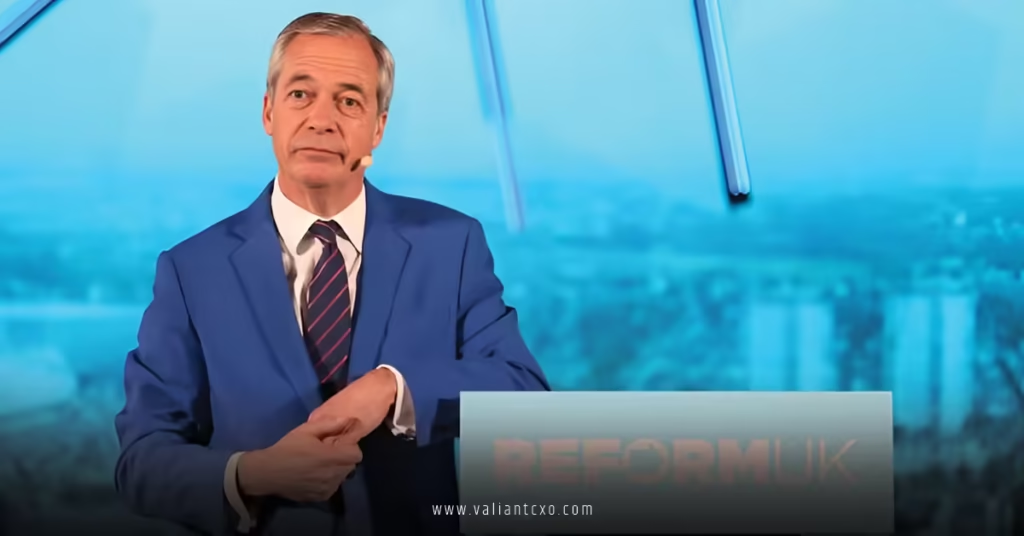
Farage has tried shifting Reform from “the Nigel show” toward a broader team. New faces get airtime. Policy units form. Yet the personal brand remains the rocket fuel. Defections from Conservatives and polling leads show the formula still delivers growth.
The Rupert Lowe Reform UK bullying allegations fallout served as a warning shot. Successful parties eventually outgrow founder dependence. Whether Farage can guide that transition without losing the magic defines the next chapter.
Read more on the Reform UK leadership tensions here.
Farage’s own take on building for power.
Background on the Clacton MP’s long game.
Key Takeaways
- Nigel Farage leadership style mixes exceptional communication with tight personal control.
- It delivers polling surges and agenda dominance but risks internal revolt.
- The Rupert Lowe split revealed limits of protest-mode leadership in scaling.
- Strengths include resilience, timing, and voter connection.
- Weaknesses centre on delegation and institutional depth.
- 2026 tests whether Farage can professionalise without losing his edge.
- Personal brands win battles; systems win wars.
- Watch local results and candidate quality for the real verdict.
Farage remains the most disruptive figure in UK politics. His style gets results where others falter. But turning that disruption into lasting institutions is the harder test ahead.
Study how he navigates the next round of elections. That will reveal if the leadership style evolves or stays locked in founder mode.
FAQs
How did the Rupert Lowe Reform UK bullying allegations impact Nigel Farage’s leadership style perception?
It amplified criticism that Farage runs a top-down, low-tolerance operation for internal dissent. Supporters saw decisive action; detractors saw insecurity about challenges to his authority.
What are the main strengths of Nigel Farage leadership style?
Unmatched ability to connect with disaffected voters, frame issues simply, and maintain relevance through multiple career setbacks. He turns cultural grievances into electoral energy.
Is Nigel Farage leadership style suited for government or better for opposition?
Many analysts argue it’s optimised for opposition and agenda-setting. The transition to governance will test whether the centralised, personality-driven model can build the structures needed for power.