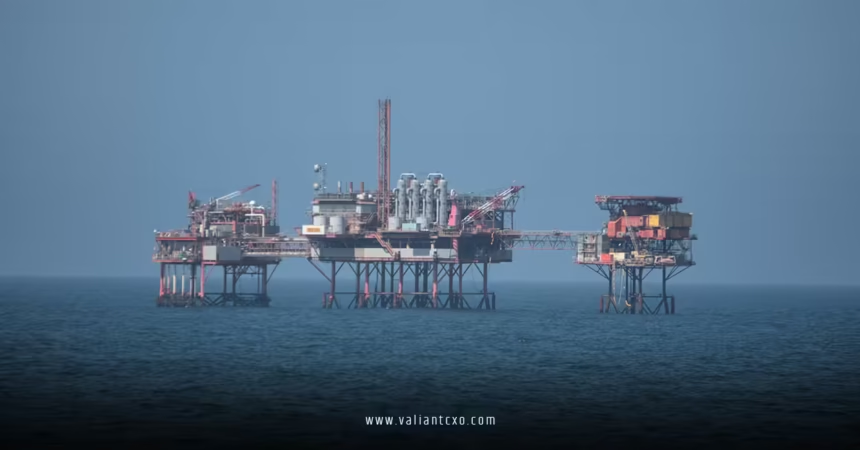
North Sea oil and gas downturn effects on UK fabrication have gutted yards, wiped out skilled jobs, and left communities reeling.
Fabrication businesses that once thrived on platform builds, subsea structures, and heavy engineering now scramble for scraps. The decline isn’t new, but it’s accelerated. Production has plummeted, investment dried up in places, and the energy transition adds another layer of pressure.
- Scale of the slump: North Sea jobs supported by the industry halved from around 441,000 in 2013 to roughly 214,000 by 2023, with ongoing losses.
- Fabrication impact: Yards face thin order books, closures, and pivots to decommissioning or renewables that often fall short.
- Real-world example: The Glacier Energy Manufacturing Limited administration Stockton closure 2025 shut a historic Teesside site just 14 months after acquisition, axing around 50 roles amid unsustainable losses.
- Why it matters now: Mature basin realities plus policy and market shifts mean fabrication must adapt fast or shrink further.
This hits the supply chain where it hurts most—high-value manufacturing that once powered regional economies.
How the North Sea Downturn Reshaped UK Fabrication
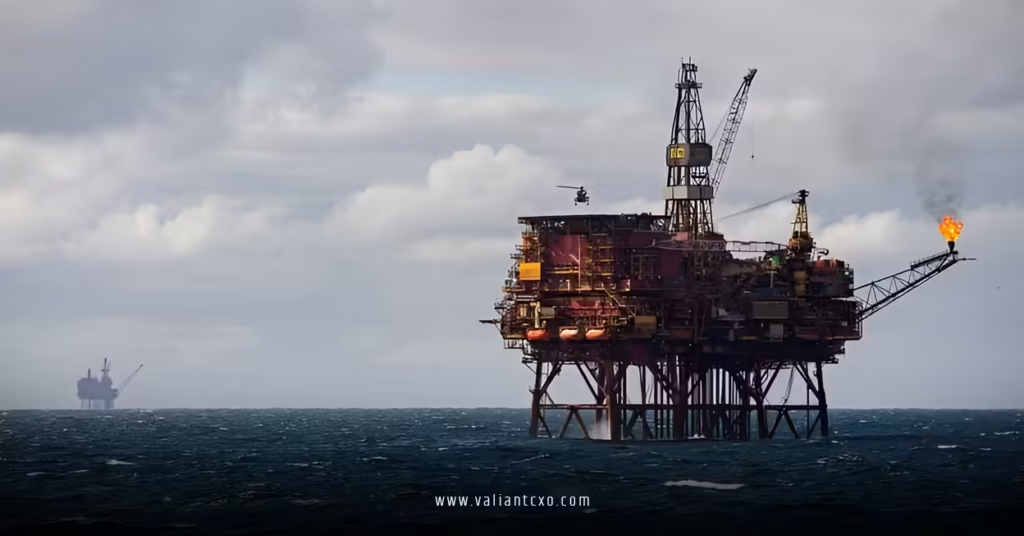
Fields deplete naturally. Production peaked decades ago and keeps falling. UK output in recent years sits far below 1999 highs, with over 85-93% of recoverable reserves already extracted in many estimates.
Fabricators felt it first. Big new builds dried up. Maintenance and tie-backs couldn’t fill the gap. Yards in Teesside, Aberdeen, and elsewhere saw layoffs, mothballed facilities, and desperate diversification attempts.
The Glacier Energy Manufacturing Limited administration Stockton closure 2025 perfectly illustrates the squeeze. Acquired in a pre-pack to boost capacity, the site still couldn’t weather weak North Sea demand and slow renewables uptake. Staff got sudden redundancy notices. No gentle phase-out.
Costs stayed sticky while revenues tanked. Fiscal regimes, global prices, and competition from overseas yards piled on.
Key Effects on Fabrication Businesses and Workers
Order books thinned dramatically. Capital projects stalled. Many yards shifted to decommissioning—lucrative short-term but not a growth engine.
Skilled welders, fitters, engineers, and project managers faced uncertainty. Wages stagnated in some areas. Families in energy-dependent towns dealt with real hardship.
| Impact Area | Pre-Downturn | Current Reality (2025-2026) | Fabrication-Specific Hit |
|---|---|---|---|
| Jobs Supported | ~441,000 (2013) | ~214,000 (2023), ongoing monthly losses | Direct yard redundancies + supply chain ripple |
| Major Projects | Frequent platform builds | Sparse; focus on maintenance/decomm | Reduced fabrication demand by 50%+ in peaks |
| Business Viability | Steady contracts | Closures like Stockton; pre-packs common | Unsustainable losses force admin |
| Transition Opportunities | Renewables promise | Slow materialization; skills mismatch | Yards chasing wind/CCUS work with mixed success |
Data from industry reports shows direct oil and gas extraction jobs dropped about a third in a decade. Fabrication, deeply embedded in the supply chain, took heavy collateral damage.
The kicker? Profits for some operators continued while communities and smaller suppliers bore the pain.
Step-by-Step Action Plan for Fabrication Pros and Yard Owners
Don’t wait for the next wave. Act now.
- Assess your exposure: Map contracts tied to North Sea oil/gas. Calculate runway if orders drop another 20-30%.
- Diversify aggressively: Target offshore wind foundations, hydrogen infrastructure, carbon capture modules, or defense work. Retrain teams on new standards.
- Build cash and skills buffers: Cut non-essentials. Invest in certifications for emerging sectors. Use government schemes for upskilling.
- Network and partner: Link with larger players or international projects. Join clusters in Teesside or Aberdeen pushing energy transition hubs.
- Advocate and monitor: Stay on top of policy like the Energy Profits Levy and net zero incentives. Engage with trade bodies.
For individuals hit by closures like the Glacier Energy Manufacturing Limited administration Stockton closure 2025, update CVs immediately, hit Jobcentre Plus, and leverage transferable skills in construction or renewables.
Common Mistakes & How to Fix Them
Mistake 1: Clinging to legacy oil/gas work exclusively. Fix: Run quarterly scenario planning. Test the business against 5-7% annual field decline rates.
Mistake 2: Underestimating transition timelines. Renewables ramp slower than hoped. Fix: Develop hybrid strategies—maintain core services while building new revenue streams.
Mistake 3: Ignoring worker morale and retention. Fix: Communicate transparently. Offer training pathways to keep talent.
Mistake 4: Poor financial oversight during thin times. Fix: Stress-test with conservative forecasts. Build 12-month reserves where possible.
One analogy rings true: UK fabrication yards navigating this downturn feel like veteran shipbuilders watching tides shift—adapt the fleet or watch it rust in dry dock.
Broader Economic Ripples Across the UK
Teesside, Aberdeen, and Humber regions suffer most. Hotels, suppliers, and local services feel the knock-on. Yet the basin still matters for energy security, providing a chunk of domestic supply even as imports rise.
Opportunities exist in decommissioning and green tech, but scaling them requires real investment and policy stability. UK Department for Energy Security and Net Zero data highlights the natural decline while signaling support for transition.
Key Takeaways
- North Sea oil and gas downturn effects on UK fabrication include slashed orders, yard closures, and major job losses over the past decade-plus.
- Production decline is geological and structural—over 75% drop from peak—exacerbated by prices, policy, and slow diversification.
- Cases like the Glacier Energy Manufacturing Limited administration Stockton closure 2025 show how quickly acquisitions can unravel without steady demand.
- Fabrication talent remains valuable but must pivot to renewables, decommissioning, and new energy infrastructure.
- Monthly job losses continue; proactive reskilling beats waiting for recovery.
- Supply chain resilience depends on domestic content policies and stable incentives.
- Communities face real challenges, but hybrid energy hubs offer a path forward if executed well.
- Monitor public data and act early—downturns reward the agile.
The North Sea won’t vanish overnight, but its glory days as a fabrication powerhouse are gone. Smart operators treat this as a pivot point, not an ending.
What skills from the old yards transfer best to the next energy buildout? And how fast can policy catch up to worker realities? Those answers will shape the UK’s industrial edge for years.
FAQs
How severe are North Sea oil and gas downturn effects on UK fabrication yards?
Severe and sustained. Fabrication demand dropped sharply with production declines, leading to closures, redundancies, and forced pivots, as seen in the Glacier Energy Manufacturing Limited administration Stockton closure 2025.
Can UK fabrication recover from the North Sea downturn?
Partial recovery is possible through decommissioning, offshore wind, and hydrogen work, but it requires reskilling, investment, and realistic timelines. Full return to past volumes is unlikely.
What should workers affected by fabrication closures like Glacier Energy do?
Prioritize benefits registration, skills audits for renewables, and networking. Transferable expertise in welding, fabrication, and project delivery remains in demand across energy sectors.