
Hey, if you’ve been following global markets lately, you’ve probably noticed how quickly oil prices can shake things up—especially for a country like Japan. The oil price impact on Japanese economy is massive because Japan imports almost all its energy needs. With recent spikes tied to geopolitical tensions (like the ongoing Iran crisis), it’s no surprise that economists are talking about growth risks, inflation pressures, and even delays in monetary policy shifts.
In this article, we’ll break down exactly how rising (or falling) oil prices ripple through Japan’s economy—from factories and households to the stock market and the Bank of Japan (BOJ). Whether you’re an investor watching the Nikkei or just curious about why energy news hits Japan so hard, stick around. We’ll keep it real, straightforward, and packed with the latest insights.
Japan’s Heavy Reliance on Imported Oil: The Core Vulnerability
Japan doesn’t produce much oil domestically—it’s one of the world’s top importers. Think about it: the country relies on imports for over 90-97% of its crude oil needs. A huge chunk—often 90-95% or more—comes straight from the Middle East, routing through chokepoints like the Strait of Hormuz.
This setup makes the oil price impact on Japanese economy brutally direct. When crude prices climb, import bills explode almost immediately. Japan has built up strategic reserves (enough for about three months of supply), but those are for true emergencies, not sustained high prices.
Why does this matter so much? Oil fuels manufacturing, transportation, electricity (even with nuclear and renewables in the mix), and everyday life. Higher costs get passed down the chain: factories pay more for energy, shipping expenses rise, and consumers feel it at the pump and in grocery bills. It’s like a slow-burning tax on the entire economy.
Direct Economic Effects: GDP Growth Takes a Hit
Let’s talk numbers—because the oil price impact on Japanese economy shows up clearly in growth forecasts.
Analysts estimate that a 10% rise in oil prices can shave roughly 0.1 percentage points off Japan’s real GDP. In prolonged scenarios—like disruptions around the Strait of Hormuz—some projections suggest a bigger drag, around 0.18% off GDP while adding upward pressure on inflation.
Why the hit? Higher energy costs squeeze corporate profits, especially in energy-intensive sectors. Manufacturers face tougher margins, exporters lose competitiveness if the yen strengthens as a safe-haven play, and overall demand softens as households cut back.
Japan’s economy is already navigating delicate recovery territory in 2026—moderate growth expected, but with risks from external shocks. Sustained high oil prices could tip things toward stagflation: sluggish growth paired with sticky inflation. Not fun for anyone.
Inflation Pressures: The Double-Edged Sword
Oil prices don’t just hurt growth—they fuel inflation, too. A sharp spike creates short-term “stagflationary risks,” pushing up costs for gasoline, electricity, heating, and goods transported by fuel-guzzling trucks or ships.
Japan’s headline inflation has hovered around or above the BOJ’s 2% target in recent times, often driven by energy and food swings. When oil jumps, energy inflation climbs fast, feeding into broader price increases.
But here’s the nuance: underlying inflation (excluding fresh food and energy) tends to behave differently. Government subsidies on fuel and energy bills have helped cushion blows lately, and measures like abolishing provisional gasoline taxes or easing household energy burdens are designed to blunt the sting.
Still, prolonged high prices complicate things. They widen trade deficits (Japan is a massive net importer), weaken the yen further in some scenarios, and make it harder for price stability to take root without aggressive policy moves.
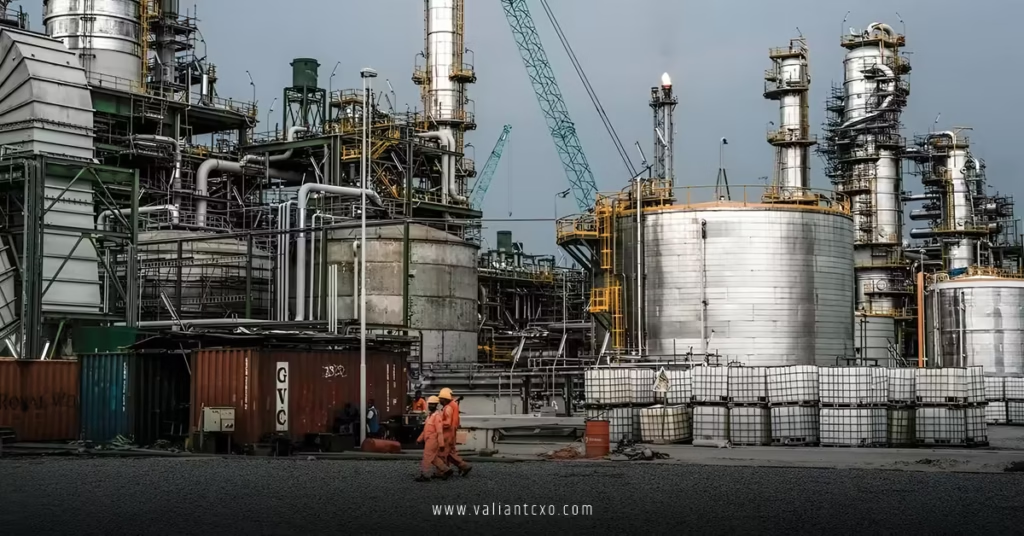
Sector Winners and Losers in the Oil Price Rollercoaster
Not every part of the economy suffers equally when oil prices rise. Some actually benefit.
Losers:
- Transportation and airlines: Fuel costs skyrocket.
- Manufacturing and exporters: Higher input costs eat into margins.
- Consumer-facing sectors: Households tighten belts, spending drops on non-essentials.
Winners (or relative survivors):
- Domestic energy producers and explorers (though limited in Japan).
- Certain industrial firms that make energy-efficient products—think advanced machinery or autos that gain market share when global energy costs rise.
Research shows that oil price increases driven by strong global demand can actually help Japanese exporters in competitive sectors like electronics and machinery. Higher world activity boosts orders for their goods, offsetting some pain.
But supply-driven spikes (like geopolitical disruptions) tend to hurt more broadly.
The Bank of Japan’s Tough Balancing Act
The BOJ watches oil prices like a hawk. The central bank targets around 2% inflation and has been gradually normalizing policy after years of ultra-loose settings.
High oil prices create a dilemma: they push up inflation (good for hitting the target) but risk hurting growth (bad for sustainable price rises). If a crisis keeps crude elevated, the BOJ might pause rate hikes—markets had eyed possible moves soon, but external shocks could delay that.
In calmer times, falling oil prices help ease inflationary pressures, letting the BOJ move more confidently toward a neutral stance. But with recent volatility, policymakers are stuck monitoring incoming data closely: wage growth, consumption trends, and yes—crude trajectories.
Link to Stock Markets: The Nikkei Connection
Rising oil prices often pressure Japanese stocks, especially export-heavy ones in the Nikkei 225. Higher costs crimp profits, and risk aversion can trigger sell-offs.
This ties directly into broader discussions like the Nikkei 225 impact of Iran crisis on Japan stocks—where geopolitical flares in the Middle East send oil surging and Tokyo’s benchmark tumbling. Airlines and manufacturers feel it first, while energy-related names might catch a bid.
Investors often rotate: defensive plays hold up better, and long-term holders look for dips if they believe tensions will ease.
Strategies for Businesses and Investors Amid Oil Volatility
How can Japan (and you) navigate this?
- Diversification: Japan is pushing to reduce Middle East dependency—boosting imports from the US, diversifying LNG sources, and ramping up renewables and efficiency.
- Hedging: Companies use futures or pass-through pricing.
- Policy buffers: Government subsidies and reserves buy time.
- Long-term shift: Accelerating the energy transition cuts vulnerability over time.
For investors: watch oil benchmarks, BOJ statements, and yen moves. Dips in quality stocks during spikes can be opportunities if fundamentals remain solid.
Conclusion: Why Oil Prices Remain a Make-or-Break Factor for Japan
Bottom line: the oil price impact on Japanese economy is profound and immediate. As a near-total importer with heavy Middle East reliance, Japan faces amplified risks from any supply shock or price surge—hitting GDP, inflating costs, complicating BOJ policy, and pressuring stocks.
Yet Japan has tools: reserves, subsidies, diversification efforts, and a resilient industrial base. Monitoring geopolitical developments (including those linked to the Nikkei 225 impact of Iran crisis on Japan stocks) will be key in 2026. Stay informed, diversify risks, and remember—energy transitions offer the ultimate path to greater stability.
Got questions? Here are some quick FAQs on the oil price impact on Japanese economy.
For deeper reading:
- Reuters on Japan growth risks from oil spikes
- Bank of Japan Outlook Reports
- EIA Japan Energy Analysis
FAQ :
FAQ 1: How much does a 10% oil price rise hurt Japan’s GDP?
Estimates suggest it shaves about 0.1% off real GDP, with bigger drags possible in prolonged disruptions.
FAQ 2: Why is Japan so vulnerable to oil price spikes?
Japan imports over 90% of its crude, mostly from the Middle East, making import costs and inflation highly sensitive to global prices.
FAQ 3: Does high oil help or hurt Japanese inflation?
It boosts headline inflation short-term (stagflation risk), but underlying trends depend on wages, subsidies, and policy responses.
FAQ 4: How does the BOJ respond to oil-driven inflation?
High prices might delay rate hikes to protect growth, while lower prices allow steadier normalization toward the 2% target.
FAQ 5: Are there positive effects from rising oil prices on some Japanese sectors?
Yes—global demand-driven spikes can benefit exporters in machinery, electronics, and energy-efficient products.