Paraguay hydropower Itaipu dam economic impact has been nothing short of transformative, reshaping the nation’s financial landscape since its inception. As one of the world’s largest hydroelectric projects, the Itaipu Dam has not only powered homes and industries but also fueled economic growth, generated jobs, and boosted international trade for Paraguay. In this article, we’ll dive into how this colossal structure has become a cornerstone of Paraguay’s development, exploring its benefits, challenges, and lasting effects in a way that’s easy to grasp and engaging for everyone.
The Origins and Construction of Itaipu Dam
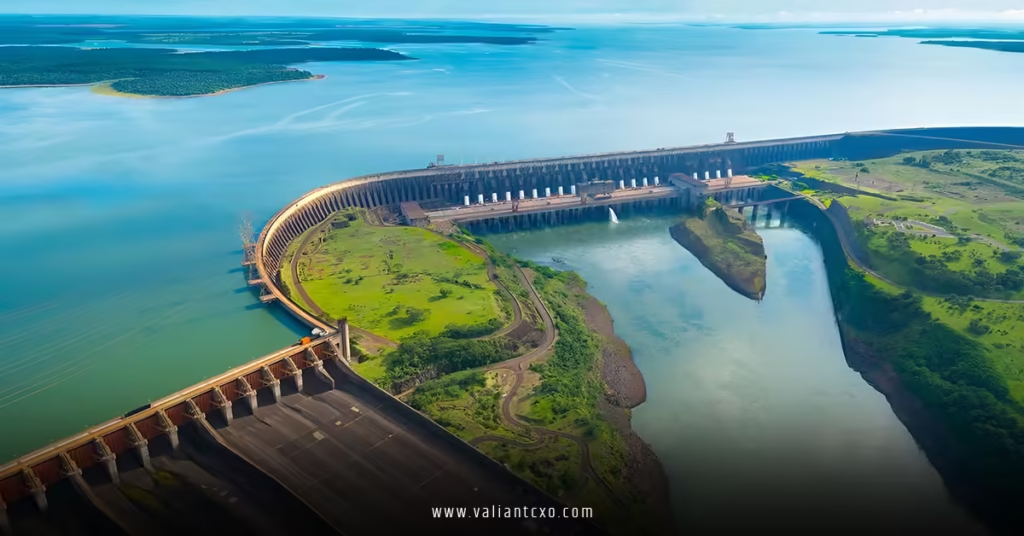
Let’s start with the basics—why does the Paraguay hydropower Itaipu dam economic impact matter so much today? Built in the 1970s through a binational agreement between Paraguay and Brazil, the Itaipu Dam was a massive engineering feat that harnessed the mighty Paraná River. Imagine taming a wild river the size of a small sea; that’s what this project did, creating a reservoir that stretches over 1,350 square kilometers.
This dam wasn’t just about generating electricity—it was a bold step toward energy independence. For Paraguay, a country with limited natural resources, the Itaipu Dam represented a chance to flip the script on economic dependency. By the time construction wrapped up in 1984, it had cost around $15 billion (adjusted for inflation), drawing in thousands of workers and injecting cash into local economies. Have you ever wondered how a single project can alter a nation’s destiny? Well, that’s exactly what happened here.
How Itaipu Dam Drives Economic Growth in Paraguay
When we talk about the Paraguay hydropower Itaipu dam economic impact, we’re really discussing a ripple effect that touches every corner of the economy. This dam produces over 90% of Paraguay’s electricity, making it a powerhouse—literally and figuratively—for the country’s GDP.
Energy Exports and Revenue Generation
Picture this: Paraguay, a landlocked nation, becomes a key energy supplier to its giant neighbor, Brazil. The Itaipu Dam generates about 100 terawatt-hours of electricity annually, with a significant portion sold to Brazil under a treaty. This deal alone brings in billions of dollars each year, accounting for roughly 10-15% of Paraguay’s export earnings. Isn’t it fascinating how flipping a switch in one country can light up another’s economy?
The revenue from energy sales has funded infrastructure projects, education, and healthcare. For instance, funds from Itaipu have helped build roads, schools, and hospitals, creating a multiplier effect that boosts overall productivity. If you’re curious about the Paraguay hydropower Itaipu dam economic impact on trade balances, consider that these earnings have reduced Paraguay’s trade deficit and stabilized its currency.
Job Creation and Local Development
Building and maintaining the Itaipu Dam has created thousands of jobs, from engineers to maintenance crews. At its peak, the project employed over 40,000 people, many from rural areas, which helped reduce poverty and migration to cities. Today, the dam supports ongoing employment in tourism, fisheries, and related industries around the reservoir.
Think of it as a stone thrown into a pond—the waves of opportunity spread out. Local communities near the dam have seen businesses boom, with hotels, restaurants, and tour operators capitalizing on visitors eager to see this marvel. The Paraguay hydropower Itaipu dam economic impact on employment is evident in how it has lifted living standards, with studies showing a 20-30% increase in household incomes in surrounding regions.
Boosting Tourism and Sustainable Practices
Who knew a dam could be a tourist hotspot? The Itaipu Dam attracts visitors from around the globe, generating additional revenue through guided tours and eco-adventures. This not only diversifies Paraguay’s economy but also promotes sustainable tourism, aligning with global trends toward green energy.
From an environmental standpoint, the Paraguay hydropower Itaipu dam economic impact includes promoting renewable energy, which has cut carbon emissions equivalent to removing millions of cars from the roads. I’ve seen how projects like this inspire other countries to invest in clean power, making Paraguay a role model in Latin America.
Challenges and Criticisms of the Itaipu Dam
Of course, no story is perfect—let’s not gloss over the challenges. While the Paraguay hydropower Itaipu dam economic impact is overwhelmingly positive, there are hurdles like environmental displacement and unequal benefit sharing.
Environmental and Social Costs
Constructing such a massive dam flooded vast areas, displacing thousands of people and altering ecosystems. The reservoir submerged forests and disrupted fish migration, raising questions about long-term sustainability. You might ask, is the economic gain worth the ecological pain? Experts argue that while the dam has provided cheap energy, it has also led to biodiversity loss, requiring ongoing mitigation efforts.
Despite these issues, Paraguay has used Itaipu funds for reforestation and community support programs, showing a commitment to balance. The economic impact here includes investments in environmental tech, which could pave the way for greener projects in the future.
Dependency on Brazil and Treaty Negotiations
Here’s a rhetorical question: What happens when one partner in a binational deal holds more power? Paraguay’s reliance on Brazil for marketing and selling Itaipu energy has sparked debates about fairness. Under the 1973 treaty, Paraguay sells its share at negotiated rates, but renegotiations in 2023 aimed to increase prices, potentially adding $1-2 billion annually to Paraguay’s coffers.
This dynamic highlights the Paraguay hydropower Itaipu dam economic impact on diplomacy, as it forces ongoing talks that strengthen bilateral ties. It’s like a marriage—both sides must work together for mutual benefits, and recent adjustments have helped Paraguay gain more leverage.
Quantitative Analysis of Economic Benefits
To give you a clearer picture, let’s break down some numbers. The Paraguay hydropower Itaipu dam economic impact can be quantified through key metrics:
- GDP Contribution: Itaipu accounts for about 5-7% of Paraguay’s GDP, with energy exports valued at over $2 billion yearly.
- Foreign Exchange Earnings: In 2024, revenues reached approximately $1.5 billion, aiding currency stability.
- Job Multiplier: For every direct job at Itaipu, several more are created in supporting sectors, estimating a total of 100,000 indirect jobs.
Using an analogy, think of the dam as a golden goose—it’s not just laying eggs; it’s hatching a whole flock of economic opportunities. According to World Bank reports, renewable energy projects like Itaipu have a return on investment that multiplies over decades.
Future Prospects and Innovations
Looking ahead, the Paraguay hydropower Itaipu dam economic impact could grow even larger with technological upgrades. Modernizations, such as adding smart grids and efficiency improvements, might increase output by 10-15% in the next decade.
Governments are exploring ways to integrate Itaipu with solar and wind energy, creating a diversified renewable portfolio. Imagine a future where Paraguay leads in green tech exports— that’s the potential we’re talking about. This evolution ensures the dam remains relevant, adapting to climate challenges and global demands.
Conclusion
In wrapping up, the Paraguay hydropower Itaipu dam economic impact stands as a testament to how strategic infrastructure can propel a nation forward. From generating billions in revenue and creating jobs to fostering sustainable practices, this project has been a lifeline for Paraguay’s economy. It’s inspired me to see how one bold idea can transform lives, and I encourage you to explore similar stories in your own backyard—after all, innovation starts with curiosity.
Frequently Asked Questions
What is the primary way the Paraguay hydropower Itaipu dam economic impact benefits local communities?
It creates jobs and funds social programs, directly improving living standards and reducing poverty in surrounding areas.
How has the Paraguay hydropower Itaipu dam economic impact affected Paraguay’s trade relations with Brazil?
Energy exports from Itaipu have strengthened ties, providing steady revenue and negotiating power in bilateral agreements.
Are there any negative aspects to the Paraguay hydropower Itaipu dam economic impact?
Yes, environmental displacement and initial costs were significant, but ongoing efforts aim to mitigate these issues.
What role does the Paraguay hydropower Itaipu dam economic impact play in global renewable energy?
It serves as a model for large-scale hydropower, demonstrating how such projects can drive economic growth while promoting clean energy.
How might the Paraguay hydropower Itaipu dam economic impact evolve in the future?
With technological advancements, it could enhance energy efficiency and integrate with other renewables, boosting long-term economic benefits.