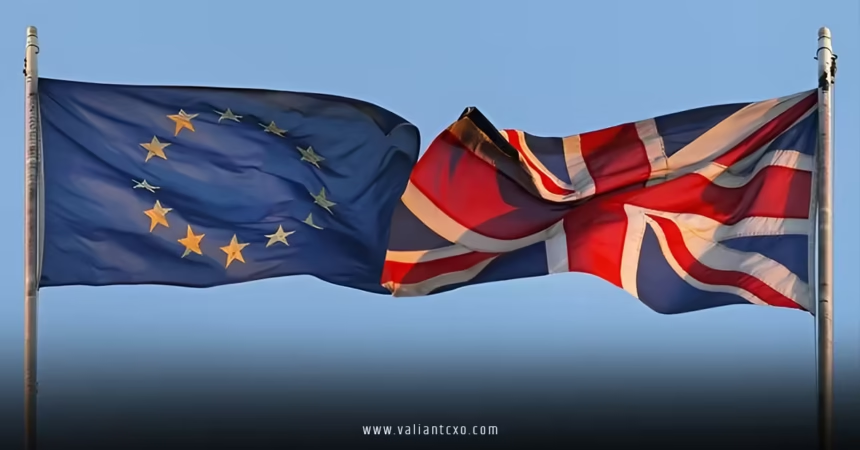
Post-Brexit UK-EU relations have entered a fascinating phase under Prime Minister Keir Starmer’s Labour government. Picture this: After years of frosty exchanges and hardline stances, we’re seeing genuine efforts to thaw the ice. But is it all smooth sailing, or are there still rocky waters ahead? From landmark summits to heated debates over specific deals—like the controversial keir starmer gibraltar border deal spanish guards permission brexit betrayal—the landscape is evolving rapidly. Let’s explore how these post-Brexit UK-EU relations are shaping up in late 2025.
The Shift in Post-Brexit UK-EU Relations Under Labour
When Labour swept to power in 2024, one of their big promises was a “reset” in post-Brexit UK-EU relations. Keir Starmer didn’t mince words: No rejoining the single market, customs union, or freedom of movement. Yet, he vowed to tear down unnecessary trade barriers and build stronger ties. Fast forward to now, and we’ve seen real movement.
Early in 2025, Starmer made headlines with visits to Brussels, joining EU leaders for dinners and discussions—a far cry from the isolation of previous years. Why the change? Geopolitics plays a huge role. With ongoing conflicts in Ukraine and uncertainties across the Atlantic, both sides realize cooperation isn’t just nice—it’s necessary.
Key Milestones in Post-Brexit UK-EU Relations
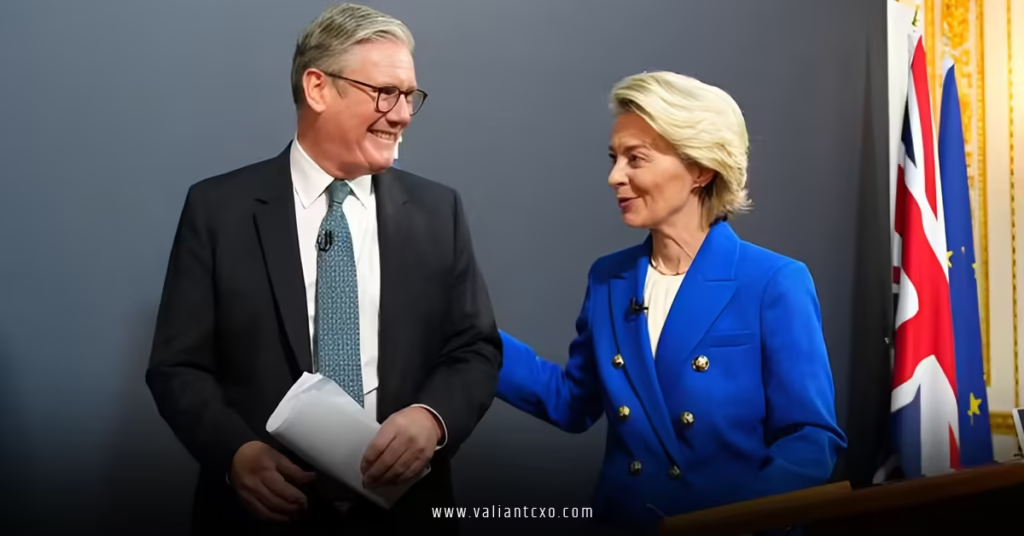
The standout moment? The inaugural UK-EU summit in May 2025 at Lancaster House. Starmer hosted Ursula von der Leyen and António Costa, hashing out a roadmap for closer collaboration. They covered everything from defence to emissions trading and youth mobility.
- Defence and Security Pact: A top priority. Starmer pushed for structured cooperation on threats like cyber attacks and migration, complementing NATO without overlapping.
- Trade Tweaks: Agreements on agri-food checks eased burdens, especially for Northern Ireland under the Windsor Framework.
- Fishing Rights: A thorny issue resolved with extended access until 2038, though it drew criticism for concessions.
Rhetorical question: Does this signal a true reset in post-Brexit UK-EU relations, or just pragmatic patching?
Economic Dimensions of Post-Brexit UK-EU Relations
Brexit hit the UK economy hard—weak goods exports, higher costs, and bureaucracy. Starmer’s team aimed to fix some of that without undoing the vote.
A big win was the veterinary (or sanitary and phytosanitary) agreement, reducing checks on food and animal products. This slashed red tape for exporters and helped stabilize prices. Think of it like removing speed bumps on a busy highway—traffic flows better, but you’re still on the same road.
Services, dominating the UK economy, saw less drama, but talks on professional qualifications recognition continue. And in December 2025, the UK rejoined the Erasmus student exchange program—a symbolic boost for young people, costing around £570m but bringing cultural and educational gains.
Yet challenges persist. Progress on a full-blown customs union? Not yet. Starmer’s red lines hold firm, frustrating some who see deeper integration as the fix for growth woes.
Controversial Flashpoints in Post-Brexit UK-EU Relations
No discussion of post-Brexit UK-EU relations is complete without touching on hot-button issues. Take the Gibraltar border deal: Critics labeled it the [keir starmer gibraltar border deal spanish guards permission brexit betrayal], arguing it allowed Spanish involvement in checks on British territory. Supporters saw it as essential for fluid borders and economic stability.
Similarly, fishing concessions sparked “sell-out” accusations from Brexiteers. Boris Johnson even quipped about Starmer turning the UK into Europe’s “gimp.” Ouch. These episodes highlight how post-Brexit UK-EU relations still stir domestic passions.
Analogy: It’s like divorcing but sharing custody of kids—practical arrangements are needed, but emotions run high.
Security and Geopolitical Ties in Post-Brexit UK-EU Relations
Amid global turbulence, security has been the low-hanging fruit. Starmer’s “NATO first” stance aligns with EU priorities, opening doors for joint efforts on Ukraine support, migration, and defence industry collaboration.
The May summit laid groundwork for a bespoke security pact. With potential shifts in US policy, Europe—including the UK—needs unity. Starmer’s invitations to informal EU summits underscore this.
But hurdles remain: Some EU states link progress to unresolved issues like fisheries or Gibraltar.
Political Reactions and Domestic Dynamics
Back home, post-Brexit UK-EU relations divide opinions. Conservatives cry “betrayal” over concessions, while Liberal Democrats push for bolder steps like a customs union. Reform UK capitalizes on any perceived softening.
Starmer walks a tightrope: Delivering benefits without reigniting Brexit wars. Public sentiment has shifted—many now view Brexit as a mistake—but rejoin talk is off the table.
Future Prospects for Post-Brexit UK-EU Relations
Looking ahead, 2026 brings the Trade and Cooperation Agreement review. Could it unlock bigger changes? Talks on youth mobility and emissions linking are ongoing.
Starmer’s approach: Incremental wins over grand reversals. As one ally put it, he’s mentioning closer EU ties in every speech now. But with economic pressures mounting, will ambition grow?
For deeper dives, check these sources:
- BBC News on UK-EU Summit Outcomes
- The Guardian on Erasmus Rejoining
- European Council on UK-EU Relations
Conclusion
Post-Brexit UK-EU relations under Starmer mark a pragmatic pivot from confrontation to cooperation. From summits and veterinary deals to Erasmus revival, tangible steps have eased frictions and opened opportunities. Yet controversies, like the [keir starmer gibraltar border deal spanish guards permission brexit betrayal], remind us old wounds linger. Ultimately, this reset prioritizes mutual benefits in a volatile world—boosting security, trade, and youth exchanges without rewriting Brexit. Will it deliver lasting growth and stability? Time will tell, but it’s a promising start. What aspects of these evolving ties intrigue you most?
FAQs
What are the main achievements in post-Brexit UK-EU relations in 2025?
Key wins include the May summit agreements on defence cooperation, veterinary deals reducing trade checks, extended fishing rights, and the December decision to rejoin Erasmus.
How has Keir Starmer approached post-Brexit UK-EU relations?
Starmer focused on a “reset” with pragmatic improvements like security pacts and barrier reductions, while firmly ruling out rejoining the single market or customs union.
Why is the Gibraltar deal relevant to post-Brexit UK-EU relations?
The agreement, criticized as [keir starmer gibraltar border deal spanish guards permission brexit betrayal] by some, resolved a lingering Brexit issue by enabling fluid borders without compromising sovereignty claims.
What challenges remain in post-Brexit UK-EU relations?
Domestic backlash over concessions, slow progress on ambitious trade fixes, and linking issues like fisheries to broader cooperation hinder faster advances.
How does rejoining Erasmus impact post-Brexit UK-EU relations?
It’s a symbolic and practical step enhancing cultural ties and youth opportunities, signaling warming relations without economic red lines.