PSG Tactical Evolution Under Luis Enrique has turned a star-heavy project into a cohesive, dangerous machine that’s winning in Europe. The Spanish coach took over in 2023 and steadily rebuilt the side around positional fluidity, high-intensity pressing, and collective responsibility instead of relying on individual brilliance.
PSG Tactical Evolution Under Luis Enrique stands out because it delivered the club’s first Champions League title in 2025 and positioned them as defending champions heading into the 2026 final against Arsenal. This isn’t just about results—it’s a fundamental shift in identity.
- From Galácticos to collective: Dropped heavy dependence on superstars for a versatile squad where players rotate positions seamlessly.
- Formation flexibility: Starts as 4-3-3 but morphs into 3-2-5 or 3-1-6 in possession with constant interchanges.
- Pressing and control: Aggressive high press combined with structured build-up and quick transitions.
- Midfield heart: Players like Vitinha and João Neves bring balance, energy, and intelligence that drive the system.
- Why it clicks now: Versatility creates chaos for opponents while maintaining underlying order—think “floaters and anchors.”
This evolution explains why PSG look so sharp against top sides and sets the stage for their Luis Enrique tactics against Arsenal Champions League final clash.
Early Days: Adapting to Post-Mbappé Reality
Luis Enrique arrived after the departures of Messi, Neymar, and eventually Mbappé. Many expected chaos. Instead, he enforced a clear philosophy: everyone works, everyone rotates, no one hides.
Early seasons focused on rebuilding habits. He demanded high work rates off the ball. Possession stayed high, but the team learned to press aggressively and recover quickly. The midfield got priority—signings and development turned it into the engine room.
Here’s the thing: Without one transcendent forward, PSG spread the creative load. Dembélé refined his decision-making. Newer faces like Barcola and Kvaratskhelia slotted into a fluid front line. The result? Less predictable, harder to stop.
Core Principles of the Current System
PSG Tactical Evolution Under Luis Enrique centers on controlled chaos. They build in a 4-3-3 or 4-2-3-1 base but shift shapes constantly.
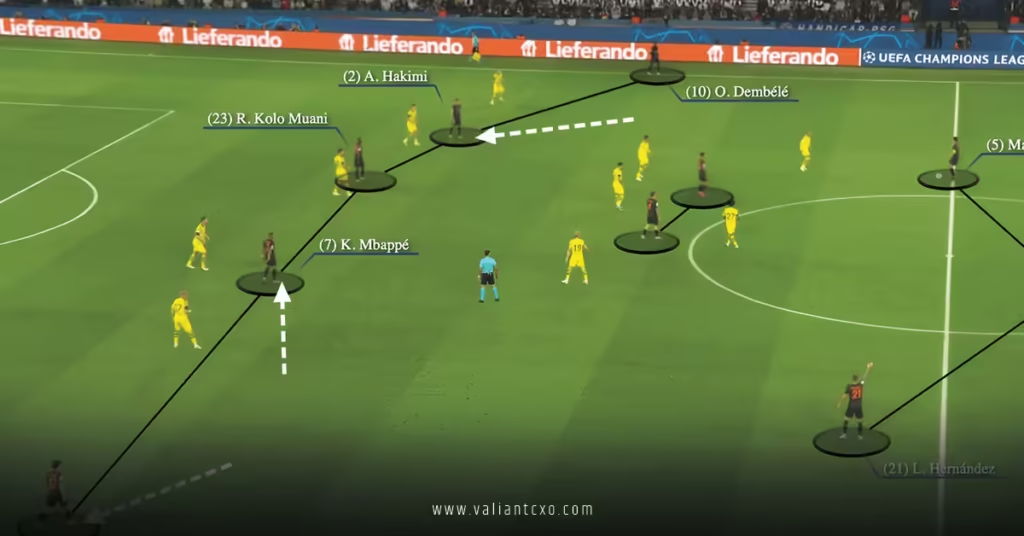
In possession, fullbacks push high or invert. One midfielder drops to form a 3-2-5. Wingers and forwards interchange freely—Dembélé cuts inside, others overload zones. This creates numerical superiorities almost everywhere.
Out of possession, they trigger presses on sideways passes or poor touches. Counter-pressing wins the ball high, leading to fast attacks. When needed, they drop into a compact block anchored by center-backs.
| Phase | Old PSG Approach | Enrique Era | Key Benefit |
|---|---|---|---|
| Build-up | Star-driven, direct | Patient + vertical options, inverted fullbacks | Better control, fewer turnovers |
| Attacking Shape | Static front three | Fluid rotations in 3-2-5 | Overloads and unpredictability |
| Pressing | Inconsistent | High-intensity, coordinated triggers | Regain ball in dangerous areas |
| Midfield | Defensive fillers | Dynamic creators (Vitinha, Neves) | Tempo control + progression |
| Defense | Vulnerable on transitions | Structured rest-defense | Resilience in big games |
How Rotations and Fluidity Define the Team
Enrique wants “20 players who can play everywhere.” His system uses constant positional swaps within a framework—anchors hold structure while floaters create threats.
This shows up clearest in wide areas and midfield triangles. Players make short combinations, then explode vertically. Opponents chase shadows. One moment it’s a winger dropping deep; next, a midfielder surges into the box.
Rhetorical question: How do you mark a player who keeps changing role every 30 seconds?
The 2025 Champions League run proved it works at the highest level. PSG mixed dominance with ruthless counter-attacking efficiency.
Midfield Revolution as the Foundation
No area improved more than the engine room. Vitinha became a conductor. João Neves adds steel and dynamism. Fabian Ruiz and others provide options. Enrique uses single or double pivots depending on the opponent, giving tactical flexibility.
This balance lets attackers roam freely. The midfield wins duels, progresses the ball, and covers when fullbacks bomb forward. It’s the glue holding the fluidity together.
For deeper insight into elite midfield setups, check resources from Total Football Analysis.
Step-by-Step: How Enrique Built This Machine
- Culture reset — Demand work rate and versatility from day one. No more passengers.
- Squad tailoring — Kept high-ceiling players who buy in (Dembélé thrived) and added smart, mobile profiles.
- Shape and principles — Drill 4-3-3 base with clear triggers for rotations and pressing.
- In-game adaptability — Halftime tweaks and opponent-specific adjustments became routine.
- Match practice — High-intensity sessions that mirror game chaos, including opposition in finishing drills.
What I’d do if building something similar: Start small with positional exercises in training, then layer in decision-making under fatigue. Film sessions on opponent reactions to rotations pay off huge.
Common Mistakes When Facing or Copying This System
Clubs often chase the rotations individually and collapse. Fix: Shift as a unit and maintain compactness.
Over-pressing without cover invites PSG’s vertical speed. Solution: Layer rest-defense and force play wide early.
Ignoring set-piece organization hurts too—PSG defend them better now but still target weak spots on the break.
Another trap? Assuming static marking works. It doesn’t against Enrique’s “choral choreography.”
Link to Big-Match Success: Luis Enrique Tactics Against Arsenal Champions League Final
This evolution peaks in high-stakes games. PSG’s ability to adapt shapes and intensity will define their approach in Budapest. Expect them to test Arsenal’s high line with runs in behind while using wide overloads to stretch the defense. The same fluidity that won the 2025 title now defends it.
Key Takeaways
- PSG Tactical Evolution Under Luis Enrique moved from superstar reliance to versatile, collective play.
- Fluid rotations in 3-2-5 shapes create constant overloads and confusion.
- Midfield control with intelligent signings forms the heartbeat.
- High pressing and quick transitions turn defense into instant attack.
- Adaptability in big matches separates them from previous versions.
- Structure prevents the fluidity from becoming chaos—”floaters and anchors.”
- Results speak: Domestic dominance plus back-to-back Champions League finals.
- The model rewards players who think and move as a unit.
Enrique didn’t just tweak PSG—he rebuilt their footballing DNA. The 2026 final against Arsenal will showcase years of patient work.
Next step: Watch PSG highlights with focus on off-ball movement. Pick one half and track just the midfielders. You’ll quickly spot the patterns that make this system special. Then apply those observation skills to other top teams.
FAQs
How has PSG Tactical Evolution Under Luis Enrique impacted their Champions League performances?
It delivered the 2025 title through better organization, pressing, and adaptability, turning them into back-to-back finalists.
What makes the current PSG system under Luis Enrique different from previous coaches?
Greater emphasis on positional rotations, collective work rate, and midfield dominance instead of individual stardom.
Can other clubs replicate aspects of PSG Tactical Evolution Under Luis Enrique?
Yes—focus on versatile players, clear pressing triggers, and structured rotations. The principles scale if the squad buys in.