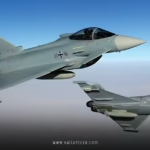
RAF Typhoon capabilities and specifications represent the cutting edge of modern air combat technology, powering Britain’s most advanced fighter aircraft through decades of successful operations. From intercepting Russian bombers over the North Sea to supporting NATO allies across Europe, the Eurofighter Typhoon has proven itself as one of the world’s most capable and versatile combat aircraft.
Here’s what makes the RAF Typhoon exceptional:
- Supersonic Performance: Mach 2+ speed with exceptional maneuverability at all altitudes
- Advanced Radar: CAPTOR-M AESA radar system with 200+ kilometer detection range
- Multi-Role Flexibility: Air-to-air superiority and precision ground attack capabilities
- Network Integration: Seamless connectivity with NATO command systems
- Combat Proven: Over 20 years of operational success in diverse mission profiles
Understanding RAF Typhoon Capabilities: More Than Just Speed
The Typhoon isn’t your grandfather’s fighter jet.
This aircraft represents a quantum leap in combat aviation—designed from the ground up for the modern battlefield. While earlier fighters excelled in specific roles, the Typhoon dominates across the entire spectrum of air operations.
Core Design Philosophy
The RAF Typhoon was built around three fundamental principles:
Agility: Unstable aerodynamic design requires constant computer correction, enabling impossible maneuvers Survivability: Low radar signature, advanced countermeasures, and exceptional situational awareness Adaptability: Modular systems allow rapid reconfiguration for different mission types
Think of it as a Swiss Army knife—if Swiss Army knives could break the sound barrier.
Complete RAF Typhoon Specifications Breakdown
Let’s dive into the numbers that matter.
Physical Dimensions and Performance
| Specification | Measurement |
|---|---|
| Length | 15.96 meters (52.4 feet) |
| Wingspan | 10.95 meters (35.9 feet) |
| Height | 5.28 meters (17.3 feet) |
| Maximum Speed | Mach 2.0+ (2,495 km/h) |
| Service Ceiling | 19,812 meters (65,000 feet) |
| Combat Range | 1,389 kilometers (863 miles) |
| Maximum Takeoff Weight | 23,500 kg (51,800 lbs) |
Engine Specifications
Powerplant: Two Eurojet EJ200 afterburning turbofans Thrust: 60 kN (13,500 lbf) dry / 90 kN (20,200 lbf) with afterburner per engine Fuel Capacity: 4,996 kg (11,015 lbs) internal fuel
The EJ200 engines deserve special mention. They’re not just powerful—they’re incredibly efficient and reliable. RAF maintenance crews consistently achieve over 95% availability rates, crucial for demanding operations like royal air force support to NATO air policing.
Advanced Avionics and Sensor Systems
Here’s where the Typhoon really shines. The avionics suite reads like science fiction.
CAPTOR-M AESA Radar
The heart of RAF Typhoon capabilities lies in its radar system:
- Detection Range: 200+ kilometers against fighter-sized targets
- Simultaneous Tracking: 20+ targets while engaging 8
- Electronic Counter-Countermeasures: Advanced resistance to jamming
- Ground Mapping: High-resolution synthetic aperture radar modes
Defensive Systems
Praetorian DASS (Defensive Aids Sub System):
- Radar warning receivers
- Missile approach warning
- Electronic countermeasures
- Chaff and flare dispensers
- Integrated threat assessment
The system works automatically. Pilot doesn’t need to think about it—the aircraft protects itself.
Helmet-Mounted Display System
RAF pilots wear the most advanced helmet in aviation:
- Helmet-Mounted Symbology System (HMSS): Projects flight data directly onto visor
- Off-Boresight Targeting: Lock onto targets without pointing the aircraft
- Night Vision Compatible: Seamless integration with night vision goggles
Weapons Systems and Combat Capabilities
RAF Typhoon specifications include an impressive weapons loadout that adapts to any mission.
Air-to-Air Arsenal
Beyond Visual Range:
- AMRAAM (AIM-120C): Primary medium-range missile
- Meteor: Next-generation ramjet missile with 100+ km range
Within Visual Range:
- ASRAAM (AIM-132): Advanced short-range air-to-air missile
- 27mm Mauser BK-27 cannon: 150 rounds
Air-to-Ground Capabilities
Precision Strike:
- Paveway IV: GPS/laser-guided bombs
- Brimstone: Anti-armor missiles with autonomous targeting
- Storm Shadow: Long-range cruise missiles
Unguided Munitions:
- General-purpose bombs up to 1,000 kg
- Cluster bomb units (when operationally required)
Maximum Weapons Load
The Typhoon can carry up to 7,500 kg (16,500 lbs) of weapons across 13 hardpoints—more than most dedicated attack aircraft.
Operational Performance in Real-World Scenarios
Numbers on paper mean nothing without proven performance. The RAF Typhoon has delivered consistently across diverse operational environments.
Quick Reaction Alert Performance
Scramble Time: 15 minutes from alarm to airborne Intercept Capability: Mach 1.6 cruise speed enables rapid area coverage Endurance: 3+ hours with external fuel tanks All-Weather Operation: Category III weather minimums
These capabilities prove essential during NATO air policing missions, where rapid response and sustained presence are critical.
Combat Record
Since entering service in 2003, RAF Typhoons have:
- Flown over 50,000 operational hours
- Achieved 95%+ mission success rates
- Operated in temperatures from -40°C to +50°C
- Maintained availability rates exceeding industry standards

Advanced Features That Set the Typhoon Apart
Supercruise Capability
Unlike most fighters, the Typhoon can maintain supersonic speed without afterburners. This “supercruise” capability:
- Extends range and reduces fuel consumption
- Maintains stealth by avoiding afterburner heat signature
- Enables sustained high-speed operations
Voice Throttle and Stick (VTAS)
Pilots control advanced systems through voice commands:
- Hands remain on flight controls during combat
- Reduced workload during high-stress situations
- Faster response times for time-critical functions
Direct Voice Input (DVI)
The aircraft recognizes pilot voice commands for:
- Radio frequency changes
- Weapons selection
- Navigation waypoint entry
- System status queries
It’s like having a conversation with your fighter jet.
Maintenance and Reliability Specifications
RAF Typhoon capabilities extend beyond performance to exceptional reliability.
Maintenance Requirements
Mean Time Between Failures: 4.5 flight hours Scheduled Maintenance Interval: Every 200 flight hours Engine Life: 6,000 flight hours between major overhauls Availability Rate: 92-95% fleet-wide
Built-In Test Equipment
The aircraft diagnoses itself:
- Automatic fault detection and isolation
- Real-time system health monitoring
- Predictive maintenance alerts
- Ground crew diagnostic interfaces
This self-monitoring capability keeps RAF Typhoons flying when other aircraft are grounded for maintenance.
Electronic Warfare and Countermeasures
Modern combat demands sophisticated defensive systems. The Typhoon delivers.
Electronic Counter-Countermeasures (ECCM)
- Frequency Agility: Radar hops between frequencies to avoid jamming
- Low Probability of Intercept: Difficult for enemies to detect radar emissions
- Adaptive Algorithms: System learns and counters new threat patterns
Integrated Defensive Systems
Everything works together seamlessly:
- Radar warning feeds threat data to countermeasures
- Missile approach warnings trigger automatic defensive responses
- Electronic warfare systems coordinate with kinematic maneuvering
Network-Centric Warfare Capabilities
The RAF Typhoon isn’t just a fighter—it’s a networked sensor and weapons platform.
Link 16 Data Network
Real-Time Information Sharing:
- Position and status of friendly forces
- Threat identification and tracking
- Coordinated engagement planning
- Battle damage assessment
Multifunctional Information Distribution System (MIDS)
Enables secure communication with:
- Other NATO aircraft
- Ground-based command centers
- Naval vessels
- Allied forces
This connectivity proves crucial during multinational operations and explains why RAF Typhoons integrate so effectively in royal air force support to NATO air policing missions.
Step-by-Step: How RAF Typhoon Systems Work Together
Understanding how these specifications translate into operational capability requires seeing the big picture.
Mission Planning Phase
- Threat Assessment: Intelligence systems identify potential targets and threats
- Route Planning: Navigation computers calculate optimal flight paths
- Weapons Loading: Ground crews configure aircraft for specific mission requirements
- Systems Check: Built-in test equipment validates all systems functionality
Pre-Flight Preparation
- Pilot Briefing: Mission parameters loaded into aircraft systems
- Communication Setup: Radio frequencies and encryption keys programmed
- Sensor Calibration: Radar and defensive systems aligned and tested
- Weapons Arming: Safety systems configured for operational requirements
In-Flight Operations
- Takeoff and Climb: Fly-by-wire system optimizes performance automatically
- En-Route Navigation: GPS and inertial systems provide precise positioning
- Target Acquisition: CAPTOR radar detects and tracks multiple threats
- Engagement Decision: Pilot selects weapons and engagement parameters
- Weapons Release: Advanced fire control ensures accurate delivery
- Battle Damage Assessment: Sensors evaluate engagement effectiveness
Return and Recovery
- Mission Data Download: Aircraft transfers flight data for analysis
- System Status Review: Maintenance crews assess aircraft condition
- Refuel and Rearm: Ground crews prepare aircraft for next mission
- Maintenance Actions: Any required repairs or inspections completed
Common Misconceptions About RAF Typhoon Specifications
Misconception #1: “The Typhoon is primarily an air-to-air fighter” Reality: Modern RAF Typhoons excel equally in air-to-ground roles, with advanced targeting systems and precision weapons.
Misconception #2: “Typhoon specifications are inferior to F-22 Raptor” Reality: Different design priorities make direct comparison meaningless. Typhoons prioritize multi-role flexibility over pure stealth.
Misconception #3: “The aircraft is too complex for reliable operation” Reality: Advanced diagnostics and maintenance systems actually improve reliability compared to older fighters.
Misconception #4: “RAF Typhoons lack modern upgrade potential” Reality: Modular architecture enables continuous capability upgrades throughout the aircraft’s service life.
Future Upgrade Programs and Enhanced Capabilities
RAF Typhoon specifications continue evolving through planned enhancement programs.
Project Centurion
This comprehensive upgrade includes:
- Enhanced radar processing: Improved target detection and tracking
- Advanced electronic warfare: New countermeasures against emerging threats
- Updated weapons integration: Compatibility with next-generation missiles
- Improved pilot interfaces: Enhanced situational awareness displays
ECRS Mk2 Radar
The next-generation radar system provides:
- 10x processing power increase
- Enhanced electronic attack capabilities
- Improved ground surveillance modes
- Extended detection ranges
Weapons Integration
Future capabilities include:
- Spear Cap 3: Precision strike missiles with autonomous targeting
- ASRAAM Block 6: Enhanced short-range air-to-air missiles
- Future Combat Air System integration: Connectivity with unmanned platforms
Key Takeaways
- Unmatched Versatility: RAF Typhoon specifications enable success across all mission types
- Proven Reliability: Exceptional availability rates demonstrate robust engineering
- Network Integration: Advanced communication systems enable effective multinational operations
- Continuous Evolution: Ongoing upgrades ensure relevance against future threats
- Combat Effectiveness: Real-world performance validates design specifications
- Maintenance Efficiency: Built-in diagnostics reduce downtime and costs
- Pilot Safety: Comprehensive defensive systems protect aircrew in hostile environments
- Strategic Value: Capabilities justify continued investment in platform development
Action Plan: Understanding Typhoon Capabilities
For Military Professionals: Study the integration between systems—it represents the future of combat aircraft design.
For Defense Analysts: Focus on the upgrade potential and network-centric capabilities when evaluating long-term platform viability.
For Aviation Enthusiasts: Appreciate how advanced engineering translates into operational capability and strategic deterrence.
The RAF Typhoon proves that superior specifications mean nothing without proven performance. After two decades of operations, these aircraft continue exceeding expectations across diverse operational environments.
Conclusion
RAF Typhoon capabilities and specifications represent the pinnacle of European fighter aircraft engineering. From supersonic performance to advanced defensive systems, every aspect of the aircraft reflects careful design optimization for modern combat requirements. The proven track record across operations from Libya to the Baltic demonstrates that impressive specifications translate into real-world effectiveness.
As threats evolve and technology advances, the Typhoon’s modular architecture ensures continued relevance well into the 2040s. The combination of current capabilities and future upgrade potential makes the RAF Typhoon an exceptional investment in British air power.
These specifications aren’t just numbers—they represent the foundation of Britain’s air defense capabilities for decades to come.
Frequently Asked Questions
Q: How do RAF Typhoon capabilities compare to the F-35 Lightning II?
A: The Typhoon excels in air superiority and sustained flight performance, while the F-35 prioritizes stealth and ground attack. Both aircraft complement each other in RAF service.
Q: What makes the Typhoon’s radar system superior to older fighter aircraft?
A: The CAPTOR-M AESA radar provides simultaneous multi-target tracking, electronic counter-countermeasures resistance, and ground mapping capabilities that older mechanically-scanned radars cannot match.
Q: Can RAF Typhoon specifications be customized for different mission requirements?
A: Yes, the modular design allows mission-specific configurations through software updates, weapons loading changes, and external pod installations without structural modifications.
Q: How long can a Typhoon remain airborne during patrol missions?
A: With external fuel tanks, RAF Typhoons can patrol for over 4 hours, though typical air policing missions last 2-3 hours to maintain pilot alertness.
Q: What training do RAF pilots need to master Typhoon capabilities and specifications?
A: Pilots complete an 18-month training program including simulator instruction, academic coursework, and progressive flight training before achieving combat readiness on the Typhoon.