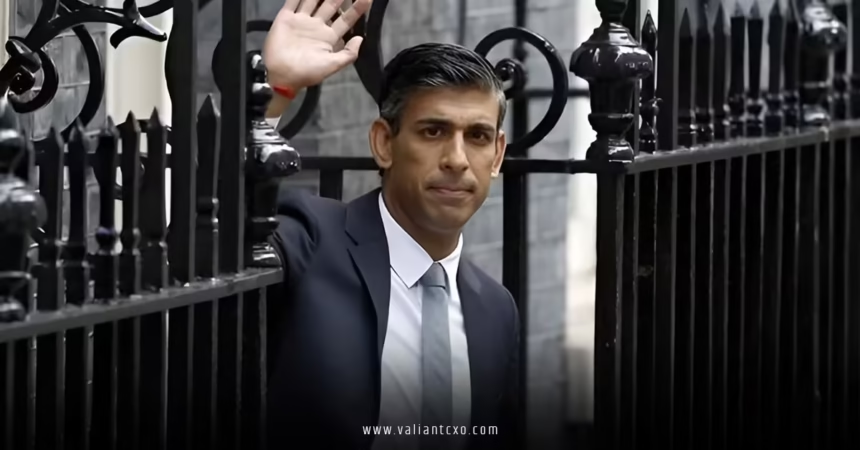
Rishi Sunak inflation control strategies became a cornerstone of his premiership. As UK Prime Minister from October 2022, Sunak made halving inflation his top priority in January 2023, pledging to reduce it from over 10% to around 5% by year-end. This commitment not only eased the cost-of-living crisis but also formed part of his broader economic plan. Understanding these Rishi Sunak inflation control strategies reveals a mix of fiscal discipline, support for independent monetary policy, and targeted household relief.
The Pledge to Halve Inflation: A Key Economic Priority
Rishi Sunak Inflation Control Strategies:When Rishi Sunak took office, UK inflation had peaked at 11.1% in October 2022, driven by soaring energy prices following Russia’s invasion of Ukraine. In his first major speech of 2023, Sunak outlined five pledges, with halving inflation as the primary goal. He aimed to bring the Consumer Prices Index (CPI) rate down to 5.3% or lower by the end of 2023, starting from 10.7% in late 2022.
By November 2023, inflation fell to 4.6%, allowing Sunak to declare the pledge met. It continued declining, reaching 2.3% by April 2024—close to the Bank of England’s 2% target. This success provided relief to households facing higher bills and mortgage costs.

Core Elements of Rishi Sunak’s Inflation Control Strategies
Sunak’s approach emphasized responsible fiscal management rather than direct intervention, recognizing the Bank of England’s independence in setting interest rates.
1. Supporting the Bank of England’s Monetary Policy
The primary tool for controlling inflation was the Bank of England’s interest rate hikes. During Sunak’s tenure, the base rate rose from around 3% to a peak of 5.25% through 14 consecutive increases. Sunak consistently backed these decisions, stating they were essential to curb demand and bring prices under control.
While the government does not set rates, Sunak ensured fiscal policy complemented the Bank’s efforts by avoiding measures that could fuel inflation, such as unfunded tax cuts.
2. Fiscal Discipline and Responsible Borrowing
Sunak prioritized “hard decisions and fiscal discipline.” This included:
- Avoiding excessive borrowing that could exacerbate inflation.
- Resisting large public sector pay rises during strikes, to prevent wage-price spirals.
- Maintaining control over public spending to support the Bank’s anti-inflation efforts.
These steps helped stabilize markets after the 2022 mini-budget turmoil under Liz Truss.
3. Energy Price Support and Cost-of-Living Measures
To mitigate immediate impacts, the government introduced the Energy Price Guarantee, capping household energy bills and preventing even sharper inflation spikes. Additional support included cost-of-living payments and windfall taxes on energy firms.
These interventions shielded vulnerable households while allowing base effects (e.g., falling energy prices) to naturally reduce headline inflation.
Outcomes and Criticisms of Sunak’s Strategies
The Rishi Sunak inflation control strategies succeeded in meeting the halving pledge, with much of the drop attributed to global factors like lower energy costs and the Bank’s rate hikes. Critics noted limited direct government influence, but Sunak argued fiscal restraint played a supportive role.
The broader Impact of Rishi Sunak Policies on British Economy extended beyond inflation, influencing growth, debt, and public services amid challenging conditions.
Conclusion: Lessons from Rishi Sunak’s Inflation Battle
Rishi Sunak’s inflation control strategies demonstrated a balanced approach: backing independent monetary policy, enforcing fiscal responsibility, and providing targeted relief. While global factors aided the decline, these measures helped restore economic stability. For those interested in the full picture, explore the overall Impact of Rishi Sunak Policies on British Economy.
By focusing on long-term discipline, Sunak’s government navigated one of the UK’s toughest economic periods in decades. Keywords like Rishi Sunak inflation control strategies highlight how leadership and prudence can address inflationary pressures effectively.
Frequently Asked Questions about Rishi Sunak’s Inflation Control Strategies
What was Rishi Sunak’s main pledge regarding inflation?
In January 2023, Prime Minister Rishi Sunak made halving inflation his top priority, aiming to reduce the Consumer Prices Index (CPI) rate from over 10% to around 5% or lower by the end of 2023. This was one of his five key pledges to voters.
Did Rishi Sunak succeed in halving inflation?
Yes, the pledge was met. Inflation fell to 4.6% in November 2023 and averaged around 4.2% in the final quarter of 2023, successfully halving it from the 10.7% level at the end of 2022.
What were the key strategies used by Rishi Sunak to control inflation?
Sunak’s approach focused on fiscal discipline, supporting the Bank of England’s independent interest rate decisions (which peaked at 5.25%), avoiding excessive borrowing or unfunded spending, and providing targeted relief like the Energy Price Guarantee to cap household bills without fueling further inflation.
How much credit does Rishi Sunak’s government deserve for reducing inflation?
While Sunak highlighted fiscal restraint and “hard decisions,” much of the decline was driven by global factors, such as falling energy prices after the 2022 spike from Russia’s invasion of Ukraine, and the Bank of England’s rate hikes. Critics argue the government’s direct influence was limited, though supportive policies helped.
What was the long-term impact of Rishi Sunak’s inflation policies on the UK economy?
The strategies contributed to stabilizing inflation near the 2% target by mid-2024, providing cost-of-living relief. However, high interest rates slowed growth. For a broader view, read more on the Impact of Rishi Sunak Policies on British Economy.