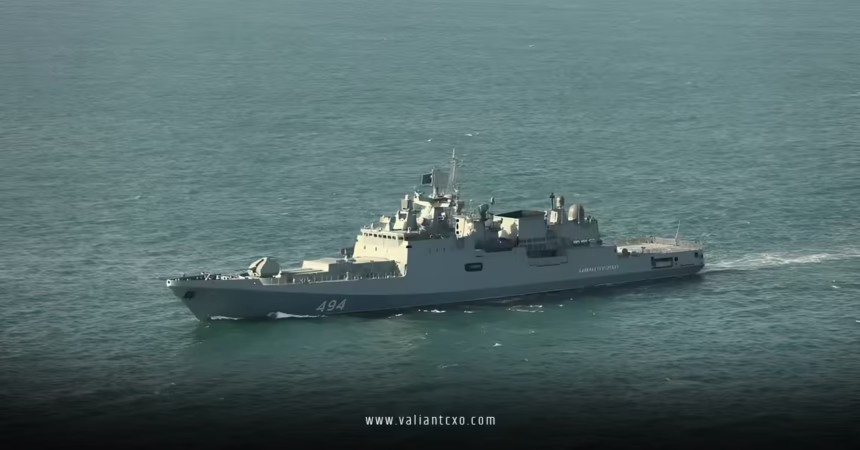
Russian warship Admiral Grigorovich fires warning shots at UK yacht Bright Future English Channel June 2026. The incident unfolded on June 16 around 11:40 a.m., roughly 20-23 nautical miles south of the Isle of Wight. A Russian frigate and a British civilian sailing yacht came dangerously close in busy waters. No one was hurt. No damage reported. But the event lit up headlines and raised fresh questions about naval tensions.
- What happened: The Admiral Grigorovich fired small-arms warning shots after the 40-foot yacht Bright Future approached closely. Russia claims the yacht ignored radio contact and headed on a collision path, closing to about 150 meters. UK officials say the shots aimed to avoid a crash after failed communication attempts; the yacht wasn’t on a direct collision course.
- Who was involved: Retired British couple Jane and Alan Kelvey sailed the Bright Future. They described the experience as “surreal” but stayed calm.
- Why it matters: This rare close encounter in the English Channel comes days after UK forces boarded a Russian shadow fleet tanker, highlighting ongoing friction over sanctions and maritime operations.
- Immediate outcome: The yacht changed course and continued. UK authorities are investigating; both sides frame it as precautionary rather than aggressive.
The kicker? In crowded shipping lanes like the Channel, one wrong move can escalate fast.
Background on the Vessels and Location
The Admiral Grigorovich is a Project 11356M frigate in the Russian Navy. It carries Kalibr missiles, surface-to-air systems, and torpedoes. It’s been operating in the region, often shadowing or escorting other Russian vessels through the Channel.
The Bright Future, a private UK-flagged yacht, carried the Kelveys from Lymington. They were sailing under sail power, possibly drifting at times. The English Channel ranks among the world’s busiest waterways. Thousands of commercial ships pass daily alongside fishing boats, ferries, and leisure craft.
Maritime Incident Quick Facts
| Aspect | Details | Source Context |
|---|---|---|
| Date & Time | June 16, 2026, ~11:40 a.m. | UK & Russian reports |
| Location | 20-23 nm south of Isle of Wight | BBC, Sky News |
| Vessels | Admiral Grigorovich (frigate) vs. Bright Future (yacht) | Multiple outlets |
| Shots Fired | Small arms warning shots, not aimed at yacht | UK MoD statement |
| Distance | Approached ~150 meters (Russian claim) | Russian Defense Ministry |
| Injuries/Damage | None | All reports |
| Crew on Yacht | Jane & Alan Kelvey (retired couple) | BBC interviews |
This table cuts through the noise. Facts line up on the basics, but interpretations differ sharply.
What Triggered the Russian Warship Admiral Grigorovich Fires Warning Shots at UK Yacht Bright Future English Channel June 2026
Accounts diverge. Russia’s Defense Ministry stated the Bright Future followed a “dangerous course,” ignored warnings including radio and flares, and kept closing in. The frigate’s commander then ordered warning fire along its path. The yacht altered course afterward.
UK sources, including the Ministry of Defence, noted attempts to contact the yacht failed. Shots prevented a possible collision. The Kelveys insist they were not on a collision path and the Russian vessel may have been drifting, perhaps with engine issues. Jane Kelvey called it surreal.
Here’s the thing: In international waters, COLREGs (International Regulations for Preventing Collisions at Sea) govern actions. Warning shots serve as a last-resort signal when communication breaks down. But firing near a civilian vessel always grabs attention—especially amid broader UK-Russia strains.
What would you do if a massive warship loomed up while you’re out for a peaceful sail?
Broader Context and Tensions
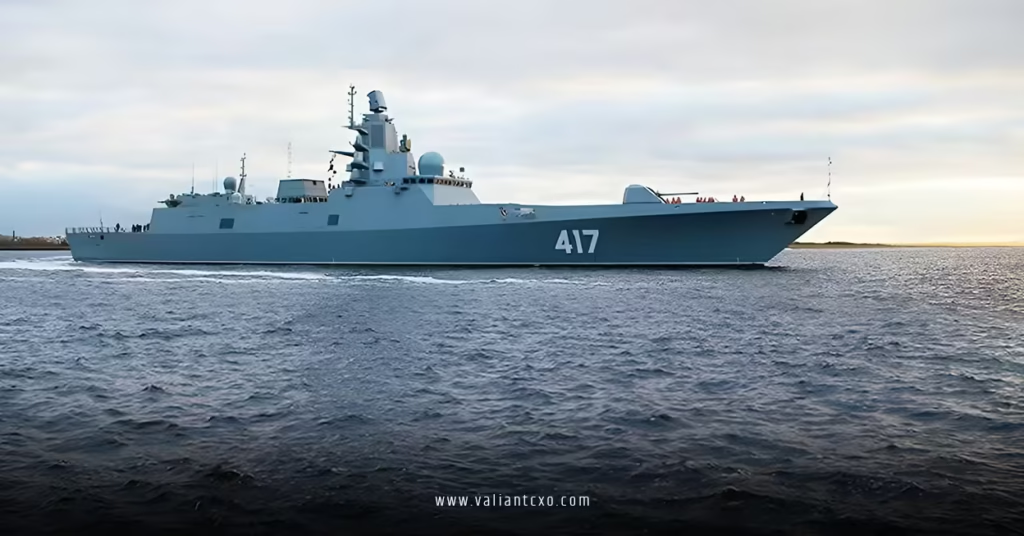
This wasn’t isolated. UK forces recently seized a vessel linked to Russia’s shadow fleet, used to evade oil sanctions. The Admiral Grigorovich has been active in the area for months, part of a pattern of Russian naval presence near UK waters. Analysts see it as probing or signaling.
For beginners tracking geopolitics, these incidents reveal how maritime domains become pressure points. One frigate. One yacht. Global ripples.
Step-by-Step Guide: How Beginners Can Stay Informed on Naval Incidents Like This
- Follow primary sources — Check UK MoD, BBC, or Reuters first. Avoid jumping to unverified social media clips.
- Understand the rules — Read up on COLREGs and maritime law basics via official sites like IMO (International Maritime Organization).
- Cross-check claims — Compare Russian and Western statements. Look for what both sides agree on (no injuries here).
- Monitor vessel tracking — Tools like MarineTraffic show public AIS data, though warships often limit it.
- Context matters — Note surrounding events, like shadow fleet actions or sanctions.
- What I’d do — Set up alerts for “English Channel incidents” or “Russian Navy UK.” Stay skeptical of sensational headlines.
In my experience, the first 24 hours bring chaos. Solid info emerges later.
Common Mistakes & How to Fix Them
People often treat these stories like action movies. Mistake one: Assuming aggression without evidence. Fix: Stick to official statements and eyewitness accounts. The shots here were warnings, not direct fire.
Mistake two: Ignoring maritime realities. Busy waters demand vigilance. Fix: If sailing, maintain radio watch, proper lights/signals, and give big ships wide berth.
Mistake three: Overreacting to every patrol. Russian ships transit the Channel regularly under international law. Fix: Differentiate routine presence from escalations.
Another pitfall? Echo chambers. Seek balanced reporting from outlets like BBC or Sky for clearer pictures.
Why This Incident Stands Out
It’s not every day a warship fires near civilians in such a high-traffic zone. The Admiral Grigorovich fires warning shots at UK yacht Bright Future English Channel June 2026 underscores vulnerabilities in shared seas. Leisure sailors mix with military assets. Communication fails. Tensions simmer.
Think of it like two drivers on a narrow road—one a tank, the other a bicycle. Rules exist, but misjudgments happen.
Key Takeaways
- No casualties or damage occurred despite the close encounter.
- Conflicting narratives highlight the need for careful verification.
- The English Channel remains a strategic chokepoint where naval posturing meets civilian traffic.
- International maritime rules provide frameworks, but enforcement relies on good faith.
- Recent shadow fleet actions add fuel to UK-Russia maritime friction.
- Civilian sailors should prioritize awareness and communication near large vessels.
- This serves as a reminder: Geopolitical ripples reach everyday waters.
- Monitoring such events helps understand bigger security dynamics without panic.
Final thoughts: Safety in these waters depends on clear protocols and calm heads. Stay informed, support transparent investigations, and push for de-escalation where possible. Next step? Follow reliable maritime news sources and consider basic COLREGs knowledge if you sail or travel by sea. Knowledge beats speculation every time.
FAQs
What exactly caused the Russian warship Admiral Grigorovich fires warning shots at UK yacht Bright Future English Channel June 2026?
Failed communication and close proximity. Russia cites a dangerous approach by the yacht; UK officials point to collision avoidance after contact attempts failed. The Bright Future was about 150 meters away per Russian accounts.
Were Jane and Alan Kelvey injured in the incident with Admiral Grigorovich?
No. The retired couple on the Bright Future reported no injuries or damage. They described the warning shots as surreal but continued their journey.
Does the Admiral Grigorovich fires warning shots at UK yacht Bright Future English Channel June 2026 signal bigger conflict?
It reflects heightened tensions but both sides downplay it as an isolated safety measure. No escalation followed immediately. Experts call for robust but measured responses.