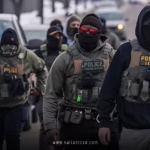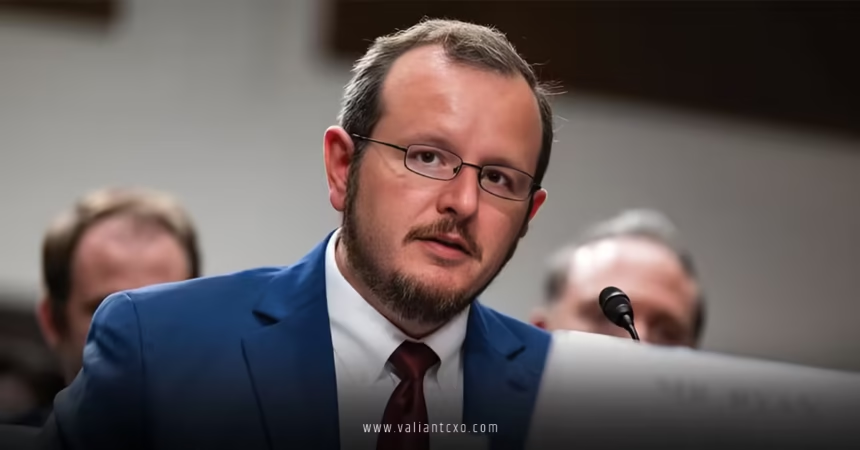
Ryan Schwank whistleblower congressional hearing transcript analysis uncovers a troubling picture of rushed changes inside Immigration and Customs Enforcement (ICE) that could put public safety and constitutional rights at risk. Picture this: a dedicated government lawyer, sworn to uphold the law, watches his own training program get chopped apart like a bad haircut—hours slashed, key lessons vanished, and secretive instructions creeping in that clash with basic rights. That’s the core of what Ryan Schwank laid bare in his testimony on February 23, 2026. As someone who’s followed government accountability issues closely, I find this story hits hard because it’s not abstract policy debate; it’s about real officers on the street, families facing raids, and whether the system still respects the rules we all expect.
In this Ryan Schwank whistleblower congressional hearing transcript analysis, we’ll walk through who he is, what he actually said (drawing from public reports and video coverage of the event), the bombshell details on training cuts, the constitutional concerns, and why this matters right now. We’ll keep it straightforward, relatable, and packed with context so you can decide for yourself what’s going on.
Who Is Ryan Schwank? The Insider Turned Whistleblower
Let’s start with the basics in our Ryan Schwank whistleblower congressional hearing transcript analysis. Ryan Schwank isn’t a random critic—he’s a former ICE attorney who joined the agency in 2021. He handled immigration cases as assistant chief counsel, worked on-site at a family detention facility in Texas, and later became an instructor at the ICE academy run through the Federal Law Enforcement Training Center in Glynco, Georgia. This place trains new deportation officers, teaching them everything from legal standards to safe firearm handling.
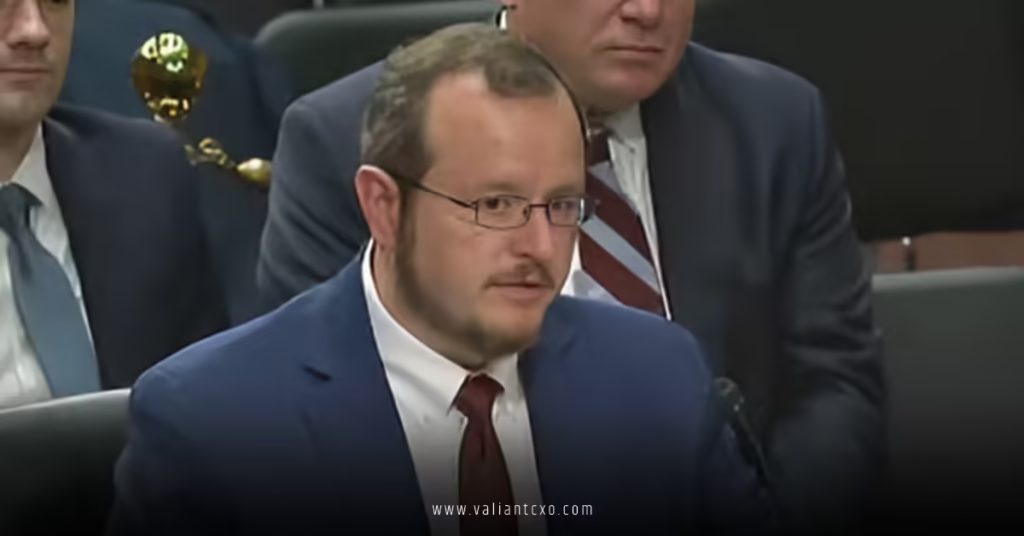
Schwank resigned on February 13, 2026, explicitly “in protest,” according to accounts from congressional staff and his own statements. Why quit a stable job? He says he couldn’t stomach what he saw happening to the training program he was supposed to deliver. On February 23, he testified publicly at a bicameral forum hosted by Sen. Richard Blumenthal (D-CT) and Rep. Robert Garcia (D-CA). This wasn’t a full committee hearing but part of a series spotlighting alleged ICE abuses under the current administration’s push for mass deportations and rapid hiring.
Schwank appeared alongside other witnesses, including a U.S. citizen who described a traumatic home raid and a former DHS general counsel. His role? The training insider with documents to back up his claims. In the Ryan Schwank whistleblower congressional hearing transcript analysis, his credibility stands out—he’s not anonymous anymore, and he’s risking a lot by going public.
The Hearing Setup: Why Democrats Called This Forum
Before diving deeper into the Ryan Schwank whistleblower congressional hearing transcript analysis, understand the context. This forum, titled something along the lines of examining constitutional violations in immigration enforcement, was the third in a Democratic-led series. With Republicans largely absent, it focused on concerns like warrantless entries, excessive force, and now, inadequate training amid plans to hire thousands more officers quickly.
Schwank’s appearance came amid broader tensions: the Trump administration’s aggressive deportation goals, reports of incidents involving ICE agents (like a fatal shooting in Minneapolis), and Democrats blocking DHS funding until reforms happen. Schwank positioned himself as duty-bound to speak, echoing his oath to the Constitution. It’s like that moment in a movie where the honest cop finally says, “Enough is enough”—except this is real life, with real stakes.
Core Claims from the Ryan Schwank Whistleblower Congressional Hearing Transcript Analysis
Now, the heart of our Ryan Schwank whistleblower congressional hearing transcript analysis: what did he actually testify? Schwank opened strong, declaring the ICE Basic Immigration Enforcement Training Program “deficient, defective, and broken.” He accused DHS and ICE leadership of misleading Congress and the public by claiming the program remained comprehensive despite massive cuts.
He described watching the dismantling over the last five months before his resignation. The original program clocked in at 584 hours of instruction. Now? Slashed to around 344 hours—a loss of 240 critical hours. What got cut? Classes on the Constitution, the legal system, firearms safety and proper use, use-of-force decision-making, lawful arrests, proper detention procedures, and limits on officer authority.
One chilling example: 16 hours of hands-on firearms training vanished. Schwank pointed out that without this, officers might not handle weapons safely or know when deadly force is justified under the “objectively reasonable” standard from Supreme Court cases like Graham v. Connor. He warned that new cadets graduate even when trainers worry they lack basic skills or legal knowledge. “That should scare everyone,” he said bluntly.
Secretive Orders and Fourth Amendment Concerns
A major flashpoint in the Ryan Schwank whistleblower congressional hearing transcript analysis involves alleged instructions to teach unconstitutional tactics. On his first day as instructor, Schwank says he received “secretive orders” tied to a May 2025 memo from acting ICE leadership. The directive reportedly allowed agents to enter homes without a judicial warrant in certain deportation scenarios—directly clashing with Fourth Amendment protections against unreasonable searches.
He described the memo as unmarked, shown only in closed-door meetings where note-taking was discouraged or forbidden. Supervisors allegedly pressured instructors to teach this without documenting it openly. Schwank refused, seeing it as a violation of his oath. Previous instructors reportedly resigned over the same issue.
This ties into broader complaints: warrantless home entries, aggressive raids terrorizing communities, and a lack of restraint. Schwank linked poor training to these risks—officers without solid grounding in rights could overstep, leading to abuses or danger.
Specific Training Cuts That Raise Red Flags
Digging deeper in this Ryan Schwank whistleblower congressional hearing transcript analysis, the cuts weren’t minor tweaks. Practical exams disappeared, like judgment shooting or simulated criminal encounters. Use-of-force simulation training got eliminated. A two-hour session on protesters’ rights shrank to a rushed 10-minute segment jammed into another lecture.
Legal courses on distinguishing criminal versus removal proceedings? Gone. Schwank emphasized these aren’t luxuries—they’re essentials for lawful, safe operations. With ICE planning to graduate thousands more officers by mid-2026, rushing undertrained people into the field feels like handing out driver’s licenses without road tests.
Broader Implications: Public Safety, Rights, and Oversight
Why should you care about this Ryan Schwank whistleblower congressional hearing transcript analysis? Because it highlights systemic risks. Undertrained officers might mishandle situations, escalating encounters unnecessarily. Communities—immigrant or not—could face unwarranted fear or harm. Constitutional erosion sets dangerous precedents for everyone.
Schwank warned that without fixes, thousands of new officers will lack the tools to recognize unlawful orders or respect limits on power. It’s like building a house with half the foundation—looks okay until the storm hits.
DHS has pushed back, insisting training remains comprehensive and standards intact. But Schwank called those claims lies, backed by documents he and others provided to Congress.
What Happens Next? Calls for Reform and Accountability
In wrapping up this Ryan Schwank whistleblower congressional hearing transcript analysis, the testimony fuels demands for change. Democrats urge independent oversight of DHS, restored training hours, and bans on certain tactics. Schwank’s story encourages other insiders to speak up.
This isn’t partisan noise—it’s about ensuring law enforcement upholds the law. Real reform could mean better protection for officers and the public alike.
In conclusion
the Ryan Schwank whistleblower congressional hearing transcript analysis reveals deep cuts to ICE training, secretive pushes toward questionable practices, and a whistleblower who chose principle over paycheck. Key takeaways: a program gutted from 584 to far fewer hours, erased lessons on rights and force, and warnings of graduating unprepared officers amid rapid expansion. This should prompt serious questions about safety, accountability, and constitutional fidelity. If you’re concerned about government overreach or agent preparedness, stay informed, support oversight, and push for transparency. Voices like Schwank’s remind us that one person’s courage can spark needed change—let’s hope it leads to real fixes before more harm occurs.
FAQs
What prompted Ryan Schwank to resign and testify in the Ryan Schwank whistleblower congressional hearing transcript analysis?
Ryan Schwank resigned from ICE on February 13, 2026, in protest over what he described as a “deficient, defective, and broken” training program. He testified on February 23 to report secretive orders and massive cuts he witnessed, feeling duty-bound by his constitutional oath.
What specific training hours were cut according to the Ryan Schwank whistleblower congressional hearing transcript analysis?
Schwank highlighted a reduction from 584 hours to about 344, losing 240 hours. Cuts included firearms training, use-of-force classes, constitutional law, lawful arrests, and protesters’ rights sessions, leaving what he called a “dangerous husk.”
Did Ryan Schwank provide evidence in his congressional testimony analyzed here?
Yes—in the Ryan Schwank whistleblower congressional hearing transcript analysis, he referenced internal documents, including a May 2025 memo on home entries without judicial warrants, shared with Congress to support claims of secrecy and constitutional violations.
How does the Ryan Schwank whistleblower congressional hearing transcript analysis relate to current ICE hiring plans?
Schwank warned that rushed training for thousands of new officers by mid-2026 risks underprepared agents. The analysis shows cuts prioritize speed over quality, potentially leading to unsafe practices amid mass deportation efforts.
What reforms does the Ryan Schwank whistleblower congressional hearing transcript analysis suggest are needed?
It points to restoring full training hours, reinstating cut courses on rights and force, ending secretive memos, and adding independent DHS oversight to ensure officers uphold the Constitution and public safety.