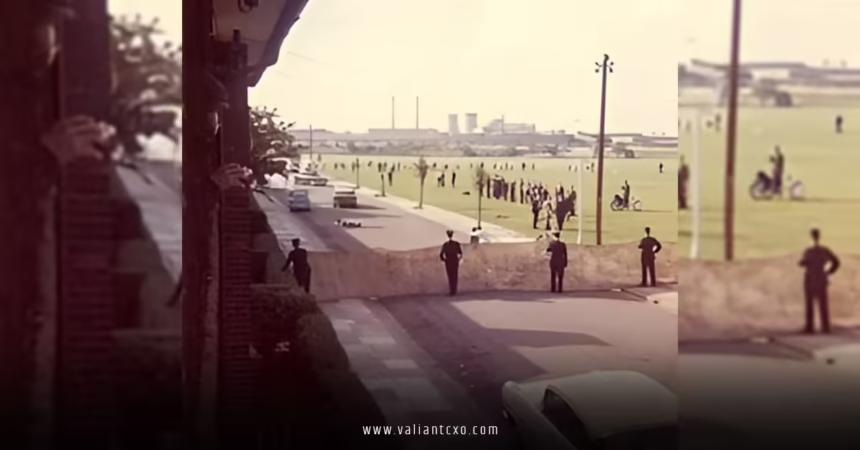
The Shepherd’s Bush murders stand as one of the darkest chapters in British criminal history—a brutal attack that claimed the lives of three unarmed police officers on a quiet west London street. On August 12, 1966, what started as a routine vehicle check spiraled into cold-blooded violence, forever etching the names of Detective Sergeant Christopher Head, Detective Constable David Wombwell, and Police Constable Geoffrey Fox into the nation’s memory.
This tragic event, often called the Massacre of Braybrook Street, not only devastated families but also ignited fierce debates about capital punishment, police safety, and justice. Fast-forward to today, and the recent news that the ringleader behind the Shepherd’s Bush murders, harry roberts triple police killer dies aged 89, has reopened old wounds, reminding us why this case still resonates nearly six decades later.
Imagine a summer afternoon in 1966: kids playing outside, officers patrolling in plain clothes, and then—bang—gunfire erupts. How could something so routine turn so deadly? Let’s unpack the Shepherd’s Bush murders step by step, from the criminals’ backgrounds to the lasting fallout.
Background: The Criminals Behind the Shepherd’s Bush Murders
Harry Roberts: The Mastermind
At the center of the Shepherd’s Bush murders was Harry Roberts, a seasoned armed robber with a military past. Born in 1936, Roberts served in the Malayan Emergency, honing survival skills that he’d later use to evade capture. By the 1960s, he was deep in London’s underworld, teaming up for high-stakes heists.
Roberts wasn’t acting alone in the Shepherd’s Bush murders. His accomplices were Jack Witney, the driver, and John Duddy, another armed criminal. The trio had hidden weapons in their van, planning a robbery later that day. Fear of discovery triggered the violence that defined the Shepherd’s Bush murders.
Think of it like a powder keg: career criminals, loaded guns, and a surprise police stop. One wrong move, and explosion.
The Day of the Shepherd’s Bush Murders: What Happened on Braybrook Street
A Routine Stop Turns Deadly
On that fateful afternoon, the three officers—DS Christopher Head (30), DC David Wombwell (25), and PC Geoffrey Fox (41)—were in an unmarked Triumph 2000, patrolling near Wormwood Scrubs prison. They spotted a suspicious Standard Vanguard van with an expired tax disc and pulled alongside on Braybrook Street.
DC Wombwell approached the driver’s side, chatting with Witney. As questions deepened, Roberts—sitting in the front passenger seat—pulled a Luger pistol and shot Wombwell point-blank in the head. Chaos ensued: DS Head bolted for cover but was gunned down from behind. PC Fox, still in the police car, took fatal shots through the windshield from Duddy.
In mere seconds, the Shepherd’s Bush murders were complete. Witnesses, including children who mistook it for a movie scene, fled in terror. The killers sped off, leaving three heroes dying on the pavement.
Rhetorically, doesn’t it chill you? These officers were unarmed, doing everyday duties—no chase, no threat—just murdered in cold blood.
Police searching Braybrook Street the day after the Shepherd’s Bush murders.
The Massive Manhunt Following the Shepherd’s Bush Murders
Britain’s Biggest Chase
The Shepherd’s Bush murders sparked outrage and one of the largest manhunts in UK history. Witney was arrested quickly, Duddy soon after in Glasgow. But Roberts? He vanished into the woods.
Using his jungle training, Roberts camped in Epping Forest and Thorley Wood for 96 days, dodging helicopters, dogs, and thousands of officers. A £1,000 reward—massive for the time—flooded tips. Finally, in November 1966, police found him hiding under hay in a Hertfordshire barn.
It’s like a cat-and-mouse thriller, but real—and the “mouse” was a cop killer responsible for the Shepherd’s Bush murders.
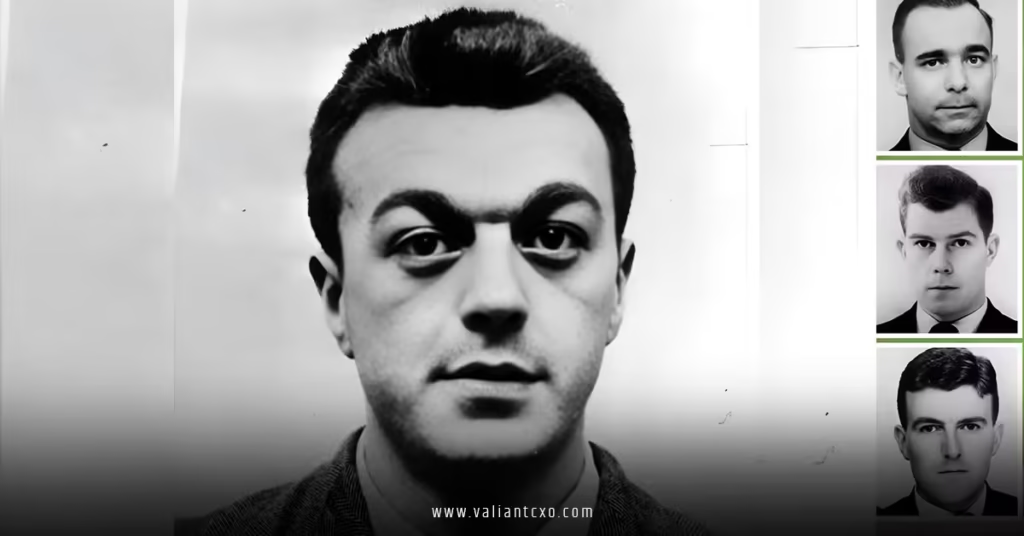
Wanted poster for Harry Roberts during the manhunt after the Shepherd’s Bush murders.
Trial and Sentencing for the Shepherd’s Bush Murders
At the Old Bailey, the trial was swift. The judge called the Shepherd’s Bush murders “the most heinous crime for a generation or more,” sentencing all three to life with a 30-year minimum—just months after hanging was abolished.
Roberts showed little remorse, later describing the killings as “electric.” Duddy died in prison, Witney was released early and murdered in 1999. Roberts served 48 years, released in 2014 amid controversy. His death, as reported in stories about harry roberts triple police killer dies aged 89, brings fresh reflection on whether justice was fully served.
Public Outrage and Cultural Impact of the Shepherd’s Bush Murders
Calls for Change
The Shepherd’s Bush murders hit Britain hard. Massive funerals drew thousands, including the Prime Minister. Petitions demanded hanging’s return; police demanded better arming. It led to the Metropolitan Police’s armed response units.
Disturbingly, Roberts became a twisted icon—football hooligans chanted “Harry Roberts is our friend, he kills coppers.” Books, TV shows, and songs referenced the Shepherd’s Bush murders, highlighting anti-police sentiment.
Analogously, it’s a scar on society: a moment when trust in safety shattered.
Harry Roberts in a later photo.
The Victims: Remembering the Heroes of the Shepherd’s Bush Murders
We can’t discuss the Shepherd’s Bush murders without honoring the fallen:
- DS Christopher Head: 30, ambitious detective, left a young family.
- DC David Wombwell: 25, newest to plainclothes, full of promise.
- PC Geoffrey Fox: 41, experienced driver, family man.
Their memorial on Braybrook Street stands today, a poignant reminder.
Memorial plaque for the victims of the Shepherd’s Bush murders.
Another view of the Braybrook Street memorial honoring the three officers.
Legacy of the Shepherd’s Bush Murders Today
The Shepherd’s Bush murders changed policing forever—more armed officers, better training. It also founded charities supporting police families.
With the ringleader’s passing covered under headlines like harry roberts triple police killer dies aged 89, reactions focus on the victims: they never grew old, while he lived to 89.
What does justice look like here? The Shepherd’s Bush murders force us to grapple with remorse, rehabilitation, and protection for those who protect us.
Conclusion
The Shepherd’s Bush murders weren’t just a crime—they were a watershed moment that exposed vulnerabilities in society and law enforcement. From the shocking violence on Braybrook Street to the epic manhunt, trial, and enduring debates, this case underscores the bravery of police and the pain of senseless loss.
As we reflect nearly 60 years later, especially with recent developments tied to harry roberts triple police killer dies aged 89, let’s honor Head, Wombwell, and Fox. Their sacrifice improved safety for today’s officers. What lessons do you take from the Shepherd’s Bush murders? It’s history that demands we never forget.
FAQs
What exactly happened during the Shepherd’s Bush murders?
The Shepherd’s Bush murders occurred on August 12, 1966, when Harry Roberts and accomplices shot three unarmed officers during a routine stop on Braybrook Street.
Who were the victims of the Shepherd’s Bush murders?
The victims were DS Christopher Head (30), DC David Wombwell (25), and PC Geoffrey Fox (41)—dedicated officers killed in the line of duty during the Shepherd’s Bush murders.
How long did the manhunt last after the Shepherd’s Bush murders?
Following the Shepherd’s Bush murders, Harry Roberts evaded capture for 96 days before arrest in November 1966.
What changes did the Shepherd’s Bush murders bring to UK policing?
The Shepherd’s Bush murders led to more armed police units and highlighted the need for better officer protection.
How is the Shepherd’s Bush murders case connected to recent news?
The mastermind’s death has renewed interest, as seen in coverage of harry roberts triple police killer dies aged 89.