Small Business Location Strategy Choosing the right location can make or break a small business. You can have great products, solid marketing, and a hardworking team, yet still struggle if the site does not bring in enough customers or ends up competing with your other locations. Many owners rush into leases because the rent looks affordable or the space feels “busy,” only to discover later that foot traffic was the wrong kind or that the area was already saturated.
In this article, we’re going to be taking a look at small business location strategy, and how you can pick sites that deliver real incremental growth instead of just adding overhead. If you would like to find out more, feel free to read on.
Pic – CC0 License
Start With White Space, Not Just Busy Streets
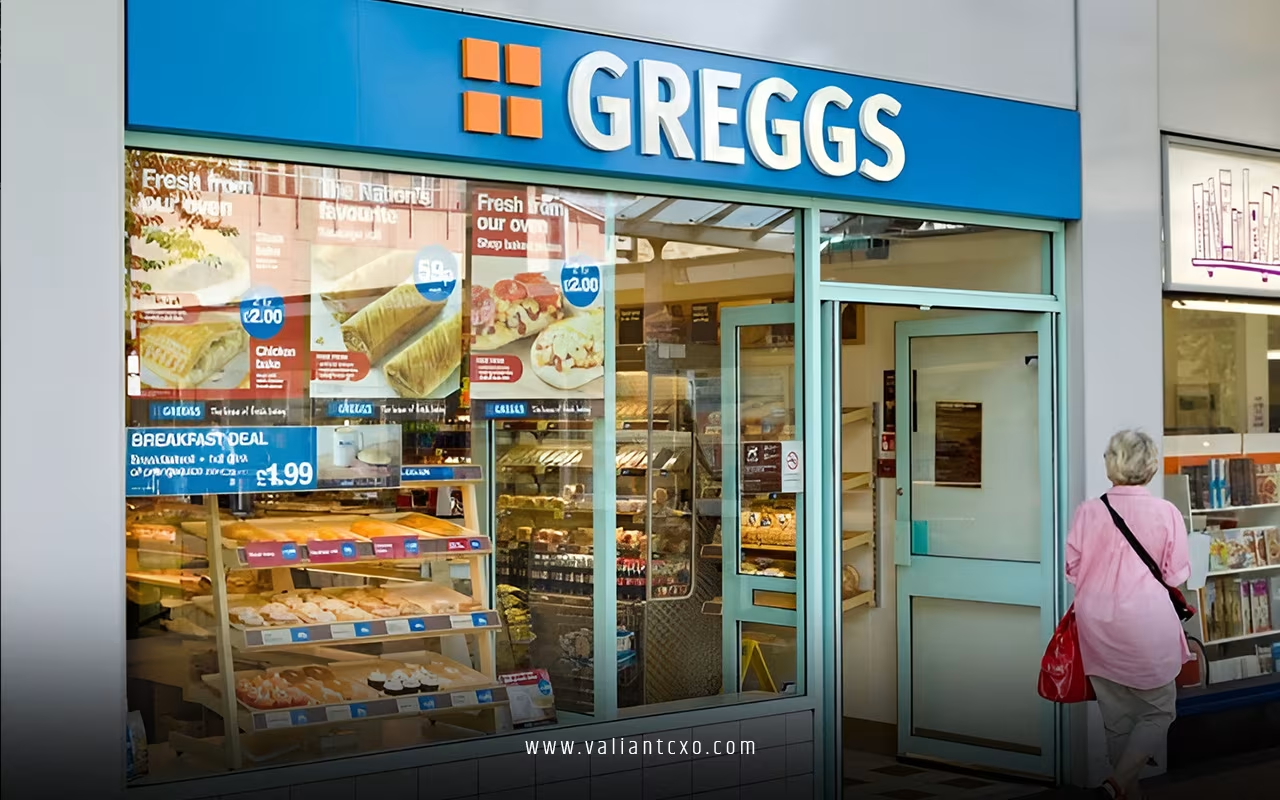
The smartest small business location strategy begins with finding white space—areas where your type of business is underrepresented. Greggs new store openings first half 2026 offer a clear real-world example: 62 percent of their new shops (excluding relocations) went into catchments that had no other Greggs within a mile. That approach helped them grow sales and market share even while overall food-to-go visits in the UK declined.
You can apply the same thinking. Map out where your competitors already sit and where demand still exists. Look at residential density, workplace concentrations, travel hubs, and retail parks that lack a strong player in your category. A quieter but underserved location often outperforms a high-rent spot on a crowded main street.
Match the Format to the Site
Not every location needs a full-size store. Successful operators test smaller footprints, kiosks, or partnered formats that fit the available space and local traffic patterns. Greggs has been rolling out compact “Bitesize” units and trial “Express” self-service formats precisely so they can enter sites that would not support a traditional shop.
For your business, ask whether a smaller or simplified version could work in a convenience store, transit stop, office lobby, or supermarket end-cap. Lower build-out costs mean faster payback and less risk if the location underperforms. This flexibility is a core part of any modern small business location strategy.
Measure Cannibalization Before You Sign
Opening a second or third site near an existing one can quietly steal sales from yourself. Before committing, estimate how much revenue the new location is likely to pull from current ones. Simple tools such as drive-time analysis, customer zip-code data from your POS system, or basic heat maps can reveal overlap.
Greggs kept a disciplined eye on this during their 2026 expansion, prioritizing sites that expanded reach rather than simply densifying already strong areas. You should do the same. If the projected cannibalization is high, either adjust the site or wait for a better opportunity. Protecting existing performance is just as important as chasing new growth.
Factor in Total Cost, Not Just Rent
Rent is only one piece of the puzzle. Parking availability, visibility from the road, delivery access, labor pool quality, and local permitting speed all affect profitability. A slightly higher rent in a strong catchment can deliver better returns than a cheap lease in a weak one.
Also consider the lease length and exit clauses. Many small businesses get locked into multi-year agreements that become painful if the location underperforms. Build flexibility into your negotiations whenever possible.
Use Data and Local Knowledge Together
Public data—census figures, traffic counts, competitor locations—gives you a solid starting point. Layer on local knowledge by walking the area at different times of day, talking to neighboring businesses, and watching actual customer flow. Online reviews and social mentions can also signal whether an area feels safe, convenient, and active.
Combine both sources. Numbers alone can miss nuances such as construction that will disrupt access for months or a nearby employer that is about to downsize. The best small business location strategy blends hard data with on-the-ground observation.
Plan for Phased Expansion
Rapid growth sounds exciting, but it often stretches cash, management attention, and supply chains. Set a realistic annual target and be willing to adjust it based on site quality. Greggs originally aimed higher for 2026 but later refined their guidance to focus on stronger locations. That kind of discipline protects margins.
Start with one or two carefully chosen sites, prove the model, then accelerate. Document what worked—drive-time radius, demographic profile, sales per square foot—so the next decisions become faster and more consistent.
Common Pitfalls to Avoid
Watch out for these frequent mistakes:
- Choosing a site mainly because it is available or cheap
- Ignoring existing customer travel patterns
- Underestimating build-out and soft costs
- Signing long leases without performance-based exit options
- Expanding into a new format without testing it first
A clear small business location strategy helps you sidestep these traps and keeps growth intentional rather than reactive.
We hope that you have found this article enlightening in some way and that these practical steps help you evaluate future sites with more confidence. Take the time to map demand, protect your existing locations, and match the format to the opportunity. Smart site decisions compound over years and turn expansion from a risk into a reliable growth engine.