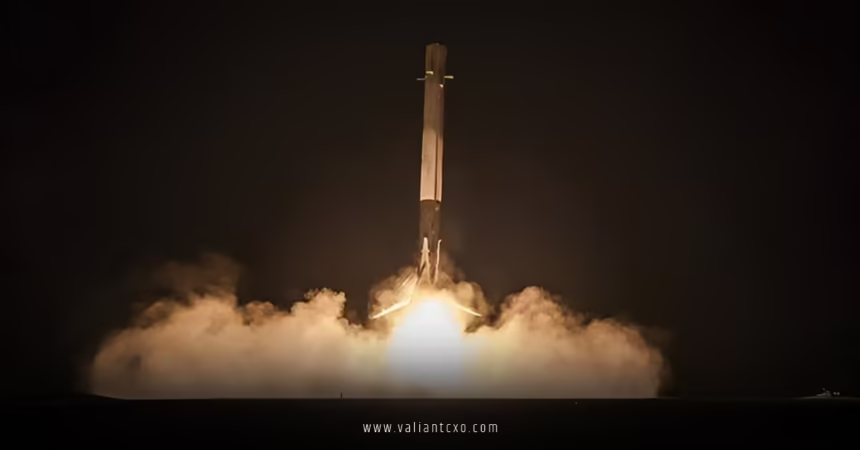
SpaceX Falcon 9 booster reusability, and it’s no longer science fiction. It’s everyday reality powering hundreds of missions. In fact, if you’re catching up on recent events like the thrilling watch rocket launch live online SpaceX Starlink 29 satellites February 20 mission, you saw this reusability in action firsthand. That Falcon 9 booster completed its 26th flight before touching down successfully off the Bahamas. Let’s unpack why this technology is a game-changer, how it evolved, and what it means for the future of space travel.
What Exactly Is SpaceX Falcon 9 Booster Reusability?
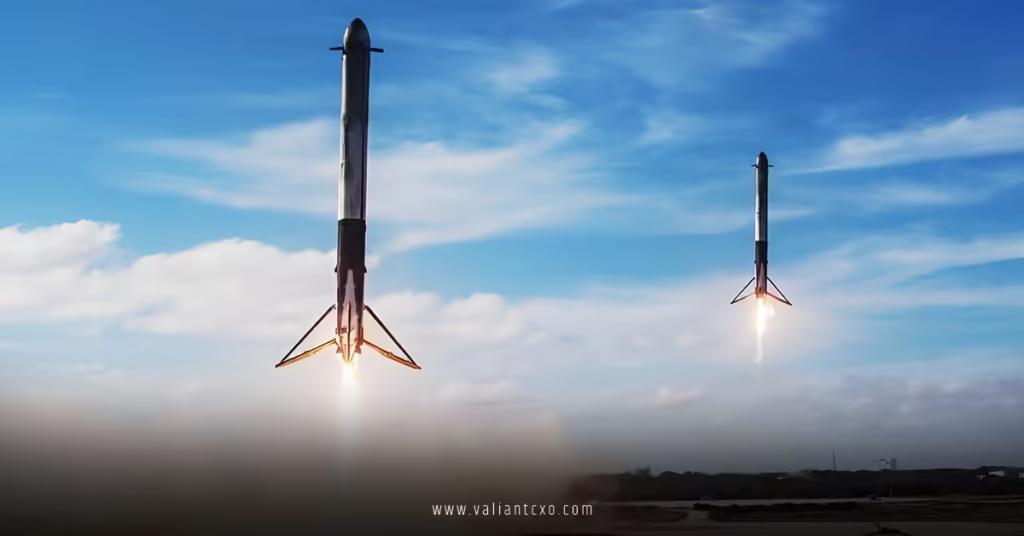
At its core, SpaceX Falcon 9 booster reusability means the first stage—the powerful bottom section with nine Merlin engines—doesn’t get discarded after one use. Instead, it separates from the upper stage, flips around mid-flight, fires its engines to slow down, and lands either on solid ground at Cape Canaveral’s Landing Zone or on an autonomous droneship in the ocean.
Think of it like a commercial airplane: you wouldn’t throw away the plane after every flight. SpaceX applies the same logic to rockets. The Falcon 9 Block 5 version (the current workhorse since 2018) was designed from the ground up for multiple flights. Grid fins guide it during reentry, landing legs deploy, and software handles the precision touchdown. It’s engineering poetry in motion.
This approach slashes costs dramatically. The first stage accounts for about 60-70% of a rocket’s total price tag. By reusing it, SpaceX turns a multimillion-dollar expendable part into a high-mileage asset.
The Evolution: From Experimental Landings to Routine Operations
SpaceX didn’t nail reusability overnight. Early attempts in 2013-2015 involved grasshopper test vehicles and low-altitude hops. Then came the real tests:
- December 2015: First successful landing of a Falcon 9 first stage at Landing Zone 1.
- April 2016: First ocean drone ship landing.
- March 2017: First reflown booster on SES-10 mission.
Fast-forward to today, and reusability is the norm. As of February 2026, Falcon 9 has flown over 600 times total, with the vast majority using reflown boosters. Landing success rates hover around 97-98% for Block 5 boosters—insanely reliable for something traveling at hypersonic speeds through plasma.
Individual boosters now rack up serious mileage. The fleet leader, like B1067, reached an astonishing 32 flights by late 2025, setting records that keep getting broken. Boosters routinely hit 20-25+ flights, with turnaround times shrinking to weeks or even days in some cases.
How Booster Reusability Powers Starlink and Beyond
Starlink is the killer app for reusability. SpaceX needs to launch frequently and cheaply to build a massive satellite constellation. High reuse rates make that possible. Missions like the watch rocket launch live online SpaceX Starlink 29 satellites February 20 (Starlink 10-36) used a veteran booster on its 26th flight—proof that these workhorses handle dozens of ascents without breaking a sweat.
Each reflown booster saves enormous resources. SpaceX can churn out dozens of launches per month (they hit 165+ in 2025 alone, dominating global orbital traffic). This cadence supports not just Starlink but NASA crew missions, national security payloads, and commercial satellites.
The environmental angle is huge too. Reusing hardware reduces space debris from discarded stages and cuts the manufacturing footprint for new boosters.
Key Milestones in SpaceX Falcon 9 Booster Reusability
Let’s highlight some standout moments:
- 500th booster landing achieved in 2025—a testament to the program’s maturity.
- Most flights by one booster: 32 (B1067 as of late 2025/early 2026 records).
- Fastest turnaround: Some boosters return to flight in under 10 days.
- Block 5 dominance: Over 545 successful flights with near-perfect landing stats.
In early 2026, SpaceX continued pushing limits. The February 19/20 Starlink mission marked another high-reuse flight, with the booster landing in a rare Bahamas-area droneship position—expanding recovery options.
The Technical Magic Behind Successful Landings
How does a 70-meter-tall, 500-ton rocket stage hit a floating platform the size of a basketball court after enduring reentry heat?
- Entry burn: Reduces speed from ~6,000 km/h.
- Reentry plasma protection: Heat shield tiles and attitude control.
- Boostback/landing burn: Precise engine restarts for velocity kill and hover.
- Grid fins and cold-gas thrusters: Fine steering.
- Autonomous software: Real-time adjustments based on wind, trajectory, and telemetry.
It’s like threading a needle at Mach 5—yet SpaceX does it routinely.
Challenges and the Road to Even Higher Reuse
No tech is perfect. Early failures taught lessons: landing legs buckling, engine issues during relight, ocean wave interference. SpaceX iterated rapidly—adding more robust legs, improving Merlin reliability, refining software.
Today, challenges include refurbishment time (inspecting, replacing parts like engines or avionics), fatigue over dozens of flights, and scaling to 100+ reuses (Elon Musk once speculated boosters could hit 100 flights).
As Starship matures, Falcon 9 will hand off heavy lifting, but its reusability blueprint paved the way.
Why This Matters for the Future of Space Exploration
SpaceX Falcon 9 booster reusability democratized access to space. Launch costs dropped from tens of millions to under $30 million per flight (sometimes lower for Starlink). This enables ambitious projects: global broadband, lunar landers, Mars cargo, point-to-point Earth travel dreams.
It inspires the next generation. Kids watching that booster land think, “I could build something like that.” It proves bold engineering pays off.
Conclusion: The Reusability Revolution Is Just Getting Started
SpaceX Falcon 9 booster reusability transformed rockets from single-use fireworks to airline-like vehicles. With boosters flying 20-30+ times, landing success near 98%, and missions like the watch rocket launch live online SpaceX Starlink 29 satellites February 20 showcasing veteran hardware, the era of routine, affordable spaceflight is here. SpaceX didn’t just build a rocket—they built a system that makes space sustainable. Keep your eyes on the sky; the next landing could be even more impressive.
FAQs
1. What is the record number of flights for a single Falcon 9 booster?
As of early 2026, the record stands at 32 flights for booster B1067, with others like the one in the February 20 Starlink mission hitting 26 flights.
2. How does SpaceX achieve such high reusability rates?
Through iterative design improvements, advanced software, precise engine control, and rigorous post-flight inspections—turning potential failures into reliability lessons.
3. Why is booster reusability so important for Starlink missions?
It drastically lowers costs and enables frequent launches needed to deploy thousands of satellites quickly, as seen in batches like the 29 satellites on February 20, 2026.
4. Can Falcon 9 boosters fly indefinitely?
Not indefinitely, but far beyond original expectations—potentially 100+ flights with ongoing upgrades. Fatigue and refurbishment set practical limits.
5. Where can I watch future launches to see reusability in action?
Head to SpaceX’s website or YouTube for live streams, just like the watch rocket launch live online SpaceX Starlink 29 satellites February 20 event—replays are always available too.