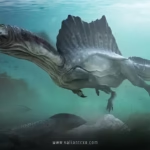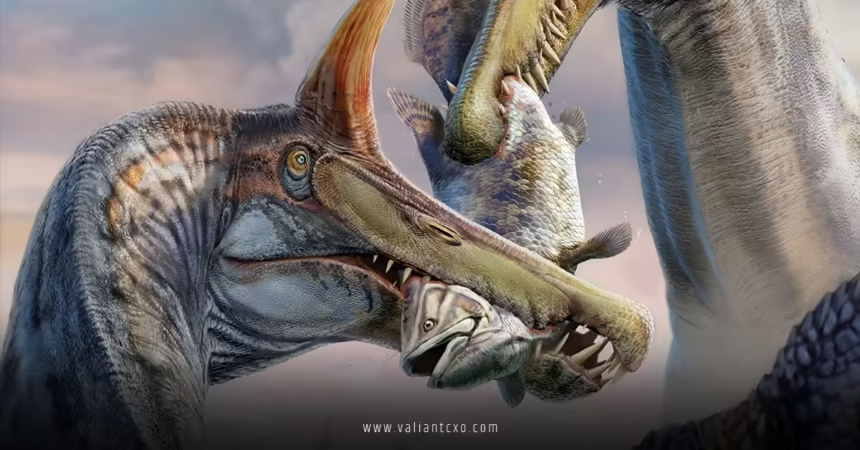
Spinosaurus mirabilis new species discovery Niger 2026 has sent shockwaves through the paleontology world. Imagine stumbling across a bone in the scorching sands of the Sahara that turns out to be part of the most astonishing dinosaur head crest ever seen—curved like a scimitar sword and towering dramatically above the skull. That’s exactly what happened when a dedicated team of scientists, led by University of Chicago’s Paul Sereno, uncovered this game-changing find in Niger’s remote central Sahara. Announced in February 2026 in the prestigious journal Science, this marks the first clear new species of Spinosaurus in over a century, breathing fresh life into debates about these bizarre, sail-backed predators.
Have you ever wondered what it feels like to rewrite dinosaur history under the relentless desert sun? For the researchers, it was an emotional rollercoaster—initial confusion in 2019 when they mistook the crest for something else, followed by triumphant return trips in 2022 that confirmed the astonishing truth.
What Makes Spinosaurus mirabilis new species discovery Niger 2026 So Groundbreaking?
Let’s dive right in. Spinosaurus has always been the oddball of theropods—the group that includes famous meat-eaters like T. rex. Known since 1915 from Egyptian fossils (Spinosaurus aegyptiacus), it sports a massive neural sail on its back, crocodile-like jaws packed with conical teeth perfect for grabbing fish, and a lifestyle that’s puzzled experts for decades. Was it a swimmer? A wader? Something in between?
The Spinosaurus mirabilis new species discovery Niger 2026 adds a thrilling twist. This specimen, dated to around 95 million years ago in the Late Cretaceous, comes from the Farak Formation at a site called Jenguebi—hundreds of kilometers inland from any ancient coastline. Unlike coastal finds, this one lived in forested river valleys dissected by waterways, suggesting these dinosaurs weren’t strictly tied to marine edges.
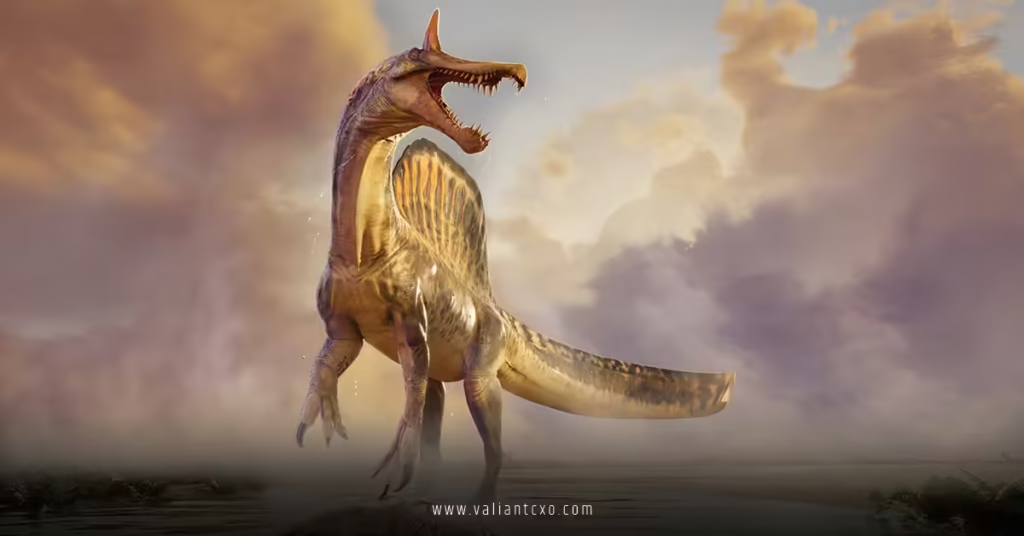
What really sets it apart? That scimitar-shaped cranial crest. Picture a bony blade rising high above the head like a dramatic mohawk or a warrior’s helmet—far taller and more curved than anything seen in its close cousin, S. aegyptiacus. Researchers describe it as “astonishing,” which is why they chose “mirabilis” (Latin for wonderful or astonishing). This feature alone screams display—maybe for attracting mates, intimidating rivals, or signaling in their watery territories.
The Expedition Behind Spinosaurus mirabilis new species discovery Niger 2026
Picture this: a 20-person team hauling gear across endless dunes, battling heat, sandstorms, and isolation. Paul Sereno, a veteran explorer who’s unearthed countless African dinosaurs, described the moment as “an adventure and a half.” They collected over 55 tons of fossils in 2022, but the real prize emerged slowly.
It started in 2019 with jaw fragments and a mysterious curved bone poking from the ground. At first, they thought it was a vertebra. Only after piecing together three partial skulls (including more crest pieces) and digitally reconstructing the skull—using solar-powered tech in the desert—did the pieces click. This wasn’t just another Spinosaurus; it was a distinct species.
The fossils include interlocking teeth ideal for snaring slippery prey like fish (think coelacanths or lungfish), elongated limbs hinting at wading ability, and a body size rivaling T. rex—around 40-50 feet long and weighing several tons. It’s one of the last-surviving spinosaurids, capping a long evolutionary story.
Key Features of Spinosaurus mirabilis in the new species discovery Niger 2026
The Iconic Scimitar Crest
This is the star of the show. Unlike the lower, more sail-like features in related dinosaurs, Spinosaurus mirabilis boasts a tall, curved bony crest that projects dramatically. It likely served as a visual signal in their riverine world—imagine it catching the light as the dinosaur waded through shallow waters, broadcasting dominance or availability.
Jaws and Teeth Adaptations
The jaws are long and narrow, with teeth spaced out and interlocking like a trap. Perfect for catching fish without letting them escape. This reinforces the piscivorous (fish-eating) lifestyle, but inland location suggests they hunted in rivers and lakes, not open seas.
Body Size and Build
Roughly T. rex-sized, but with longer hind limbs and a more crocodile-like posture. The sail on the back? Still present, but the head crest steals the spotlight. Overall, it points to a semi-aquatic ambush predator—wading like a giant heron (some call it a “hell heron”) rather than a full-time swimmer.
Habitat Insights from Niger
The Jenguebi site paints a vivid picture: lush, river-crossed forests far from the Tethys Sea coast. Buried in fluvial sediments alongside new sauropods (long-necked herbivores), it shows Spinosaurus mirabilis shared its world with diverse giants. This inland setting challenges older ideas of Spinosaurus as purely coastal.
How Spinosaurus mirabilis new species discovery Niger 2026 Fits into Spinosaurid Evolution
Spinosaurids evolved in three phases, according to the 2026 Science paper. Early forms in the Jurassic developed fish-snaring skulls. By the Early Cretaceous, they dominated around the Tethys Sea. In the final Late Cretaceous phase—when oceans opened wider—giants like Spinosaurus mirabilis and S. aegyptiacus reached max size as shallow-water specialists in northern Africa and South America.
This new find “caps” that radiation, showing stepwise adaptations toward more aquatic traits while staying versatile in inland rivers. It revives debates: was Spinosaurus a diver or just a wader? The inland fossils lean toward wading specialist.
Compared to S. aegyptiacus, mirabilis has a taller crest, slightly more elongated snout, and perhaps better wading limbs—subtle but enough for species status.
Why the Spinosaurus mirabilis new species discovery Niger 2026 Matters Today
Discoveries like this remind us how much we still don’t know about Earth’s past. In a world obsessed with T. rex, Spinosaurus stands out for its weirdness—part dinosaur, part croc, part something entirely unique. This Niger find pushes us to rethink aquatic adaptations in dinosaurs and highlights Africa’s fossil riches.
Plus, it’s inspiring. Kids (and adults) flock to museums—Spinosaurus mirabilis even debuts at Chicago Children’s Museum in March 2026. It sparks curiosity about science, exploration, and our planet’s wild history.
For more on Spinosaurus basics, check out the Natural History Museum’s dinosaur directory. Dive deeper into the research with the original paper via Science journal. And follow updates from the lead researcher at Paul Sereno’s University of Chicago page.
Conclusion
The Spinosaurus mirabilis new species discovery Niger 2026 is more than just another fossil—it’s a window into a lost world of river giants with sword-like head crests, fish-trapping jaws, and lives far from the ocean. Led by Paul Sereno and team, this find from 95-million-year-old Niger deposits reveals a distinct species that pushes the boundaries of what we thought we knew about Spinosaurus. From its astonishing crest to its inland habitat, it challenges assumptions and enriches our understanding of dinosaur evolution. If this excites you, keep an eye on paleontology—new surprises are always waiting beneath the sand. Who knows what astonishing creature we’ll uncover next?
FAQs
What is the Spinosaurus mirabilis new species discovery Niger 2026 all about?
It’s the announcement of a brand-new Spinosaurus species from fossils found in Niger’s Sahara, featuring a unique scimitar-shaped head crest, published in Science in February 2026.
Who discovered Spinosaurus mirabilis in the new species discovery Niger 2026?
A team led by University of Chicago paleontologist Paul Sereno made the find during expeditions in 2019 and 2022 at the remote Jenguebi site.
How does Spinosaurus mirabilis differ from other Spinosaurus in the 2026 Niger discovery?
It has a much taller, curved cranial crest, slightly longer snout, and lived inland in river habitats—unlike the more coastal relatives like S. aegyptiacus.
When and where did the Spinosaurus mirabilis new species discovery Niger 2026 occur?
Fossils date to about 95 million years ago in the Late Cretaceous, unearthed in the central Sahara’s Farak Formation, Niger.
Why is the Spinosaurus mirabilis new species discovery Niger 2026 important for science?
It’s the first undisputed new Spinosaurus species in over 100 years, offering fresh evidence on evolution, habitat, and adaptations in spinosaurids.