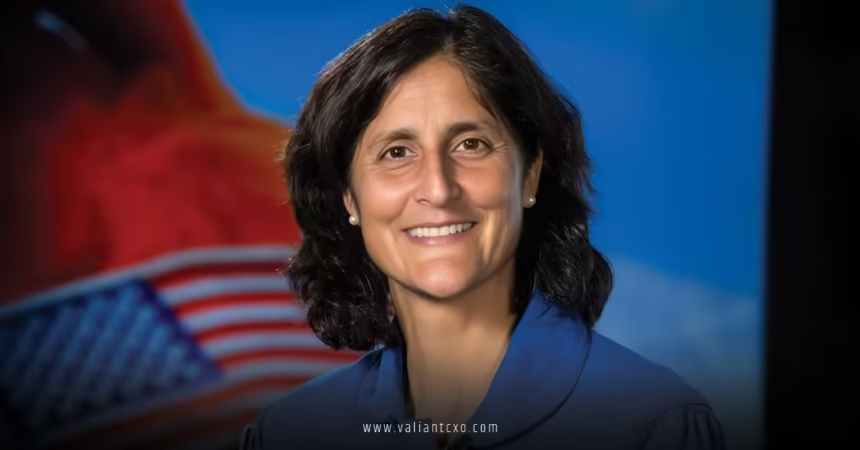
Sunita Williams retires from NASA after Boeing Starliner mission, closing an extraordinary chapter in space exploration that captured global attention. Imagine launching for what was supposed to be a quick test flight, only to end up spending nearly nine months orbiting Earth—turning a routine mission into one of the most talked-about space sagas in recent years. That’s exactly what happened to this trailblazing astronaut, and now, after 27 years of pushing boundaries, she’s stepping away from NASA. Her retirement, effective December 27, 2025, comes just months after her safe return home in March 2025. It’s a moment that feels both bittersweet and triumphant.
Why does Sunita Williams retiring from NASA after Boeing Starliner mission resonate so deeply? Because her story isn’t just about one challenging trip—it’s about decades of dedication, breaking barriers as a woman and person of Indian heritage in a high-stakes field, and showing us what true grit looks like when things go sideways in the vacuum of space.
Who Is Sunita Williams? A Quick Look at Her Stellar Journey
Before diving into the Boeing Starliner chapter, let’s rewind. Sunita “Suni” Williams, born in 1965, grew up with a passion for adventure. She served as a U.S. Navy captain and test pilot before joining NASA in 1998. Over the years, she became one of the agency’s most reliable and record-breaking astronauts.
Think of her as the ultimate multitasker in zero gravity. She completed three missions to the International Space Station (ISS), logging a jaw-dropping 608 days in space—the second-highest cumulative time for any NASA astronaut. She holds the record for the most spacewalk time by a woman (62 hours and 6 minutes across nine EVAs) and famously became the first person to run a marathon in space during her 2007 mission. Ever tried jogging on a treadmill while floating? She did it while cheering on the Boston Marathon runners back on Earth.
Her calm demeanor, quick thinking, and infectious enthusiasm made her a favorite among colleagues and the public alike. Space, she once said, is her “absolute favorite place to be.” Who wouldn’t want to hear more from someone who feels that way about floating 250 miles above our planet?
The Boeing Starliner Mission: What Was Supposed to Be a Short Hop Turned Epic
Sunita Williams retires from NASA after Boeing Starliner mission largely because that final flight defined her closing act with the agency. In June 2024, Williams and fellow astronaut Butch Wilmore launched aboard Boeing’s Starliner capsule for its first crewed test flight (Crew Flight Test, or CFT). The plan? Dock with the ISS, spend about a week testing systems, and return home.
But space travel rarely follows plans perfectly. Shortly after launch, Starliner encountered thruster malfunctions and helium leaks. NASA engineers worked tirelessly to troubleshoot, but safety came first. The decision was made: Starliner would return uncrewed, and Williams and Wilmore would stay on the ISS until a ride home could be arranged.
What started as an 8-day mission stretched into 286 days—the longest single spaceflight for both astronauts. They integrated seamlessly with the Expedition crews, conducting science experiments, performing maintenance, and even completing additional spacewalks. Williams, ever the optimist, downplayed the “stranded” narrative in interviews, emphasizing how they were part of the team up there, contributing every day.
Picture this: You’re expecting a quick business trip, but your flight gets canceled, so you end up living at the conference venue for months. Except the venue is a orbiting lab, and the “delay” involves thruster failures in the harshest environment imaginable. Williams handled it with grace, running, exercising, and staying connected with family via video calls. Her resilience turned a potential crisis into a masterclass in adaptability.
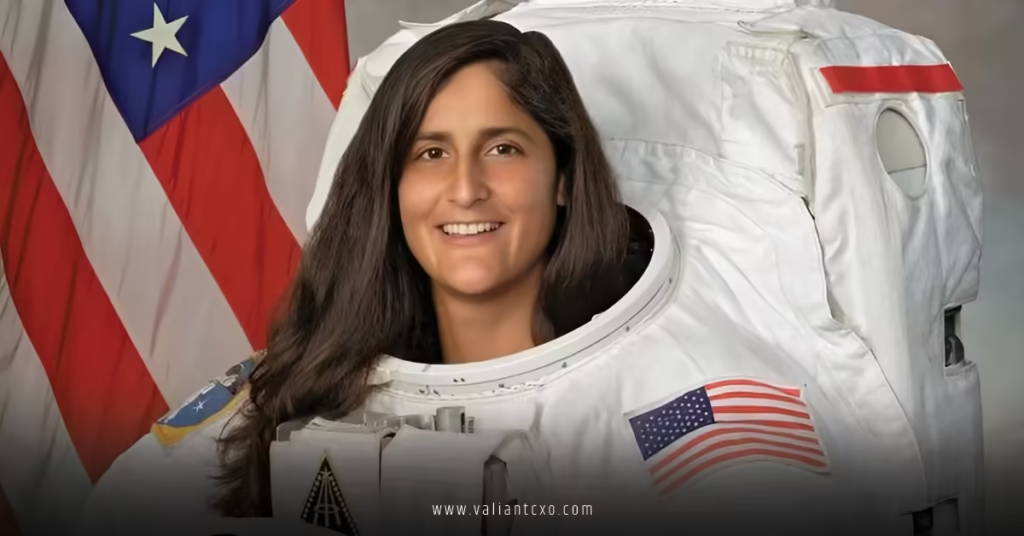
Challenges Faced During the Extended Stay and How They Were Overcome
The Boeing Starliner issues weren’t minor. Propulsion problems raised concerns about the spacecraft’s ability to safely bring the crew back through reentry. NASA debated options, including using Starliner for return or waiting for a SpaceX Crew Dragon rescue.
In the end, the astronauts hitched a ride home on SpaceX’s Crew-9 Dragon in March 2025, splashing down off Florida’s coast. The experience highlighted the complexities of commercial crew programs—Boeing’s Starliner faced scrutiny, while SpaceX’s reliability shone through.
For Williams, the extension meant more time away from loved ones, but also more opportunities to contribute. She participated in over 1,000 hours of research, helped with station upkeep, and inspired people back on Earth with her updates. Have you ever wondered how astronauts stay mentally sharp during long missions? Williams leaned on routine, humor, and the view of Earth from above—reminders that challenges are temporary.
Records Set and Legacy Left Behind by Sunita Williams
Even before the Starliner saga, Williams was a record holder. But Sunita Williams retires from NASA after Boeing Starliner mission having added even more to her resume. Her 608 total days in space place her high on the all-time list, and her spacewalk prowess remains unmatched among women.
She broke cultural barriers too—as an Indian-American woman, she carried pride for her heritage, performing Indian dances in orbit and speaking about representation. Young girls watching her might now dream bigger, seeing someone who looks like them command the ISS.
Her leadership extended beyond records. As a veteran astronaut, she mentored others, flew as pilot on Starliner, and embodied NASA’s values of exploration and teamwork. Retiring now feels like passing the torch at the right moment, with Artemis missions on the horizon and commercial space booming.
What’s Next After Retirement? Reflections on a Life in Space
Sunita Williams retires from NASA after Boeing Starliner mission, but what comes next? While she hasn’t detailed post-retirement plans publicly, astronauts often transition to advisory roles, speaking engagements, or even private space ventures. Williams has always been passionate about education and inspiration—she might focus on encouraging the next generation.
In her NASA statement, she expressed excitement for the agency’s future: “I am super excited for NASA and its partner agencies as we take these next steps, and I can’t wait to watch the agency make history.” That optimism is classic Suni—always looking forward.
Retirement doesn’t erase the impact. Her story reminds us that space exploration is human: messy, unpredictable, and profoundly rewarding. Like a marathon runner hitting the wall but pushing through, she showed endurance under pressure.
Why Sunita Williams Retires from NASA After Boeing Starliner Mission Matters to All of Us
This retirement isn’t just a personal milestone—it’s a reflection on the evolving space era. The Starliner mission underscored the risks and rewards of new spacecraft development. Boeing learned hard lessons, NASA demonstrated flexibility, and the astronauts proved human adaptability.
For everyday folks, Williams’ journey offers inspiration. Whether facing a tough job, unexpected delays, or personal challenges, her example says: Stay calm, contribute where you can, and keep moving forward. Space might seem distant, but the lessons from orbit apply right here on the ground.
In a world craving heroes who are real and relatable, Sunita Williams stands out. She didn’t just fly to space—she lived it fully, records and all.
Sunita Williams retires from NASA after Boeing Starliner mission, leaving behind a legacy of courage, achievement, and quiet determination. From Navy pilot to ISS commander to record-setting spacewalker, her career inspired millions. The extended Starliner mission tested her like never before, yet she emerged stronger, proving that true explorers thrive in uncertainty. As she steps into this new phase, we celebrate her contributions and look forward to how her story continues to fuel dreams of the stars. Thank you, Suni, for showing us what’s possible when we reach higher.
For more on Sunita Williams’ career, check these high-authority sources:
- NASA Official Announcement on Suni Williams’ Retirement
- NASA Astronaut Record Holders
- International Space Station Overview
FAQs
1. Why did Sunita Williams retire from NASA after the Boeing Starliner mission?
Sunita Williams retires from NASA after Boeing Starliner mission primarily because her final flight—the extended 286-day stay due to Starliner issues—marked a natural capstone to her 27-year career. After returning in March 2025 and reflecting on her accomplishments, she chose to step away effective December 27, 2025, allowing younger astronauts to take the lead.
2. How long was Sunita Williams in space during the Boeing Starliner mission?
The mission, intended for about 8 days, extended to 286 days because of technical problems with the Starliner spacecraft. This contributed to her total of 608 days in space across three missions.
3. What records does Sunita Williams hold as she retires from NASA?
Upon retirement, Williams holds the record for the most spacewalk time by a woman (62 hours, 6 minutes), ranks second in cumulative NASA time in space (608 days), and was the first to run a marathon in orbit.
4. Was Sunita Williams actually “stuck” in space during the Boeing Starliner mission?
While media often called it being “stuck,” Williams emphasized she and Butch Wilmore were integrated into ISS operations, contributing fully. The extension stemmed from safety concerns with Starliner’s propulsion, not abandonment.
5. What impact has Sunita Williams retiring from NASA after Boeing Starliner mission had on future missions?
Her experience highlighted the importance of redundancy in crewed vehicles. It reinforced NASA’s partnership with SpaceX for safe returns and pushed Boeing to refine Starliner, influencing safer commercial spaceflight going forward.