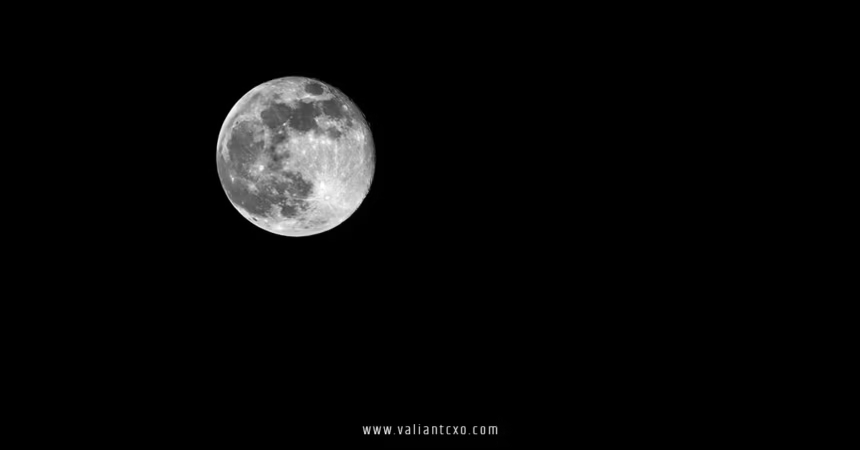
Supermoon photography techniques are all about turning that massive, glowing orb in the sky into jaw-dropping images that make your friends jealous. Have you ever pointed your camera at a full moon, only to end up with a tiny white blob against a black backdrop? Yeah, we’ve all been there. But with the right supermoon photography techniques, you can capture its true grandeur—whether it’s rising huge on the horizon or revealing intricate craters up close. As someone who’s spent countless nights chasing lunar magic, I promise these tips will level up your shots, no matter if you’re using a pro DSLR or just your smartphone.
If you’re gearing up for an epic event like the Wolf Moon supermoon, check out these wolf moon supermoon 2026 viewing tips to nail the timing and location first—because great photography starts with being in the right place at the right moment.
What Makes Supermoon Photography Techniques So Exciting?
A supermoon isn’t just a buzzword—it’s when the full moon cozies up closest to Earth, appearing up to 14% larger and 30% brighter. It’s like the moon decided to flex for the camera. But here’s the kicker: that “super” size is most dramatic at moonrise, thanks to the moon illusion—your brain tricks you into seeing it bigger near the horizon with landmarks for scale.
Mastering supermoon photography techniques means playing with that illusion, nailing exposure on a super-bright subject, and adding creative flair. Whether you’re after isolated close-ups or epic landscapes, these methods turn ordinary snaps into portfolio-worthy art.
Essential Gear for Killer Supermoon Photography Techniques
You don’t need a rocket scientist’s budget, but the right tools make supermoon photography techniques shine.
Lenses: Reach for the Stars (or Moon)
Telephoto is king. Aim for 200mm or longer—400mm+ for filling the frame with details. Superzooms like the Nikon P950’s 2000mm equivalent are game-changers for beginners. Add a teleconverter for extra reach without breaking the bank.
Analogy: It’s like using binoculars at a concert—suddenly, the stage feels intimate.
Tripods and Stability
Handheld? Forget it. A sturdy tripod is non-negotiable to banish blur from long exposures or zoom shake. Pair it with a remote shutter or timer to avoid vibrations.
Cameras: From DSLR to Smartphone
Mirrorless or DSLRs offer manual control gold. But modern smartphones? They’re surprisingly capable with night modes and zoom.
Best Camera Settings in Supermoon Photography Techniques
The moon’s bright—treat it like daylight reflected back at you. Overexposure is the enemy, turning details into a washed-out glow.
The Looney 11 Rule and Beyond
Start with the classic: f/11, ISO 100, shutter 1/125s. Adjust from there—faster shutter for sharpness, lower ISO for clean images.
Pro tweak: ISO 100-200, f/8-11, 1/125-1/250s. Use spot metering on the moon itself.
For landscapes: Bracket exposures or composite later—one for the moon, one for foreground.
Manual Focus is Your Friend
Autofocus often hunts in the dark. Switch to manual, zoom in live view, and sharpen on the edge.
Timing and Location: Core Supermoon Photography Techniques
Rhetorical question: Why do pro shots look massive? It’s all about moonrise.
Shoot during golden or blue hour when the moon hugs the horizon. Use apps like PhotoPills or The Photographer’s Ephemeris to plan alignment with landmarks.
Location hacks: Distant foregrounds (miles away) for compression—making the moon loom huge behind cities or mountains.
Composition Tips to Elevate Your Supermoon Photography Techniques
Don’t just snap the moon solo—it’s boring without context. NASA’s top photographer says: Always include foreground for scale.
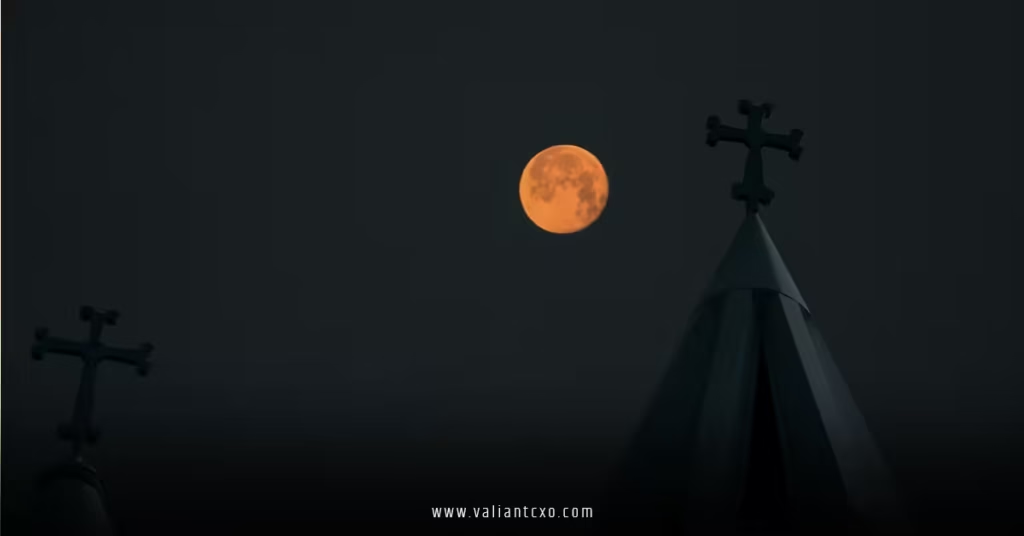
Ideas: Silhouettes of trees, buildings, or people. Reflections in water. Leading lines drawing the eye upward.
Creative twists: Clouds for drama, or planes crossing for action.
Smartphone-Specific Supermoon Photography Techniques
No fancy gear? No problem—phones have revolutionized this.
Use night mode, stabilize on a tripod or prop. Pro apps like Camera+ or Halide for manual controls.
Zoom optically if possible; avoid digital crops. Tap to expose on the moon to prevent blowout.
Bonus: Attach clip-on telephoto lenses for extra punch.
Common Mistakes to Avoid in Supermoon Photography Techniques
We’ve all made them:
- Shooting high overhead: Moon looks tiny—wait for rise/set.
- Overexposing: Moon becomes featureless—underexpose slightly.
- No foreground: Lacks impact and scale.
- Shaky shots: Always stabilize.
- Ignoring weather: Clouds can add mood, but check forecasts.
Post-Processing: Polishing Your Supermoon Photography Techniques
Shoot RAW for flexibility. In Lightroom or Photoshop: Boost contrast, sharpen craters, reduce noise.
For composites: Blend multiple exposures seamlessly.
Advanced Supermoon Photography Techniques
Stack images for noise reduction. Time-lapses of moonrise. Or try moon trails with long exposures.
Pair with events like eclipses for blood moons.
These supermoon photography techniques aren’t just rules—they’re invitations to experiment and create something uniquely yours. Next time a supermoon rolls around (and pair it with solid wolf moon supermoon 2026 viewing tips for planning), grab your gear, head out, and capture the magic. The moon’s waiting—make it unforgettable. Your portfolio (and Instagram) will thank you.
FAQs
What are the best basic supermoon photography techniques for beginners?
Start simple: Use a tripod, manual settings around f/11 and 1/125s, and shoot at moonrise with foreground elements—these foundational supermoon photography techniques deliver impressive results fast.
How do smartphone supermoon photography techniques differ from DSLR?
Phones rely on night modes and stability; avoid digital zoom. DSLRs offer telephoto reach and full manual—both can shine with the right supermoon photography techniques.
Why is timing key in supermoon photography techniques?
Moonrise creates the illusion of huge size and balances light for foreground—core to dramatic supermoon photography techniques.
What common errors ruin supermoon photography techniques?
Overexposure, no stabilization, and lacking composition context—avoid these to master supermoon photography techniques.
Can clouds enhance supermoon photography techniques?
Yes! Wispy clouds add mystery and depth, turning good shots into atmospheric masterpieces with creative supermoon photography techniques.