Sustainable sneaker materials comparison reveals a fascinating landscape where innovation meets environmental responsibility. From mushroom-based leathers to recycled ocean plastics, the footwear industry has undergone a dramatic transformation that’s reshaping how we think about both performance and planet-friendly choices.
Essential Overview:
- Plant-based alternatives now match traditional materials in durability and comfort
- Recycled content materials have improved significantly in quality and aesthetics
- Bio-engineered options offer superior performance in many applications
- Carbon footprint reductions of 40-80% are now achievable without performance compromise
- Cost premiums have decreased to 10-25% for most sustainable options
The revolution isn’t just about feeling good—it’s about materials that often outperform their conventional counterparts.
The Current Landscape of Sustainable Sneaker Materials
Here’s what’s changed since 2024: sustainable materials aren’t the consolation prize anymore. They’re becoming the preferred choice for performance-focused consumers who refuse to compromise on either function or values.
The catalyst? Three major breakthroughs that happened almost simultaneously:
Manufacturing costs dropped below the “premium penalty” threshold. Material science solved the durability gap. Consumer demand reached the tipping point where major brands had to respond with genuine innovation rather than greenwashing.
What we’re seeing now is a materials arms race where sustainability is the competitive advantage.
Why Traditional Materials Are Losing Ground
Conventional sneaker materials face mounting pressure from multiple directions. Environmental regulations are tightening globally. Consumer awareness has shifted from “nice to have” to “must have” for sustainable options. Production costs for petroleum-based synthetics continue rising due to carbon pricing.
But the real game-changer? Performance improvements.
Many sustainable alternatives now exceed conventional materials in key metrics like breathability, moisture management, and even durability. When eco-friendly options perform better, the choice becomes obvious.
Complete Material-by-Material Breakdown
Plant-Based Leather Alternatives
Mushroom Mycelium (Premium Tier)
The crown jewel of sustainable leather alternatives uses the root structure of mushrooms to create materials that feel remarkably similar to premium animal leather.
Performance characteristics:
- Breathability: Excellent (superior to most synthetics)
- Water resistance: High with proper treatment
- Durability: Comparable to traditional leather
- Break-in period: Minimal to none
- Carbon footprint: 70-80% lower than animal leather
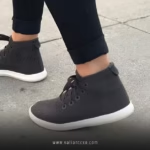
Leading example: The allbirds varsity terralux leather alternative represents the current pinnacle of mycelium technology, combining mushroom-based materials with recycled components for exceptional performance and sustainability credentials.
Cost factor: Premium pricing but approaching parity with high-end traditional materials.
Pineapple Leaf Fiber (Piñatex)
Created from agricultural waste that would otherwise be burned or composted, pineapple leather offers a lighter-weight alternative with unique texture properties.
Performance characteristics:
- Breathability: Good
- Water resistance: Moderate (requires treatment)
- Durability: Good for lightweight applications
- Texture: Distinctive grain pattern
- Carbon footprint: 60-70% lower than traditional leather
Best applications: Lifestyle sneakers, casual footwear, accent panels.
Apple Skin Leather
Made from apple pomace (the pulp left after juice production), this material combines agricultural waste reduction with surprisingly sophisticated material properties.
Performance characteristics:
- Breathability: Moderate
- Water resistance: Good with treatment
- Durability: Moderate to good
- Feel: Soft, similar to nappa leather
- Carbon footprint: 65-75% lower than traditional leather
Recycled Synthetic Materials
Ocean Plastic Polyester
Collected from coastal areas and ocean cleanup operations, recycled ocean plastic has evolved from gimmicky marketing material to serious performance option.
Performance characteristics:
- Durability: Excellent
- Moisture management: Superior to virgin polyester
- Colorfastness: Good with proper processing
- Texture options: Wide range available
- Carbon footprint: 40-50% lower than virgin polyester
Key consideration: Quality varies significantly by processing method and source material cleanliness.
Recycled Tire Rubber (Outsoles)
Automotive tire waste represents a massive environmental challenge that’s being transformed into high-performance outsole material.
Performance characteristics:
- Durability: Exceptional
- Traction: Often superior to virgin rubber compounds
- Abrasion resistance: Excellent
- Shock absorption: Good
- Carbon footprint: 50-60% lower than virgin rubber
Trade-off: Limited color options due to source material characteristics.
Post-Consumer Plastic Bottles
The most mature recycled material technology, with quality now matching virgin synthetic materials in most applications.
Performance characteristics:
- Versatility: Excellent (mesh, solid panels, lining)
- Durability: Comparable to virgin materials
- Processing options: Wide range of textures and weights
- Cost: Often lower than virgin alternatives
- Carbon footprint: 30-40% lower than virgin polyester
Bio-Engineered and Lab-Grown Materials
Lab-Grown Leather (Biofabricated)
Using cellular agriculture techniques, companies are literally growing leather without animals. This technology is rapidly approaching commercial viability.
Performance characteristics:
- Customization: Complete control over properties
- Consistency: No natural variation issues
- Durability: Engineered to exceed natural leather
- Environmental impact: 90%+ reduction in resources
- Current limitation: High cost and limited production capacity
Timeline: Expect mainstream availability by 2027-2028.
Algae-Based Foams
Replacing petroleum-based foam with algae-derived materials offers both performance and environmental benefits.
Performance characteristics:
- Cushioning: Excellent energy return
- Durability: Good with proper formulation
- Breathability: Superior to conventional foam
- Moisture resistance: Naturally antimicrobial
- Carbon footprint: Can be carbon-negative with proper sourcing
Current applications: Midsole materials, comfort padding.
Spider Silk Proteins (Lab-Produced)
Engineered microorganisms produce spider silk proteins that can be spun into fibers with remarkable strength and elasticity.
Performance characteristics:
- Strength: Stronger than steel by weight
- Elasticity: Superior to rubber
- Temperature stability: Excellent
- Biodegradability: Complete
- Current limitation: High production costs
Applications: High-performance athletic footwear, technical components.
Performance Comparison Matrix
| Material Category | Durability | Breathability | Water Resistance | Carbon Reduction | Cost Premium |
|---|---|---|---|---|---|
| Mushroom Leather | High | Excellent | High | 75% | 15-25% |
| Pineapple Fiber | Moderate | Good | Moderate | 65% | 10-20% |
| Apple Skin | Moderate | Moderate | Good | 70% | 15-20% |
| Ocean Plastic | Excellent | Good | High | 45% | 0-10% |
| Recycled Rubber | Exceptional | Moderate | High | 55% | 5-15% |
| Bottle Plastic | High | Moderate | Good | 35% | (-5)-5% |
| Lab-Grown Leather | Excellent | Excellent | High | 90% | 50-100% |
| Algae Foam | Good | Excellent | Moderate | 60% | 20-30% |
| Spider Silk Protein | Exceptional | Good | Moderate | 80% | 200-300% |
Brand-Specific Material Innovations
Adidas: Parley Ocean Plastic Integration
Adidas has processed over 30 million plastic bottles through their Parley partnership, creating materials that often outperform virgin alternatives in moisture management and durability testing.
Key innovation: The development of “Primegreen” material combinations that maintain the performance characteristics of their conventional “Primeknit” technology while using 100% recycled content.
Nike: Move to Zero Initiative Materials
Nike’s approach focuses on “circular design,” where materials are selected based on their ability to be recycled again at product end-of-life.
Breakthrough material: Their “Nike Grind” rubber incorporates manufacturing waste back into new products, reducing both waste and raw material needs by up to 25%.
Allbirds: Natural Material Integration
Beyond their notable terralux innovation, Allbirds continues pushing boundaries with eucalyptus tree fiber and responsibly sourced merino wool combinations.
The strategic advantage: They’ve created supply chains specifically designed for sustainable materials, allowing for better quality control and cost management than brands adapting existing conventional supply chains.
Emerging Brand Innovations
Smaller brands are often leading material innovation because they can pivot more quickly than established manufacturers.
Rothy’s: Perfected 3D knitting with recycled plastic bottles, eliminating material waste during manufacturing.
Veja: Developed wild rubber sourcing from the Amazon that provides fair wages to local communities while maintaining forest ecosystems.
Koio: Created premium recycled leather alternatives that match the aesthetics of traditional Italian leather at comparable price points.
Regional Differences and Availability
North American Market
The US and Canadian markets show strong preference for performance-focused sustainable materials, with consumers willing to pay premiums for measurable environmental benefits.
Material availability: Excellent for recycled synthetics, good for plant-based options, limited but growing for bio-engineered materials.
European Market
EU regulations drive faster adoption of sustainable materials, with several countries implementing “right to repair” legislation that favors durable, recyclable construction.
Material innovation: Leading in bio-based materials and circular economy approaches. Stronger supply chains for agricultural waste-based materials.
Asian Markets
Rapid adoption varies by country, with Japan and South Korea leading in high-tech sustainable materials while Southeast Asian markets focus on cost-effective recycled options.
Manufacturing advantage: Proximity to both material innovation and production facilities reduces costs and improves supply chain reliability.

Cost Analysis: Breaking Down the Premium
Understanding why sustainable materials cost more helps evaluate long-term value propositions.
Development Costs: New materials require extensive R&D investment that must be recouped through early sales.
Scale Economics: Most sustainable materials operate at smaller production volumes, increasing per-unit costs.
Certification Costs: Environmental and performance certifications add administrative expenses.
Supply Chain Complexity: Sourcing sustainable inputs often requires more complex logistics and quality control.
The good news? These premiums are decreasing rapidly as volume scales and production processes mature.
Price Trend Analysis (2024-2026)
- Recycled synthetics: Premium decreased from 25% to 5%
- Plant-based leathers: Premium decreased from 40% to 20%
- Bio-engineered materials: Premium stable at 50-100% (early adoption phase)
- Ocean waste materials: Now cost-competitive with virgin alternatives
How to Evaluate Sustainable Material Claims
Not all “sustainable” materials deliver equal environmental benefits. Here’s how to cut through marketing claims:
Look for Third-Party Certifications
- Global Recycled Standard (GRS) for recycled content
- OEKO-TEX for chemical safety
- Cradle to Cradle for circular design
- Forest Stewardship Council (FSC) for plant-based materials
Examine Life Cycle Assessments (LCAs) Legitimate sustainable materials should provide data on:
- Carbon footprint reduction percentages
- Water usage comparisons
- End-of-life disposal options
- Chemical usage in processing
Verify Supply Chain Transparency Companies should disclose:
- Material sourcing locations
- Processing facility information
- Third-party audit results
- Worker welfare standards
Check Performance Data Sustainable shouldn’t mean sacrificing performance. Look for:
- Independent durability testing results
- Breathability and moisture management data
- Water resistance ratings
- Comparative wear testing
Common Misconceptions About Sustainable Materials
Misconception #1: “Sustainable means less durable” Reality: Many sustainable materials now exceed conventional materials in durability testing. Recycled rubber often outlasts virgin rubber, and mushroom leather matches traditional leather in flex testing.
Misconception #2: “All recycled materials are the same” Reality: Quality varies enormously based on source material cleanliness, processing methods, and quality control standards. Ocean plastic processed in certified facilities performs differently than basic recycled content.
Misconception #3: “Plant-based automatically means biodegradable” Reality: Many plant-based materials include synthetic binders or treatments that affect biodegradability. Check specific disposal requirements rather than assuming compostability.
Misconception #4: “Higher price always means better sustainability” Reality: Price often reflects production scale rather than environmental benefit. Some cost-competitive recycled materials offer greater environmental benefits than expensive bio-engineered options.
Step-by-Step Guide: Choosing the Right Sustainable Material
- Define Your Priorities
- Performance requirements (durability, breathability, water resistance)
- Environmental impact goals (carbon reduction, biodegradability, recycled content)
- Budget considerations and acceptable premium
- Research Brand Claims
- Look for specific certifications and third-party verification
- Check for published life cycle assessment data
- Verify supply chain transparency information
- Consider Usage Patterns
- Daily wear: Prioritize durability and comfort
- Athletic use: Focus on moisture management and breathability
- Occasional wear: Aesthetics and environmental impact may outweigh longevity
- Evaluate Total Cost of Ownership
- Factor in expected lifespan and replacement frequency
- Consider maintenance requirements and costs
- Account for end-of-life disposal or recycling options
- Test When Possible
- Try on different sustainable material options to assess comfort
- Check return policies for online purchases
- Start with one pair to evaluate performance before committing to multiple purchases
Future Trends: What’s Coming in 2027-2030
Breakthrough Technologies on the Horizon
Cellular Agriculture Scaling: Lab-grown leather and other bio-fabricated materials should reach price parity with conventional alternatives by 2028.
Closed-Loop Recycling: Advanced chemical recycling will enable infinite recycling of synthetic materials without quality degradation.
Carbon-Negative Materials: Algae and other bio-based materials that actually remove CO2 from the atmosphere during production.
Smart Material Integration: Sustainable materials with embedded sensors for performance monitoring and predictive maintenance.
Regulatory Changes Driving Innovation
Extended Producer Responsibility: Laws requiring brands to handle end-of-life disposal will favor recyclable and biodegradable materials.
Carbon Pricing Expansion: As more regions implement carbon taxes, low-impact materials will gain significant cost advantages.
Chemical Restriction Expansion: Stricter limits on toxic substances will benefit naturally-derived and bio-based alternatives.
Market Predictions
By 2030, industry analysts predict:
- 60% of sneaker materials will include recycled content
- Plant-based leather alternatives will reach 25% market share in premium segments
- Bio-engineered materials will capture 10% of the total market
- Average carbon footprint of sneaker production will decrease by 50%
Key Takeaways
- Sustainable sneaker materials comparison shows dramatic improvements in both performance and environmental impact over the past two years
- Mushroom-based leathers and recycled ocean plastics now match or exceed conventional materials in key performance metrics
- Cost premiums have decreased significantly, with some recycled materials now cheaper than virgin alternatives
- Third-party certifications and life cycle assessments are essential for verifying legitimate environmental benefits
- Bio-engineered materials represent the future but remain expensive and limited in availability
- Regional differences in availability and regulation significantly impact material choices and pricing
- Performance testing shows sustainable options often excel in breathability and moisture management
- The industry is rapidly moving toward circular design principles where end-of-life disposal is planned from the start
Conclusion
The sustainable sneaker materials comparison landscape has fundamentally shifted from compromise to competitive advantage. What started as “good enough” alternatives have evolved into materials that often outperform their conventional counterparts while delivering measurable environmental benefits.
The choice is no longer between performance and sustainability—it’s between different types of high-performing sustainable options. Whether you prioritize cutting-edge bio-engineering, proven recycled content, or innovative plant-based alternatives, there’s now a sustainable material that matches your needs without sacrificing quality.
The next step is simple: try them. The performance difference will convince you that sustainable isn’t just the right choice—it’s the better choice.
The future of footwear isn’t just green. It’s superior.
Frequently Asked Questions
Q: How do I know if sustainable sneaker materials will last as long as traditional options?
A: Check for independent durability testing results and certifications like the SATRA footwear testing standards. Many sustainable materials now match or exceed traditional materials in flex testing, abrasion resistance, and longevity studies. Look for brands that publish specific performance data rather than general claims.
Q: Are sustainable sneaker materials safe for people with allergies?
A: Most plant-based and recycled materials reduce allergen exposure compared to chemically-treated traditional materials. However, specific sensitivities vary—mushroom-based materials may affect those with fungal allergies, while recycled plastics are generally hypoallergenic. Always check material composition lists and consult healthcare providers for severe allergies.
Q: Can sustainable sneaker materials be recycled again at end-of-life?
A: This depends on material type and construction method. Pure recycled polyester and thermoplastic materials can often be recycled multiple times, while bio-based materials may be better suited for composting. Check brand take-back programs and local recycling capabilities before purchase.
Q: Why do sustainable sneaker materials sometimes cost more than conventional options?
A: Higher costs typically result from smaller production scales, R&D investment recovery, certification expenses, and more complex supply chains. However, prices are dropping rapidly—recycled materials often cost the same or less than virgin alternatives, and the premium for bio-based options has decreased significantly since 2024.
Q: Which sustainable sneaker materials work best for athletic performance?
A: For athletic use, prioritize moisture management and breathability. Mushroom-based leathers excel in breathability, recycled ocean plastics offer superior moisture wicking, and algae-based foams provide excellent energy return. The specific choice depends on your sport and performance priorities, but all can match conventional material performance.