Texas flood preparedness checklist planning isn’t a “maybe someday” task. If you live in Texas, it’s a when‑not‑if situation — especially with stronger storms, rapid urban runoff, and more flash flooding on roads you drive every week.
Here’s the good news: getting flood‑ready is simple if you break it into clear steps, use tech like the Texas flood early warning system with real-time alerts 2026, and build habits before the radar turns ugly.
Why every Texan needs a flood preparedness checklist
Texas holds a long history of flood disasters, from river overflows to surprise flash floods after intense thunderstorms. FEMA and the National Weather Service have consistently ranked Texas near the top for flood-related damage and disaster declarations.
In my experience, the people who manage floods best have three things in common:
- They know their flood risk.
- They use dependable warning tools.
- They’ve rehearsed what to do when minutes matter.
A Texas flood preparedness checklist forces you to decide those things now, not at 2 a.m. with water at the curb.
Quick Texas flood preparedness checklist (at-a-glance)
Start with this high-level snapshot, then drill into each section:
- Know your flood zone and nearby water sources.
- Turn on and test flood alerts (phone, local systems, weather radio).
- Protect your home: drainage, appliances, utilities, and important documents.
- Build a flood go‑bag and car kit.
- Plan evacuation routes and safe places.
- Protect your finances: insurance, documentation, and backups.
Think of this as your flood playbook. Let’s walk through it like pros.
1. Understand your personal flood risk
A Texas flood preparedness checklist is pointless if you don’t know what you’re prepping for.
A. Identify your flood zone
- Look up your property on official flood maps to see if you’re in a Special Flood Hazard Area or near a floodplain.
- Check local government or county websites for historical flood layers, high-water marks, or local hazard maps.
- Ask neighbors who’ve lived there longer about past floods — especially where water actually reached on your street.
You’re trying to answer two questions:
- Do I face flash flood, river flood, or coastal flood risk (or a combination)?
- What has history already tried to tell this neighborhood?
B. Study your surroundings
- Walk your block and note low‑spots, ditches, and bayous.
- Figure out which direction water flows when it rains hard.
- Note any low‑water crossings or dips on your normal routes.
Once you see the landscape through a water lens, your checklist makes way more sense.
2. Plug into the Texas flood early warning system with real-time alerts 2026
Having a Texas flood preparedness checklist without real-time intel is like having a smoke alarm with no batteries.
The Texas flood early warning system with real-time alerts 2026 ties together National Weather Service warnings, local sensors, river gauges, and regional dashboards so you get usable, timely alerts — not rumors.
A. Turn on your core alerts
- Wireless Emergency Alerts (WEA):
- On your smartphone, ensure emergency alerts — especially for flooding and extreme weather — are turned on in settings.
- Local emergency alerts:
- Sign up for your county or city’s official alert system (text/email/app). These often send targeted flood notifications and evacuation messages.
- Reliable weather app:
- Use an app that pulls directly from National Weather Service data and allows alerts for watches, warnings, and lightning in your area.
B. Add redundancy
- Get a NOAA Weather Radio with battery backup. It’s still one of the most dependable tools when cell networks or power go down.
- Bookmark your local NWS office page and regional flood dashboards that show river levels and rainfall.
That combination — WEA, local alerts, weather app, and weather radio — puts the Texas flood early warning system with real-time alerts 2026 to work for you, not just “in the background.”
3. Harden your home before the next storm
The best time to protect your house is when the sky is clear.
A. Improve drainage
- Keep gutters, downspouts, and street drains near your home clear of leaves and debris.
- Extend downspouts away from your foundation.
- If water regularly pools near doors or garage, consider basic grading, French drains, or sump pumps (talk with a local contractor where needed).
B. Protect entry points
- Install or check backflow preventers on sewer lines if your area is prone to backups.
- Use flood barriers, flood gates, or sandbags for known problem doors or garage entries.
- Seal cracks in foundations and around windows, as practical.
C. Safeguard critical systems
- Elevate appliances like washers, dryers, and HVAC components off the ground where feasible.
- Know how to quickly shut off electricity, gas, and water if instructed.
- Store chemicals, fuels, and hazardous materials higher off the floor to avoid contamination.
Include a simple home check section in your Texas flood preparedness checklist so you’re not guessing under pressure.
4. Prepare a flood go‑bag and car kit
When a warning hits, you won’t be in the mood to assemble supplies from scratch.
A. Flood go‑bag (for each household)
Include:
- Copies (or secure digital backups) of IDs, insurance policies, and important documents.
- Prescription medications and basic first‑aid.
- Phone chargers and a battery power bank.
- Flashlight and extra batteries.
- A few days’ worth of non‑perishable snacks and bottled water.
- Change of clothes, sturdy shoes, and basic hygiene items.
- Cash in small bills.
Store it near your main exit. Every checklist should answer: If I had 5 minutes, what am I grabbing?
B. Vehicle flood kit
- Jumper cables and basic tools.
- Reflective vest and flashlight.
- Poncho or rain gear.
- Portable phone charger.
- Small first aid kit and some water/snacks.
Important: A vehicle kit is not a license to drive through flooded roads. It’s a buffer if you’re stuck while evacuating or detouring.
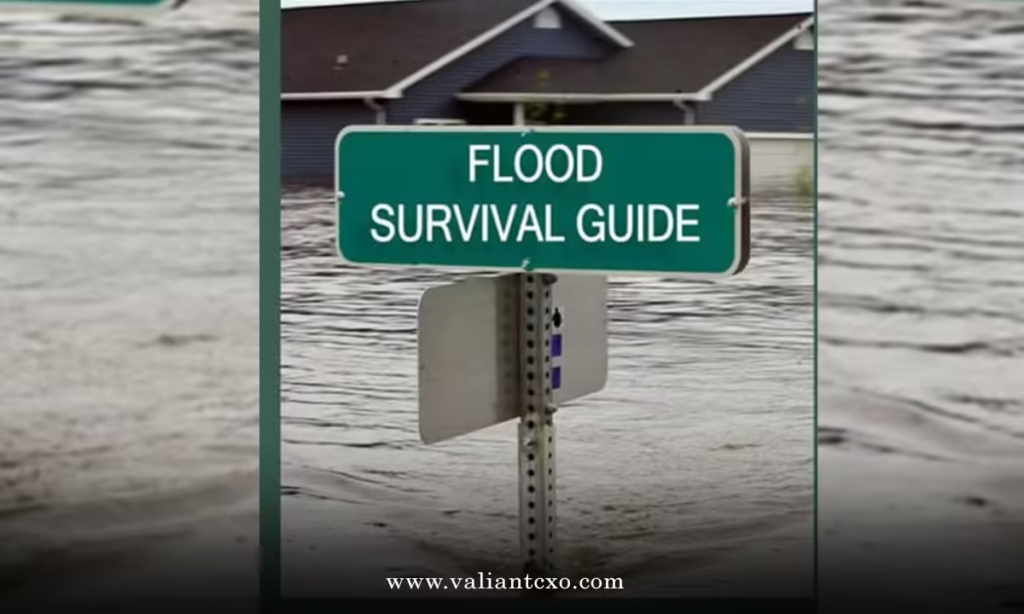
5. Plan your evacuation and communication strategy
This is where most people get caught flat-footed.
A. Routes and destinations
- Map at least two evacuation routes that avoid low‑water crossings and typical flood‑prone roads.
- Identify realistic destinations: friends/family on higher ground, hotel options, or official shelters announced by emergency management.
- Know how long it takes to reach each destination in good conditions, then add time for heavy traffic.
B. Family communication plan
- Decide on a primary and backup meeting point if you get separated.
- Write down key phone numbers — don’t rely solely on your phone’s contacts.
- Pick an out‑of‑area contact (friend or relative in another city) whom everyone can call to “check in.”
When the Texas flood early warning system with real-time alerts 2026 pushes a flash flood warning or evacuation notice, your question shouldn’t be “What do we do?” It should be “We’re on Plan A or Plan B?”
6. Protect your finances and documents
Floods don’t just move furniture. They wreck paperwork and wreck budgets.
A. Insurance checkup
- Verify whether you have flood insurance (most standard homeowners policies in the U.S. do not cover flood damage).
- Review coverage limits and waiting periods so you’re not assuming protection you don’t really have.
- Photograph your home’s interior, key belongings, and any upgrades — store these with your digital backups.
B. Digital and physical backups
- Scan or photograph important documents: IDs, deeds, titles, medical records, and key receipts.
- Store them securely in the cloud or on an encrypted drive kept in your go‑bag.
- Keep originals or certified copies in a waterproof, fire‑resistant container if possible.
Add a calendar reminder to review this part of your Texas flood preparedness checklist at least once a year, or after major life changes.
7. Prep for after the water recedes
Preparedness doesn’t end when the rain stops. The recovery phase can be just as stressful.
A. Safety re-entry checks
Before re-entering a flooded home:
- Ensure local authorities say it’s safe to return.
- Watch for structural damage (sagging ceilings, cracked walls, shifted foundations).
- Treat all floodwater and anything it touched as potentially contaminated.
- Never turn on power or gas if you suspect damage; let professionals clear it first.
B. Document damage early
- Take clear photos and videos of all affected areas and items before you begin cleanup.
- Keep a log of conversations with insurers and contractors.
- Save receipts for any immediate repairs, temporary lodging, or emergency purchases.
Having this already listed in your checklist means you won’t forget the documentation that can make or break an insurance claim.
Sample Texas flood preparedness checklist (copy & customize)
Use this as a starting point and adapt it to your home, family, and risk level:
Risk & Alerts
- Checked flood zone and nearby rivers/creeks.
- Enabled emergency alerts on my phone.
- Signed up for local emergency management alerts.
- Installed or verified a reliable weather app.
- NOAA Weather Radio purchased, tested, and accessible.
Home Prep
- Gutters and downspouts cleared and extended.
- Street drains near property checked and cleared if safe.
- Critical appliances elevated where possible.
- Know how to shut off gas, electricity, and water.
- Flood barriers or sandbags stored and ready (if needed).
Go‑Bag & Car Kit
- Go‑bag assembled with documents, meds, chargers, and basics.
- Backups of key documents stored securely.
- Vehicle emergency kit assembled.
- Fuel tank kept at least half full during storm season.
Evacuation & Communication
- At least two evacuation routes planned that avoid low‑water crossings.
- Primary and backup destinations identified.
- Family communication plan written and shared.
- Out‑of‑area contact designated.
Financial & Recovery
- Flood insurance status checked and documented.
- Home inventory photos and videos updated.
- Fire/water-resistant container for critical items in place.
- Post‑flood safety and documentation steps understood.
Print it. Stick it on the fridge or near your emergency supplies. Review it when the forecast turns ugly and the Texas flood early warning system with real-time alerts 2026 starts issuing watches and warnings.
Final thoughts: Floods are fast — your preparation shouldn’t be
Floods don’t schedule themselves around your calendar. They hit in the middle of the night, during school pickup, or right as you’re about to clock out.
A smart Texas flood preparedness checklist, tuned to your actual risk and synced with the Texas flood early warning system with real-time alerts 2026, turns a chaotic emergency into a sequence of decisions you’ve already rehearsed.
You can’t stop the rain. But you can absolutely control how ready you are when it shows up in force. Start with one section of this checklist today — alerts, go‑bag, or drainage — and build from there. The payoff is simple: less panic, more control, and a better chance that your biggest post‑storm problem is cleaning up, not rebuilding from scratch.
FAQ :
FAQ 1: What should I do first on a Texas flood preparedness checklist if I’m overwhelmed?
Start with the essentials that give you the biggest safety boost fast. Turn on emergency alerts on your phone, sign up for local alerts, and choose at least two evacuation routes that avoid low‑water crossings. Once that’s done, assemble a basic go‑bag with documents, meds, chargers, and a flashlight — you can refine the rest later.
FAQ 2: How often should I update my Texas flood preparedness checklist?
At minimum, review and update it once a year before peak storm or hurricane season. Also revisit it after major life changes like moving, remodeling, buying a car, or adding family members. Use each significant flood watch or warning as a reminder to double-check routes, supplies, and contact info.
FAQ 3: How does the Texas flood early warning system with real-time alerts 2026 fit into my checklist?
It’s the intelligence layer of your plan. Your Texas flood preparedness checklist should include enabling phone alerts, signing up for local emergency notifications, and knowing how to interpret watches and warnings issued through the Texas flood early warning system with real-time alerts 2026. That way, when alerts fire, you already know which actions to take and in what order.