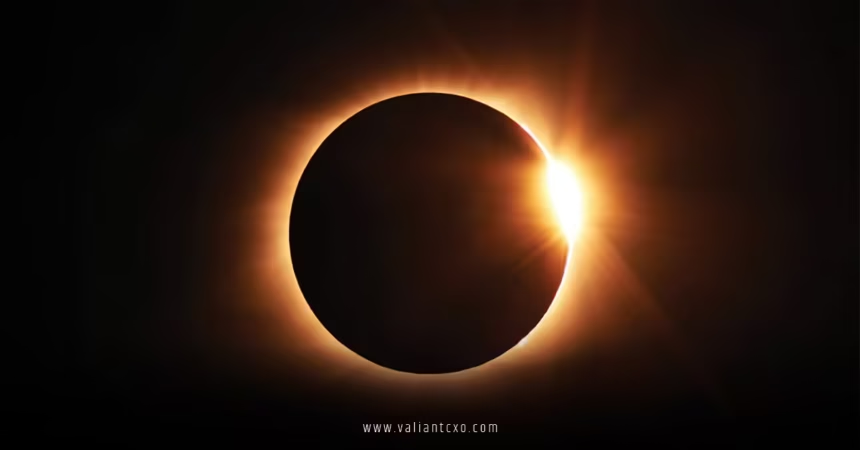
Total Solar Eclipse August 12 2026 Iceland hits western parts of the country with up to about two minutes of totality. This marks the first total solar eclipse visible from Iceland since 1954. For Americans dreaming of chasing this rare event, it combines jaw-dropping celestial drama with Iceland’s volcanic landscapes, fjords, and geothermal wonders.
- What it is: The Moon completely blocks the Sun along a narrow path, revealing the corona in a sudden twilight.
- Why it matters: Totality turns day to night for minutes. Stars pop out. Temperatures drop. It’s a bucket-list experience you can’t replicate with a partial eclipse.
- Iceland specifics: Western regions like the Westfjords, Snæfellsnes, and Reykjanes Peninsulas sit in the path. Maximum duration on land approaches 2 minutes 14 seconds near Látrabjarg.
- For US travelers: Late summer timing, direct-ish flights to Keflavík, and August’s milder weather make it doable. Expect crowds and book early.
- Partial vs total: Outside the path? You’ll see a deep partial, but you miss the full mind-bending show.
The kicker? Clear skies aren’t guaranteed in Iceland, but the payoff when they align is pure magic—like the universe hitting pause on reality. Ready to plan?
Why Chase the Total Solar Eclipse August 12 2026 Iceland?
Total solar eclipses happen somewhere on Earth roughly every 18 months. Specific spots wait centuries. Iceland gets this one after a long drought. The path clips the west coast near the point of greatest eclipse just offshore, delivering some of the longest totality on land anywhere.
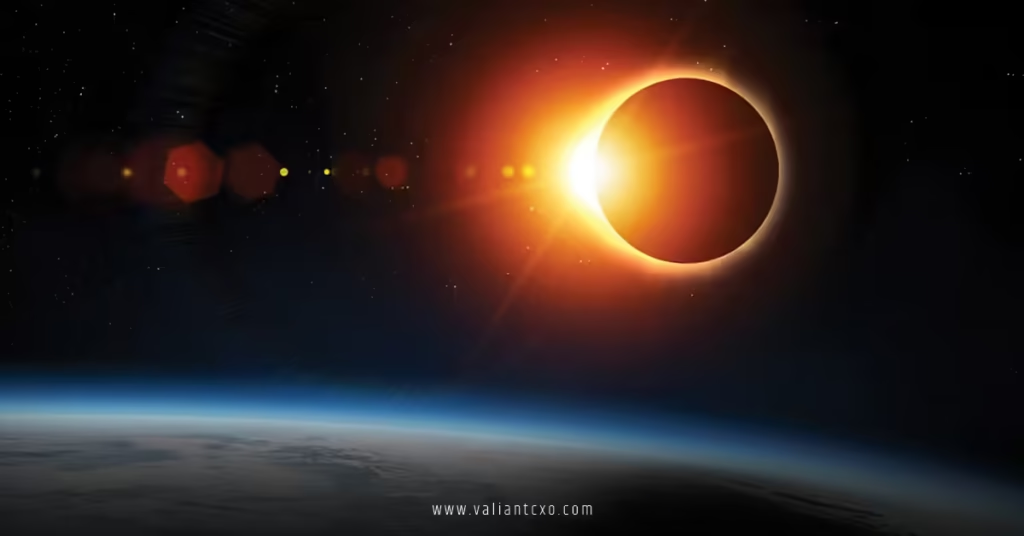
Picture this: You stand on black sand or dramatic cliffs. The Sun vanishes. The horizon glows in 360-degree sunset colors. Birds quiet down. Your skin feels the chill. Then the diamond ring flashes as sunlight returns. That single fresh metaphor? It’s like the sky ripping open a window to the cosmos for a private viewing.
Will you actually see stars? Yes, brighter planets like Venus, Jupiter, and Mercury often pop during totality here. The experience sticks with people forever.
Eclipse Timing and Path in Iceland
The event unfolds in the afternoon local time (GMT/UTC).
Expect partial phases to start around 4:47 PM in many western spots, with totality hitting between roughly 5:45–5:49 PM depending on exact location. It ends with partial phases wrapping up near 6:45–6:50 PM.
Here’s a quick comparison table for key spots:
| Location | Totality Start (approx) | Totality Duration | Notes |
|---|---|---|---|
| Ísafjörður (Westfjords) | ~17:44 | 1m 31s | Remote, dramatic fjords |
| Snæfellsnes Peninsula | ~17:45–17:48 | Up to ~2m 10s | Iconic mountains, accessible |
| Reykjavík | 17:48 | 1m 01s | Convenient but shorter |
| Keflavík/Reykjanes | 17:48 | 1m 39s | Near airport, Blue Lagoon option |
| Látrabjarg (Westfjords) | Early in path | ~2m 14s (longest on land) | Cliffs, puffins, remote roads |
Data drawn from official astronomical sources.
Pro tip: The centerline sits just offshore, so western peninsulas give you the best land-based views.
Best Places to Watch the Total Solar Eclipse August 12 2026 Iceland
Head west. The Westfjords offer the longest totality on land but require careful driving—narrow roads, possible closures for safety.
Snæfellsnes Peninsula delivers “Iceland in miniature” with glaciers, beaches, and Mt. Kirkjufell. Reykjanes near the airport suits first-timers or those short on time, especially if pairing with the Blue Lagoon eclipse events. Reykjavík works for urban convenience, though buildings can obstruct low western views.
What I’d do: Rent a 4×4, scout a coastal spot days ahead, and have a backup inland if clouds roll in. Mobility beats a fixed hotel view when weather shifts.
Step-by-Step Action Plan for Beginners
- Book now: Flights from major US hubs to Keflavík fill fast. Secure lodging, car, or guided tour immediately. August is peak season anyway.
- Gear up: Grab ISO 12312-2 certified eclipse glasses. No regular sunglasses. Add layers—base, fleece, waterproof shell. Pack binoculars or camera with solar filter if shooting.
- Study the path: Use interactive maps from NASA or timeanddate.com to pinpoint your spot.
- Monitor weather: Check forecasts obsessively the week before. Be ready to drive 1-2 hours for clearer skies.
- Arrive early: Get to your viewing site by midday. Traffic will snarl roads.
- During the event: Wear glasses for all partial phases. Remove only in full totality. Soak it in. Replace glasses as soon as the Sun reappears.
- After: Celebrate. Extend your trip for glaciers, Golden Circle, or early aurora chances.
Follow this and you’ll avoid rookie stress.
Safety and Preparation Essentials
Eye safety first. Never stare at the partial Sun without proper filters. Cameras, phones, and binoculars need solar filters too—never look through them unprotected.
Iceland’s August weather: cool (50s F highs), windy, possible rain. Pack for rapid changes. Fuel up, carry snacks and water. Tell someone your plans—cell service can be spotty in remote areas.
Common advice from veterans: Practice with your camera setup beforehand. Test glasses. Have a cloudy-day backup plan like joining a boat tour near the centerline.
Common Mistakes & How to Fix Them
- Waiting too long to book: Iceland tourism spikes. Fix: Lock in travel 12+ months out.
- Underestimating weather: Clouds kill views. Fix: Stay mobile, use real-time radar apps.
- Wrong gear: Cheap glasses or none. Fix: Buy certified ones early from reputable sources.
- Ignoring traffic/safety: Remote roads clog. Fix: Consider bus tours or guided experiences.
- Forgetting the big picture: Obsessing over photos instead of experiencing it. Fix: Put the camera down during totality for at least 30 seconds.
What usually happens is first-timers freeze in awe and forget basics. Prepare checklists.
Cost and Logistics Breakdown for US Travelers
| Item | Estimated Cost (per person) | Tips |
|---|---|---|
| Round-trip flight (US-East Coast) | $800–$1,500 | Book early for deals |
| 7-night lodging | $1,200–$2,500 | Guesthouses or campervan cheaper |
| Car rental (4×4) | $500–$900/week | Essential for flexibility |
| Tours/activities | $200–$600 | Eclipse-specific packages save hassle |
| Food & misc | $400–$700 | Groceries beat restaurants |
Total for a week: $3,000–$6,000+. Worth every penny for the memory.
Key Takeaways
- The total solar eclipse August 12 2026 Iceland delivers up to 2+ minutes of totality in stunning western landscapes.
- Western peninsulas offer prime viewing; plan for weather mobility.
- Safety glasses and layers are non-negotiable.
- Book everything yesterday—demand is high.
- Combine with Iceland’s natural wonders for an epic trip.
- Partial views elsewhere pale compared to totality.
- Preparation turns potential stress into pure wonder.
- This could be your only shot in Iceland for generations.
Chasing eclipses changes how you see the world. The total solar eclipse August 12 2026 Iceland hands you front-row seats to one of nature’s greatest shows in a place built for drama. Start mapping your route today. Clear skies or not, you’ll come back with stories that last a lifetime.
FAQs
Is the total solar eclipse August 12 2026 Iceland visible from the entire country?
No. Only western regions fall in the path of totality. Eastern and central areas see a strong partial eclipse, but miss the full corona reveal and darkness.
What time does the total solar eclipse August 12 2026 Iceland reach totality?
Afternoon local time, roughly 5:45–5:49 PM in prime western spots. Partial phases bookend it for about two hours total.
Can beginners successfully view the total solar eclipse August 12 2026 Iceland without prior experience?
Absolutely. Join a guided tour, follow basic safety rules, and focus on a solid viewing spot. The event itself does the heavy lifting—your job is showing up prepared.