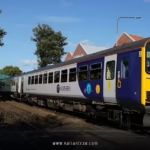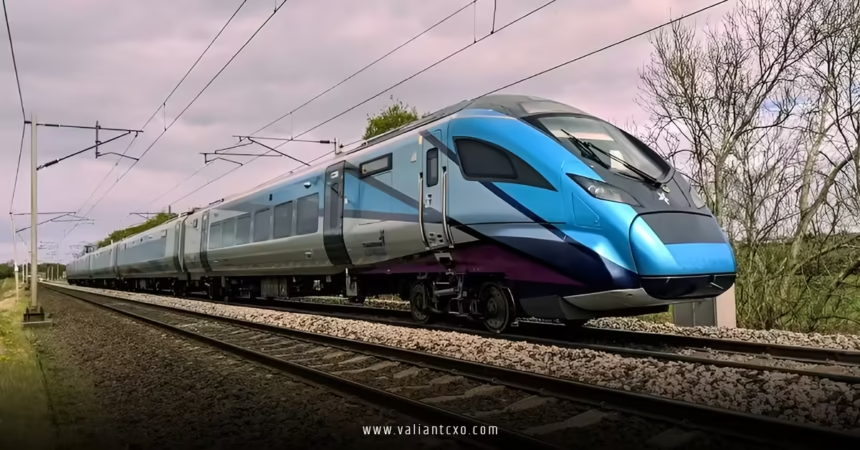
Transpennine Route Upgrade is reshaping how millions travel across the North of England, and if you’re a regular on trains between Manchester, Leeds, York, or Huddersfield, you’ve likely noticed the buzz—or the occasional bus replacement. This ambitious, multi-billion-pound project isn’t just tinkering around the edges; it’s a full-on transformation aimed at making your journeys faster, greener, and far more reliable. Imagine swapping noisy diesel engines for sleek electric trains zipping through the Pennines with fewer delays. That’s the promise of the Transpennine Route Upgrade.
But why now? And what’s actually happening on the ground in 2026? Whether you’re a daily commuter dodging peak-hour crowds or a weekend explorer heading to the Yorkshire Dales, understanding the Transpennine Route Upgrade helps make sense of the short-term hassles for those long-term wins. Let’s break it down step by step—you’ll see why this is one of the biggest rail investments in decades.
What Exactly is the Transpennine Route Upgrade?
At its core, the Transpennine Route Upgrade (often shortened to TRU) is a massive infrastructure program led by Network Rail. It targets the vital rail artery stretching about 76 miles from Manchester to York, primarily via Huddersfield and Leeds. This isn’t a quick fix; it’s a comprehensive overhaul involving electrification, track doubling, speed enhancements, signalling modernizations, and station revamps.
Think of the current line like an old country road—charming but congested and slow in spots. The Transpennine Route Upgrade is widening it into a motorway: smoother, faster, and capable of handling way more traffic. Funded with around £11 billion, it’s part of broader efforts to level up connectivity in the North, boosting economies from Liverpool’s influence to Newcastle’s reach.
Why does this matter to you? Because the Transpennine Route Upgrade directly tackles pain points like unreliable services and packed carriages. Once complete, expect journey times to drop significantly—Manchester to Leeds could shave off eight minutes to hit 42, while more trains per hour mean less waiting around.
Why is the Transpennine Route Upgrade Happening Now?
Ever wondered why trains across the Pennines feel stuck in the past? Much of the route still relies on diesel, with single-track bottlenecks and outdated signals causing cascades of delays. Passenger numbers have boomed, yet capacity hasn’t kept pace.
The Transpennine Route Upgrade addresses this head-on, responding to decades of underinvestment. It’s aligned with net-zero goals—electrifying the line could slash up to 87,000 tonnes of CO2 annually. Plus, it supports economic growth: better links between major cities like Manchester and Leeds fuel jobs, tourism, and business.
Rhetorical question: Wouldn’t you rather spend less time on a train and more time at your destination? That’s the driving force behind the Transpennine Route Upgrade. Government backing and industry collaboration make it possible, even if it means enduring some disruptions along the way.
Key Improvements in the Transpennine Route Upgrade
The Transpennine Route Upgrade packs several game-changing elements. Let’s unpack the big ones.
Full Electrification: The Green Heart of the Transpennine Route Upgrade
Electrification is the star feature. The entire core route from Manchester to York via Huddersfield and Leeds will run on overhead electric wires, allowing modern electric trains to replace diesels. By early 2026, over a quarter of the route is already wired up, with sections like Manchester Victoria to Stalybridge and York to Church Fenton complete.
This shift isn’t just eco-friendly; electric trains accelerate faster, climb hills better, and run quieter. Analogy time: It’s like upgrading from a clunky old bike to an e-bike—suddenly, those steep Pennine gradients feel effortless.
Track and Infrastructure Upgrades
Tracks are getting doubled in key spots, speeds raised, and curves straightened. Over 40 miles of new track were laid in 2025 alone. Signalling gets a digital boost for more trains safely running closer together.
Station Enhancements
Stations aren’t forgotten. Huddersfield saw major work in 2025, including new platforms and a restored roof canopy. Mirfield gets realigned tracks, while others gain longer platforms for bigger trains and better accessibility.
These tweaks in the Transpennine Route Upgrade add up to up to six fast trains per hour on core sections—double some current frequencies.
Current Progress on the Transpennine Route Upgrade in 2026
As we kick off 2026, the Transpennine Route Upgrade is humming with activity. 2025 was a banner year: 25% electrification milestone hit by summer, growing to over 25% by year-end. Thousands of overhead line foundations poured, miles of cabling for signals, and major remodelling at spots like Church Fenton.
Huddersfield station reopened after intensive upgrades, a new £46 million depot opened nearby, and bridges demolished to make way for electrification. Track realignments at Mirfield and elsewhere smoothed the ride.
But progress means work—and work means closures. Right now, in January 2026, a major blockade between Leeds and York (extended from late December 2025) is installing new tracks, signals, and platforms. It’s disruptive, but essential for those faster future journeys.
The pace is impressive: 12,000 trains diverted in 2025 to keep things moving while upgrades happened. Teams work around the clock during possessions to maximize efficiency.
Breaking Down the Transpennine Route Upgrade by Section
The route splits into three main stretches, each with tailored upgrades.
Manchester to Huddersfield: Tackling the Standedge Challenge
This western section crosses the rugged Pennines, including the Standedge tunnels. Focus here is electrification through tough terrain, track improvements for speed, and station tweaks at places like Stalybridge.
Early electrification successes here set the tone, with electric services already running parts of this stretch.
Huddersfield to Leeds: The Busy Central Core
Often the bottleneck, this area sees quad-tracking in places (like Ravensthorpe to Dewsbury), major station work at Huddersfield, and signalling overhauls. 2025’s intensive works here, including viaduct upgrades, pave the way for more reliable flows.
Leeds to York: Eastern Momentum
East of Leeds, including Church Fenton and towards York, recent blockades remodel tracks and install wires. The ongoing January 2026 works here are critical, realigning platforms and boosting capacity towards the East Coast Main Line.
Each section of the Transpennine Route Upgrade builds on the others—like dominoes falling into perfect faster travel.
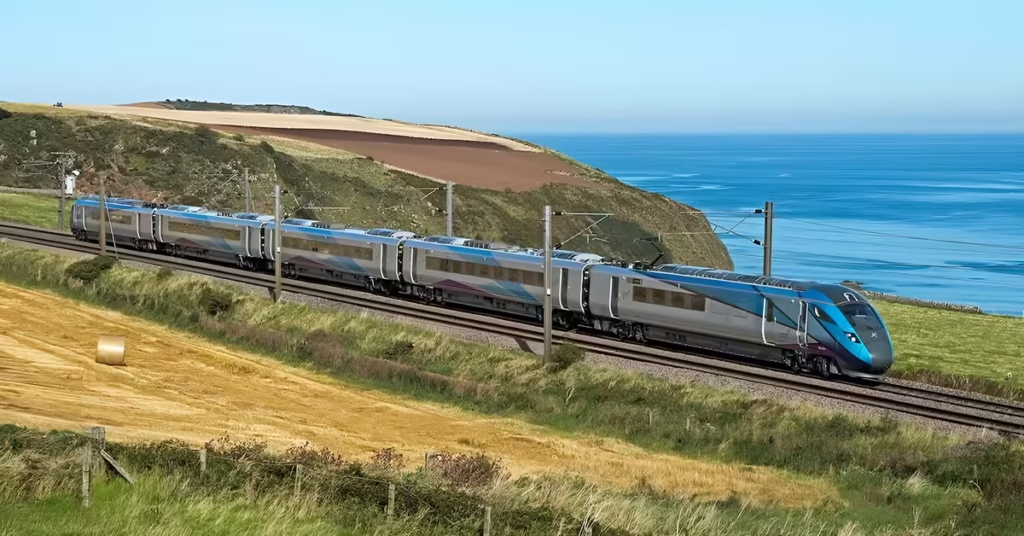
Navigating Disruptions During the Transpennine Route Upgrade
Let’s be real: Upgrades aren’t painless. The Transpennine Route Upgrade involves big engineering blocks, leading to bus replacements or diversions.
The current Leeds-York/Selby closure (December 27, 2025, to January 25, 2026) is a prime example, tying into broader industry changes. These works directly influenced the northern trains december 2025 timetable changes, with amended services and replacements for affected routes.
Holiday periods often host major possessions to minimize passenger impact. Operators like TransPennine Express and Northern provide alternatives, but always check apps. Short-term inconvenience for long-term gain—think of it as gym pain for future strength.
The Exciting Benefits Once the Transpennine Route Upgrade Completes
Picture this: Boarding an electric train in Manchester, gliding smoothly to Leeds in under 45 minutes, with room to spare and no diesel fumes. More seats, fewer cancellations, and seamless connections to other lines.
Economically, the Transpennine Route Upgrade unlocks potential—better access to jobs, tourism boosts in the Pennines, and greener freight options. Reliability soars with modern signalling, cutting those frustrating delay chains.
For leisure travelers? Spontaneous trips become easier with frequent services. Commuters? More predictable days. It’s not hype; it’s engineered improvement.
Timeline and What’s Next for the Transpennine Route Upgrade
Full completion stretches into the late 2020s or early 2030s, phased to deliver benefits incrementally. Electric services expand as sections wire up, with partial faster timings possible sooner.
2026 promises continued momentum: More electrification miles, station finishes, and track handovers. Watch for milestones like full Huddersfield-Leeds wiring or end-to-end testing.
Delays have happened—projects this scale always face challenges—but momentum in 2025 shows commitment.
Conclusion
The Transpennine Route Upgrade stands as a beacon of investment in Northern rail, turning a vital but strained route into a modern powerhouse. From electrification slashing emissions to tracks enabling blistering speeds and packed-extra services, the benefits will touch everyone from daily grinders to occasional adventurers. Yes, disruptions like the current blockades test patience, but they’re building something transformative.
Stay updated, plan around works, and look forward to those smoother rides. The Transpennine Route Upgrade isn’t just upgrading tracks—it’s upgrading opportunities across the North. Exciting times ahead!
FAQs
What is the main goal of the Transpennine Route Upgrade?
The Transpennine Route Upgrade aims to deliver faster, more frequent, greener, and reliable trains between Manchester, Huddersfield, Leeds, and York through electrification and infrastructure improvements.
How much of the Transpennine Route Upgrade is electrified in 2026?
As of early 2026, over a quarter of the route is electrified, with key sections like Manchester to Stalybridge and York to Church Fenton complete, building on 2025’s 25% milestone.
What disruptions are happening in January 2026 due to the Transpennine Route Upgrade?
A major closure between Leeds, York, and Selby runs until January 25, 2026, for track remodelling, signalling, and platform work—check operators for bus replacements.
How does the Transpennine Route Upgrade affect journey times?
Once complete, the Transpennine Route Upgrade will cut times significantly, such as Manchester to Leeds from 50 to around 42 minutes, with more fast services overall.
When will the Transpennine Route Upgrade be fully finished?
The Transpennine Route Upgrade is phased, with benefits rolling out progressively; full completion is expected in the late 2020s or early 2030s.