Trump 2026 economic policies impact continues to dominate headlines as the second year of President Donald Trump’s second term unfolds. With bold moves like massive tax cuts, aggressive tariffs, deregulation drives, and immigration restrictions, the administration promised a manufacturing renaissance, lower costs, and explosive growth. But the reality? It’s a mixed bag—some sectors booming, others feeling the pinch, and everyday Americans asking: Are we really better off?
In this deep dive, we’ll unpack the Trump 2026 economic policies impact, from GDP swings and job numbers to how tariffs hit your wallet. We’ll also link back to the president’s own framing in his recent address—check out the Trump 2026 State of the Union address full transcript for his unfiltered take on these policies. Whether you’re cheering the wins or worried about the costs, let’s break it down honestly and clearly.
Core Pillars of Trump’s 2026 Economic Agenda
Right out of the gate in 2025, Trump rolled out what supporters call “America First” economics. Key elements included:
- Tax Cuts via the One Big Beautiful Bill (OBBBA) — Extending and expanding the 2017 cuts, slashing corporate rates further (some to 15-20%), and boosting disposable income.
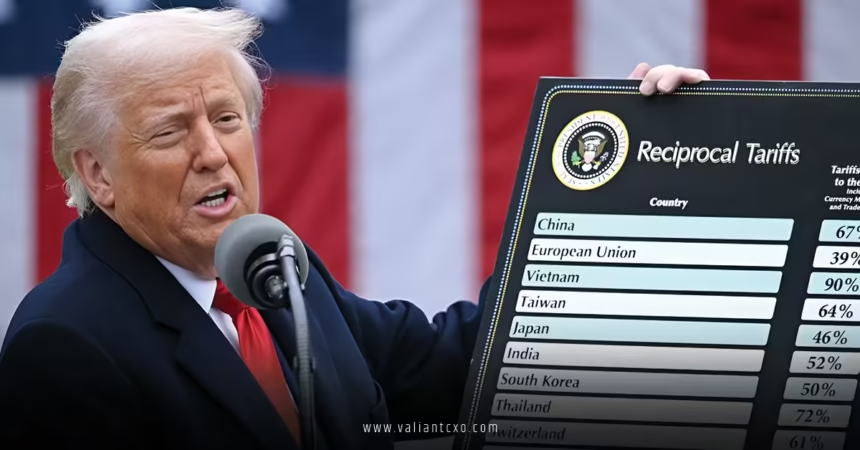
- Tariffs as Revenue and Protection — Starting with sweeping levies (peaking near 28% at points), then pivoting after Supreme Court rulings to new rates around 15% under different authorities.
- Deregulation Push — Easing rules in energy, banking, and tech to unleash investment.
- Immigration Crackdown — Sharp reductions in net inflows, sold as protecting jobs and housing.
These weren’t tweaks—they were big swings aimed at reshoring factories and making America “win again.”
Positive Impacts: Where Growth and Wins Showed Up
Let’s start with the bright spots. The Trump 2026 economic policies impact shines in several areas.
Strong GDP Performance Despite Bumps
After a shaky Q1 2025 dip (businesses front-loaded imports to dodge tariffs), growth rebounded hard. Mid-2025 quarters hit 3.8% and 4.4% annualized—beating expectations. Tech/AI investment surged, consumer spending held firm, and overall 2025 GDP landed around 2.2%. Projections for 2026 hover near 2-2.2%, with deregulation and tax tailwinds helping offset headwinds.
Think of it like a car hitting potholes early but then cruising on smoother roads—the engine (private investment) kept revving.
Manufacturing and Investment Boom
Factories saw output rise, thanks to tariffs shielding domestic producers. Trillions in pledged investments (White House claims around $9-18 trillion, though debated) flowed in, especially in energy and tech. Energy production climbed, with oil up notably, lowering some input costs.
Supporters point to this as proof: Protectionism works when it brings jobs and capital home.
Stock Market Resilience
Despite volatility from tariff chaos and a long 2025 government shutdown, major indexes pushed higher. The Dow even crossed 50,000 at points—a symbol of confidence in pro-business moves.
Challenges and Criticisms: The Downsides of the Approach
No policy is perfect, and the Trump 2026 economic policies impact includes real pain points.
Tariffs: A Tax on Americans?
Tariffs generated huge revenue—hundreds of billions—but economists say U.S. consumers and firms bore most (80-90%) of the cost. Prices for imported goods rose, contributing to lingering inflation above 2%. Pass-through hit 50-90% in studies, meaning everyday items cost more.
After the Supreme Court struck down major “emergency” tariffs in February 2026, the administration imposed new ones (10-15%), keeping pressure on. Result? Higher household costs—estimates suggest $600-1,300 extra per family annually, depending on duration.
It’s like putting a toll booth on imports: The government collects cash, but drivers (you) pay the fee.
Job Growth and Labor Market Soft Spots
Job creation stalled in parts of 2025. Unemployment ticked up slightly, broader measures worsened. Immigration curbs reduced labor supply sharply (net negative in 2025), tightening markets but slowing hiring in some sectors.
Wage growth? Mixed—real after-tax incomes rose just 0.9% in 2025, slower than prior years.
Inequality and Affordability Squeeze
Critics argue policies favor the top: Tax cuts skewed richward, while tariffs act as regressive taxes. Ending some health credits added burdens. For most income groups below the top 5%, net taxes rose in 2026. Affordability worsened for essentials, with many feeling squeezed despite headline growth.
Recession risks? Higher from chaotic implementation, spending cuts, and uncertainty.
How the Trump 2026 State of the Union Address Full Transcript Framed These Policies
In his record-long February 24, 2026, address, Trump painted a triumphant picture. He claimed a “stunning economic turnaround,” roaring growth, plunging prices, and tariffs paving the way to replace income taxes. He touted investments pouring in and factories returning.
For his full vision straight from the source, read the Trump 2026 State of the Union address full transcript—it captures the optimism he projects amid debates.
But fact-checks noted exaggerations: Growth wasn’t “unheard of,” incomes rose modestly, and trade deficits barely budged despite tariffs.
Long-Term Outlook: What 2026 and Beyond Might Bring
Looking ahead, models vary. Some see modest GDP boosts from tax/deregulation (0.7% long-run lift), offset by tariff drags (0.2% hit). Others warn of persistent smaller economy, higher inequality, and slower wage growth for typical families.
Tariffs could narrow trade gaps over time, but short-term uncertainty lingers—especially with legal fights and potential retaliation.
The big question: Will the wins compound, or will costs mount? Midterms loom, and voter wallets will decide.
Conclusion: Weighing the Trump 2026 Economic Policies Impact
The Trump 2026 economic policies impact tells a story of contrasts—robust growth in pockets, investment surges, and manufacturing gains on one side; higher costs from tariffs, stalled jobs in spots, and affordability struggles on the other. Tax cuts and deregulation fueled momentum, but trade experiments added friction.
It’s not all rosy or doom—it’s real-world economics with trade-offs. Dive into the Trump 2026 State of the Union address full transcript to see how the president spins it, then look at data for the full picture. What’s your take—game-changer or gamble? The next chapters will reveal more.
Here are a few high-authority resources for deeper reading:
- Explore detailed analysis on Reuters coverage of Trump’s economic agenda outcomes.
- Check balanced views from Brookings on why the economy hasn’t tanked.
- Review fiscal estimates at Tax Foundation’s tariff and tax policy tracker.
FAQs About Trump 2026 Economic Policies Impact
1. What are the main Trump 2026 economic policies impact areas?
Key effects include boosted GDP from tax cuts and investment, manufacturing gains from tariffs, but higher consumer prices, modest wage growth, and inequality concerns.
2. How have tariffs shaped the Trump 2026 economic policies impact?
Tariffs raised government revenue massively but increased costs for U.S. households (often $600+ annually), with limited trade deficit reduction so far.
3. Did tax cuts help or hurt in the Trump 2026 economic policies impact?
They spurred growth and disposable income (especially for higher earners), but combined with tariffs, many middle-income families saw net tax increases.
4. What does the Trump 2026 State of the Union address full transcript say about economic policies?
It highlights “roaring” growth, investment inflows, and tariffs as transformative—though some claims faced fact-check pushback on scale and speed.
5. What’s the long-term Trump 2026 economic policies impact forecast?
Mixed: Potential modest GDP lift from deregulation/taxes, but drags from tariffs, immigration limits, and uncertainty could slow typical family progress.