
Tsunami warning systems in Europe represent a critical line of defense against one of nature’s most devastating forces—sudden, massive waves that can strike without mercy. From Mediterranean earthquakes to potential asteroid impacts, these sophisticated networks monitor the seas, analyze threats, and alert millions in minutes. In this in-depth guide, we’ll dive into how these systems work, their evolution, and why they’re more vital than ever in our changing world.
The Evolution of Tsunami Warning Systems in Europe
From Reactive to Proactive Defense
Remember when tsunamis were just vague warnings from distant oceans? Europe has come a long way. Modern tsunami warning systems in Europe didn’t just appear overnight—they evolved from tragic lessons learned. The 2004 Indian Ocean tsunami exposed global vulnerabilities, prompting Europe to build its own robust infrastructure.
By the early 2010s, coastal nations recognized that their shared seas demanded shared solutions. Today, these systems blend cutting-edge technology with international cooperation, providing warnings that can save thousands of lives. It’s like having a vigilant guardian watching every seismic twitch beneath the waves.
Why Europe Needs Advanced Systems
Europe isn’t immune to tsunamis. The Mediterranean generates frequent earthquakes, the Atlantic hosts submarine landslides, and emerging risks like 2026 North Sea asteroid impact risks and evacuation plans add new dimensions. These systems aren’t luxuries; they’re necessities for regions where millions live within striking distance of the sea.
How Tsunami Warning Systems in Europe Actually Work
The Detection Network: Eyes Under the Sea
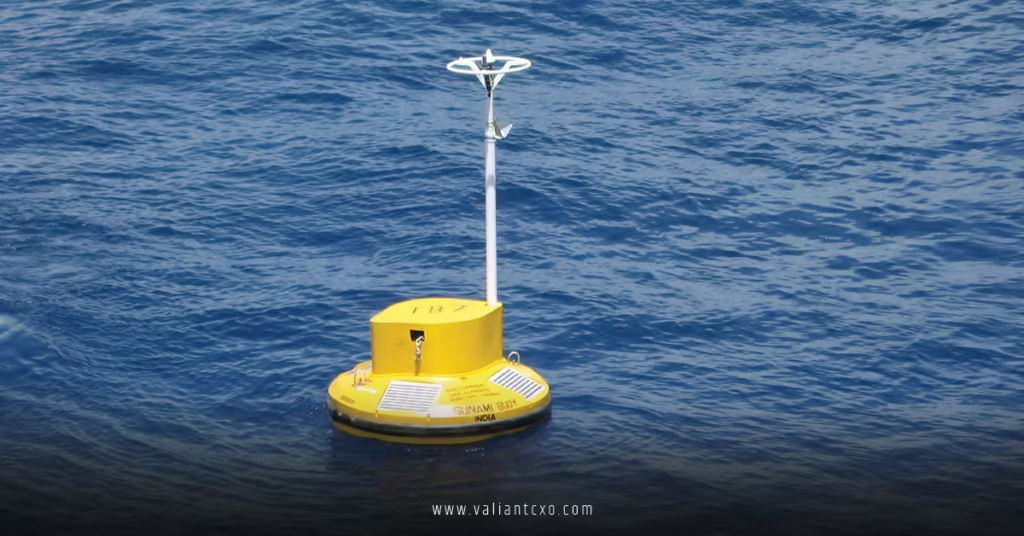
At the heart of tsunami warning systems in Europe lies an intricate web of sensors. Seafloor seismometers detect earthquakes instantly, while deep-sea buoys measure water pressure changes—subtle shifts that signal an approaching tsunami. These devices form the North-East Atlantic, Mediterranean and Connected Seas Tsunami Warning System (NEAMTWS), covering everything from Portugal to Turkey.
When an earthquake strikes, data races to analysis centers at light speed. Algorithms crunch numbers, predicting wave height, speed, and arrival times. It’s a high-stakes chess game where every second counts.
Multi-Layered Verification Process
No single sensor tells the whole story. Tsunami warning systems in Europe cross-verify data from GPS stations, coastal tide gauges, and even satellite altimetry. This redundancy ensures accuracy—false alarms cost trust, but missed warnings cost lives.
For instance, if a Mediterranean quake registers 6.5 magnitude, the system models potential tsunamis across multiple scenarios. Within minutes, coastal authorities receive tailored alerts: “Evacuate to higher ground” or “No threat detected.”
Key Components of Europe’s Tsunami Warning Infrastructure
1. NEAMTWS: The Continental Backbone
The NEAMTWS is Europe’s flagship network, coordinating 39 countries. Its candidate centers—like France’s in Toulouse and Italy’s in Catania—operate 24/7, sharing real-time data. This system has already proven its worth, issuing timely warnings for events like the 2018 Aegean Sea quake.
2. Regional Specialists
- Mediterranean: Focuses on frequent seismic activity from the Hellenic Arc.
- Atlantic: Monitors Canary Islands volcanoes and landslide risks.
- North Sea Integration: Links to systems addressing asteroid-related threats, as explored in 2026 North Sea asteroid impact risks and evacuation plans.
3. Technological Marvels
| Component | Function | Coverage |
|---|---|---|
| Seafloor DART Buoys | Detect deep-ocean tsunamis | Atlantic & Mediterranean |
| Coastal Tide Gauges | Measure incoming waves | 200+ stations across Europe |
| Seismic Networks | Earthquake detection | Integrated with national grids |
| GNSS Stations | Real-time sea level monitoring | 1,000+ across member states |
These tools create a seamless shield, turning potential disasters into manageable events.
Case Studies: Tsunami Warning Systems in Action
The 2023 Crete Earthquake Response
In late 2023, a 6.8 magnitude quake struck near Crete. Tsunami warning systems in Europe sprang into action: alerts reached Greek authorities in under 5 minutes. While waves reached 1.2 meters, timely evacuations prevented casualties. This event validated years of investment.
Lessons from Historical Events
The 1755 Lisbon tsunami killed tens of thousands, highlighting Europe’s vulnerability. Fast-forward to today, and systems have reduced response times from hours to minutes. Yet, challenges persist—public compliance during warnings remains variable.
Integration with Emerging Threats
Asteroid Impact Scenarios
Traditional seismic tsunamis aren’t Europe’s only worry. Systems are adapting to space-based threats. For example, 2026 North Sea asteroid impact risks and evacuation plans incorporate tsunami modeling, where an impact could generate waves dwarfing earthquake-triggered ones. Warning networks now simulate these “meteotsunamis,” ensuring readiness for cosmic curveballs.
Climate Change Amplification
Rising sea levels and stronger storms compound tsunami risks. Warning systems evolve with climate data, predicting how warmer oceans might amplify wave energy. It’s proactive adaptation at its finest.
Public Alert Mechanisms: From Warning to Action
Multi-Channel Communication
Tsunami warning systems in Europe don’t stop at detection—they deliver action. Cell broadcast alerts ping every phone in the zone. Sirens wail, apps notify, and TV interrupts programming. In Sweden, for instance, the VMA system reaches 99% of mobiles instantly.
The Critical First Hour
- 0-5 minutes: Scientific alert to authorities
- 5-15 minutes: Public warnings issued
- 15-60 minutes: Evacuation to safe zones
Rhetorical question: Would you know where to go if your phone buzzed with a tsunami alert right now? Practice makes perfect.
Challenges Facing Tsunami Warning Systems in Europe
Funding and Maintenance Hurdles
High-tech buoys cost millions, and harsh seas batter them relentlessly. Budget cuts threaten long-term sustainability. Yet, the ROI is undeniable—one successful warning saves infrastructure worth billions.
Human Factors
Even perfect tech fails without public trust. Skepticism leads to ignored alerts. Education campaigns, like those in Portugal post-1755 commemorations, build awareness through school programs and apps.
Cross-Border Coordination
Tsunamis ignore borders. Delays in data sharing could prove fatal. NEAMTWS addresses this through binding protocols, but political tensions occasionally test the system.
Future Innovations in Tsunami Warning Technology
AI and Machine Learning
Tomorrow’s systems will predict tsunamis before quakes even finish. AI analyzes patterns from historical data, flagging “high-risk” tremors instantly. Pilot programs in Greece already cut analysis time by 40%.
Satellite Constellations
CubeSats and radar satellites provide global coverage gaps. Europe’s Copernicus program integrates this, offering unprecedented ocean surveillance.
Drone Networks
Post-warning, drones deliver real-time visuals to response teams, guiding evacuations with precision.
Country-Specific Highlights
Greece: Mediterranean Frontline
With 6,000 km of coastline, Greece leads in seismic tsunami readiness. Their system integrates folklore—ancient tales of “sea retreats”—with modern tech.
Portugal: Atlantic Sentinel
Post-1755, Portugal pioneered public education. Their alerts reach fishing boats via VHF radio.
UK and North Sea Focus
Integrating with 2026 North Sea asteroid impact risks and evacuation plans, the UK bolsters North Sea monitoring for multi-hazard scenarios.
Preparing Yourself: What Individuals Should Know
Stay safe by:
- Downloading official apps (e.g., NEAMTWS-linked ones)
- Knowing your vertical evacuation route
- Following “run, climb, or stay” rules
- Participating in drills
Simple steps amplify system effectiveness.
Conclusion
Tsunami warning systems in Europe stand as testaments to human ingenuity, transforming terror into manageable risk. From seafloor sentinels to AI predictions, these networks safeguard millions along vulnerable coasts. As threats evolve—from quakes to potential asteroid events like those in 2026 North Sea asteroid impact risks and evacuation plans—so too must our vigilance.
Investments today ensure tomorrow’s safety. Governments, scientists, and citizens must collaborate to maintain and enhance these lifelines. Stay informed, stay prepared—the sea’s power demands our respect and readiness.
External Resources
- NEAMTWS Official Site – Primary source for Europe’s tsunami warning coordination and real-time updates
- IOC-UNESCO Tsunami Programme – Global standards and technical resources supporting European systems
- EMSC (European-Mediterranean Seismological Centre) – Real-time earthquake data feeding into tsunami warnings
Frequently Asked Questions
1. How fast do tsunami warning systems in Europe detect threats?
Most systems detect earthquakes within 2-3 minutes and issue public warnings within 5-10 minutes, giving coastal communities precious time to evacuate.
2. Are tsunami warning systems in Europe prepared for asteroid-generated waves?
Yes, networks like NEAMTWS now model “meteotsunamis” from scenarios such as 2026 North Sea asteroid impact risks and evacuation plans, integrating space threat data.
3. What happens if a false alarm is issued?
False alarms are minimized through verification, but when they occur, they build system credibility by demonstrating responsiveness without panic.
4. Which European country has the most advanced tsunami warning system?
Greece leads due to frequent threats, but the interconnected NEAMTWS makes all participating nations equally protected through shared technology.
5. Can individuals receive tsunami alerts if traveling in Europe?
Yes, many countries use cell broadcast technology that alerts any phone in the warning zone, regardless of the user’s home network.