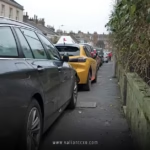
UK Parking Rules 2026 Updates hit drivers harder than many expect. Councils across England gain fresh powers to clamp down on obstructive parking, while enforcement tightens on dropped kerbs, cycle lanes, and more.
Fines stay in familiar bands but get issued faster. Private parking operators face continued pressure for fairer practices. The changes prioritize pedestrians, cyclists, and smoother traffic flow.
- Pavement parking crackdown: English councils outside London can now enforce civil penalties for unnecessary obstruction, with fines typically £60–£130.
- Dropped kerbs and obstructions: Stronger action against blocking access points.
- Local flexibility: No blanket national ban — councils decide where to tighten rules.
- Highway Code reminders: Rules 238–252 emphasize considerate parking.
- Private parking tweaks: Ongoing push for consistent codes of practice.
These UK Parking Rules 2026 Updates close long-standing enforcement gaps. What used to require police now falls to civil enforcement officers already on patrol.
Major Changes Taking Effect in 2026
The big one? Pavement parking.
For decades, London enforced strictly. Scotland has its national rules. Outside London in England, police handled complaints — which meant little happened. Now councils step in directly.
By the end of December 2026, civil enforcement officers issue Penalty Charge Notices (PCNs) for vehicles causing unnecessary obstruction on footways. This shift comes through the English Devolution and Community Empowerment Act and related guidance.
Other updates tighten rules around:
- Parking across dropped kerbs (even without yellow lines)
- Blocking cycle lanes during restricted hours
- Obstructive parking near schools or junctions
- Verge parking where it damages surfaces or creates hazards
Local authorities get tools to apply broader restrictions without street-by-street battles. Some areas will introduce wider zone bans. Others keep flexibility on narrow residential streets.
UK Parking Rules 2026 Updates also reinforce the Highway Code. Rule 244 makes it clear: don’t park on the pavement unless signs say otherwise. The message? Park properly or pay the price.
Fines and Penalty Breakdown 2026
Expect these typical amounts. Councils set exact levels within government bands, and many offer 50% early payment discounts (often 14–21 days).
| Contravention | Typical PCN Amount | Early Discount | Notes |
|---|---|---|---|
| Pavement obstruction | £60–£130 | 50% off | Main 2026 focus outside London |
| Dropped kerb blocking | £70–£130 | Yes | Pedestrian and access priority |
| Cycle lane / yellow line | £70–£130 | Yes | Higher in busy or school zones |
| Serious or repeated | Higher end | Applies | Possible vehicle removal |
Private parking charges often cap lower under the Code of Practice, but ignore them and debt recovery escalates fast.
How These Rules Affect You Day to Day
Picture this: you nip into the shops and leave two wheels on the pavement “like always.” In 2026, that quick stop could cost you. Civil enforcement officers don’t need a police officer present anymore.
The kicker? Narrow streets might still allow some tolerance where full carriageway parking isn’t realistic. But blatant blocking of prams, wheelchairs, or visibility lines? That’s a ticket waiting to happen.
Drivers in suburban and rural areas face the biggest mindset shift. Urban areas already felt stricter. Now the net widens.
For full details on the pavement side of these changes, check this guide to pavement parking fines amount England outside London 2026.

Step-by-Step Action Plan to Stay Compliant
- Know your area — Visit your local council website. Search their parking enforcement page for 2026 updates.
- Scan before parking — Check for new signs, markings, or yellow lines extending to kerbs.
- Default to full carriageway — Leave the pavement clear whenever possible.
- Respect dropped kerbs — Treat them as no-go zones for parking.
- Use apps wisely — Pay for any pay-and-display or zone parking promptly.
- Document everything — Photos help if you need to appeal.
- Stay informed — Sign up for council alerts on local parking changes.
Do this and you drive with confidence instead of crossing your fingers.
Common Pitfalls and Quick Fixes
Assuming old habits are safe. Fix: Assume enforcement is active in your area now.
Ignoring early payment windows. Fix: Pay fast or set calendar reminders.
“Just for a minute” thinking. Fix: CEOs patrol actively. No free passes.
Forgetting private car parks. Fix: Read signs. The Code of Practice limits some excesses but doesn’t eliminate risk.
Missing local variations. Fix: Rules differ by council. One town’s tolerance isn’t another’s.
Wider UK Context
Scotland keeps its stricter national approach. London remains the toughest. Wales and Northern Ireland evolve at their own pace, but the England rollout sets a tone for the whole UK.
Private parking operators continue adapting to the Code of Practice. Expect clearer signage, appeals processes, and capped charges in many locations.
For official Highway Code details, head to gov.uk The Highway Code. The Department for Transport’s pavement parking response offers deeper policy insight.
Key Takeaways
- UK Parking Rules 2026 Updates empower councils for faster pavement and obstruction enforcement.
- Fines generally range £60–£130 with early payment discounts.
- Focus remains on unnecessary obstruction rather than total bans everywhere.
- Pedestrian safety drives the changes — especially for vulnerable users.
- Check local council rules — variations are real.
- Always prioritize clear pavements and access points.
- Document and appeal unfair tickets with strong evidence.
- Adapt early to avoid surprise costs through late 2026 and beyond.
These updates make streets work better for everyone who uses them. The days of pavement parking as a low-risk habit are fading fast. Park smart, check local rules, and save yourself the hassle — and the money.
FAQs
What are the main UK Parking Rules 2026 Updates drivers need to know?
The standout change gives English councils outside London direct powers to fine pavement parking that causes unnecessary obstruction, with PCNs from £60 to £130. Dropped kerb and cycle lane enforcement also strengthens.
Will pavement parking be completely banned under the 2026 rules?
No nationwide blanket ban. Councils gain easier ways to prohibit it locally and enforce against obstructions. Some areas will be stricter than others.
How do I avoid fines from the UK Parking Rules 2026 Updates?
Park fully on the carriageway, respect dropped kerbs and signs, check your council’s parking page regularly, and pay any tickets quickly for the discount.