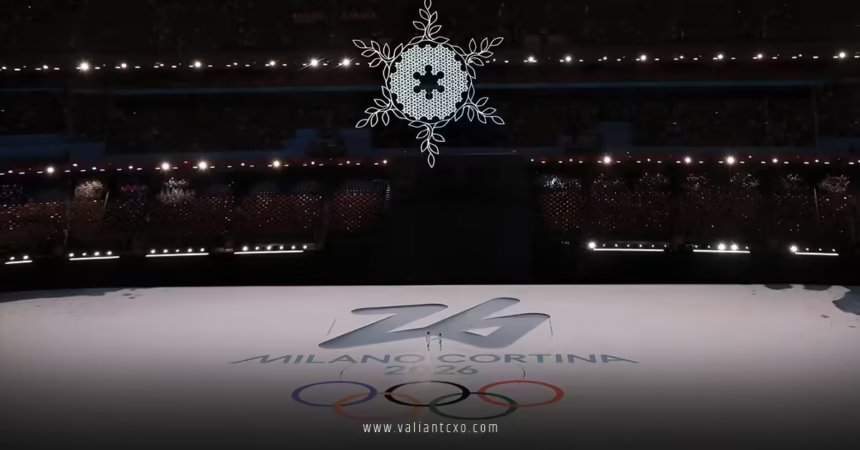
Ukraine Paralympics boycott 2026 has cast a long shadow over the Milano Cortina Winter Paralympic Games, turning what should be a celebration of human resilience into a stark reminder of how geopolitics can freeze even the warmest sporting spirit. As the opening ceremony unfolded in Verona on March 6, 2026, Ukrainian athletes and officials stayed away in protest, joining a growing coalition of nations furious at the International Paralympic Committee’s (IPC) decision to let a small group of Russian and Belarusian competitors wave their national flags. This isn’t just about one ceremony—it’s a powerful statement echoing the pain of an ongoing war, and it links directly to the broader storm known as the Milano Cortina 2026 Paralympics Russian athletes flag controversy.
Have you ever wondered how a simple piece of colored fabric can spark such fierce division? In this case, it’s not abstract symbolism; it’s tied to invasion, loss, and the question of whether sport can—or should—stay neutral when lives are still on the line.
The Spark: IPC’s Controversial Green Light for Russian and Belarusian Flags
Everything traces back to a pivotal IPC General Assembly vote in September 2025. After years of partial suspensions following Russia’s 2022 full-scale invasion of Ukraine, the committee lifted key restrictions on the National Paralympic Committees of Russia and Belarus. This opened the door for athletes from those nations to return—not as neutrals, but under their own banners.
By early 2026, the IPC awarded 10 wildcard slots: six to Russians (split across para alpine skiing, cross-country skiing, and snowboarding) and four to Belarusians (all in cross-country skiing). Unlike the stricter rules at the preceding Winter Olympics in the same venues—where Russians competed as Individual Neutral Athletes (AINs)—these Paralympians could march with flags flying and hear their anthems if they claimed gold.
The IPC framed it as a step toward inclusion, arguing that athletes shouldn’t bear the full weight of governmental actions forever. President Andrew Parsons stood firm, even as criticism mounted, insisting the decision “cannot be overturned” and urging everyone to focus on the athletes’ right to compete. Yet for Ukraine and its allies, this felt like a betrayal of the Paralympic values of peace and respect.
Ukraine’s Firm Stand: Boycotting the Ceremony, Not the Competition
Ukraine led the charge in the Ukraine Paralympics boycott 2026. The National Paralympic Committee announced early that its delegation would skip the March 6 opening ceremony in Verona entirely. Officials, including sports minister Matvii Bidnyi, condemned the IPC move as “outrageous” and “cynical,” refusing to share the spotlight with symbols of the aggressor state.
President Volodymyr Zelenskyy amplified the outrage, calling it a “dirty decision” that clashed with European principles. Ukrainian Paralympic chief Valeriy Sushkevych stressed a key point: boycotting the full Games would hand Putin a symbolic win by sidelining Ukraine’s competitors. So the athletes stayed in—ready to race, push, and glide for medals—but the ceremonial parade? That was a hard no.
This nuanced approach—protest without self-exclusion—mirrors Ukraine’s broader resilience strategy: show up, compete fiercely, but never normalize the unacceptable.

The Growing Coalition: Who Else Joined the Ukraine Paralympics Boycott 2026?
Ukraine didn’t stand alone. The boycott snowballed quickly, drawing in nations from Eastern Europe and beyond. By early March 2026, reports confirmed at least seven to eleven countries (depending on the source) opting out of the ceremony:
- Czech Republic
- Estonia
- Finland
- Latvia
- Lithuania
- Poland
- Germany
- Netherlands
- And others like Canada and Croatia signaling solidarity
The European Union even joined the chorus, with foreign ministries praising the collective stand. Even host Italy expressed “absolute opposition,” urging the IPC to rethink the flags and anthems policy.
Some nations cited practical reasons too—like tight travel from Verona to Cortina for early alpine events—but the core driver remained clear: solidarity with Ukraine and rejection of state symbols amid active warfare.
Why This Matters: The Human and Symbolic Stakes
Think about the Ukrainian para-athletes heading to these Games. Many come from regions scarred by conflict—some have lost limbs or loved ones to the very forces whose flags now flutter at the Paralympics. Sharing a village, a dining hall, or a podium with those symbols? It’s not just politics; it’s personal.
The Ukraine Paralympics boycott 2026 highlights a deeper tension in international sport: Where do we draw the line between punishing regimes and protecting innocent athletes? The IPC chose inclusion; Ukraine and its partners chose accountability. Both sides invoke the Paralympic charter, yet arrive at opposite conclusions.
This drama also spotlights how the Paralympic movement sometimes diverges from the Olympic path. While the IOC kept stricter neutrality rules for Milano Cortina 2026 Olympics, the IPC’s more permissive stance created this unique flashpoint.
What Happens Next? Medals, Messages, and the Road Ahead
Despite the absences at the ceremony, the competition rolls on. Ukrainian stars—proven powerhouses in events like biathlon and cross-country—will chase podiums as fiercely as ever. China, often dominant in Winter Paralympics, may capitalize on any distractions, but the real story remains the athletes’ grit.
The Ukraine Paralympics boycott 2026 sends a loud message: Sport can’t pretend the war doesn’t exist. It pushes federations to reconsider policies, fuels calls for stricter vetting, and reminds the world that flags carry weight far beyond fabric.
In the end
these Games may be remembered not just for records broken on snow, but for principles defended off it. Ukraine‘s stand—measured, principled, unyielding—shows that even in division, the human spirit finds ways to endure.
If you’re following the action, tune in to the races and cheer for every competitor pushing limits. But don’t ignore the bigger picture: sometimes the bravest moves happen before the starting gun fires.
Frequently Asked Questions (FAQs)
What triggered the Ukraine Paralympics boycott 2026?
It stemmed directly from the IPC’s allowance of Russian and Belarusian athletes to compete under national flags, seen as incompatible with the ongoing war in Ukraine.
Did Ukraine withdraw entirely from the Milano Cortina 2026 Paralympics?
No—only the opening ceremony was boycotted. Ukrainian athletes competed fully to avoid giving any perceived victory to aggressors.
How many countries joined the Ukraine Paralympics boycott 2026?
At least seven to eleven nations, including Czechia, Estonia, Finland, Latvia, Lithuania, Poland, Germany, and others, skipped the ceremony in solidarity.
Why did the IPC allow Russian flags despite protests?
After lifting suspensions in 2025, the IPC awarded wildcards, viewing it as athlete inclusion separate from government actions—though critics called it tone-deaf.
How does the Ukraine Paralympics boycott 2026 relate to the Milano Cortina 2026 Paralympics Russian athletes flag controversy?
The boycott is the direct fallout from that controversy, where the IPC’s flag decision sparked widespread outrage and ceremonial absences.