USS Abraham Lincoln struck by ballistic missiles? It’s been all over the news lately, sparking heated debates, wild rumors, and a whole lot of questions. In early March 2026, amid rising tensions between the US, Israel, and Iran, claims surfaced that Iran’s Revolutionary Guard Corps (IRGC) had launched a daring attack on one of America’s mightiest warships. But here’s the thing: the story isn’t as straightforward as those dramatic headlines make it seem. Let’s dive in, break it down step by step, and separate fact from fiction in a way that’s easy to follow—even if you’re new to naval geopolitics.
The Claim That Shook the Headlines: USS Abraham Lincoln struck by ballistic missiles
Picture this: a massive nuclear-powered aircraft carrier, longer than three football fields, cruising through strategic waters. Suddenly, reports emerge claiming it’s been hit by four ballistic missiles. That’s exactly what Iranian state media and the IRGC announced around March 1, 2026. They boasted that the USS Abraham Lincoln struck by ballistic missiles event marked a bold retaliation, part of what they called a new phase in their operations—warning that “land and sea will increasingly become the graveyard of the terrorist aggressors.”
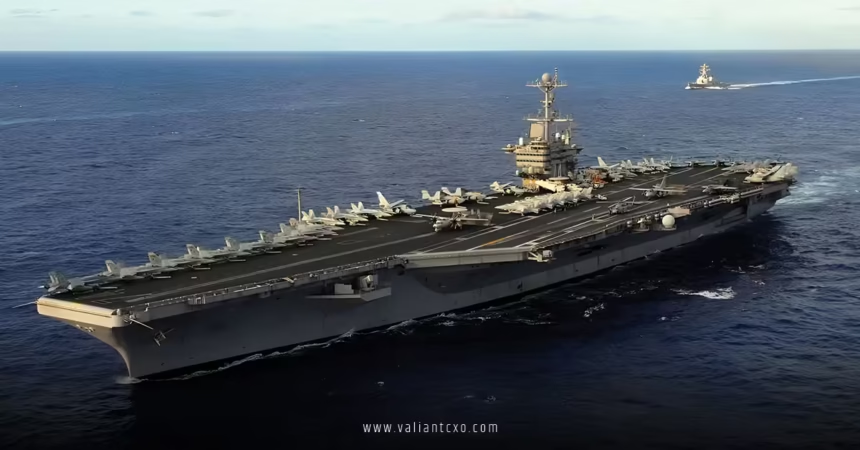
Why target this specific ship? The USS Abraham Lincoln (CVN-72), a Nimitz-class supercarrier, had reportedly played a key role in recent US-led strikes against Iranian targets. It launched fighter jets and supported missile barrages in coordinated actions with allies. So, claiming a hit on it would be a huge propaganda win for Iran—if it were true. But was it?
Official US Response: “The Lincoln Was Not Hit”
Right after the Iranian announcement, the US Central Command (CENTCOM) fired back—literally and figuratively. In a blunt statement shared on social media and official channels, CENTCOM called the claim a flat-out “lie.” They stated: “The Lincoln was not hit. The missiles launched didn’t even come close.” The carrier, they emphasized, kept right on operating, launching aircraft to support ongoing missions.
Think of it like this: imagine someone bragging about landing a knockout punch in a boxing match, only for the opponent to pop up unscathed and keep throwing jabs. That’s the vibe here. US officials insisted the ballistic missiles—likely advanced models like the Fattah hypersonic ones Iran has touted—missed their mark by a wide margin. No damage, no casualties on the Lincoln, and business as usual on the flight deck.
Why the USS Abraham Lincoln Is Such a Formidable Target
To understand why USS Abraham Lincoln struck by ballistic missiles claims grabbed attention, you need to know what this beast of a ship really is. Commissioned in 1989 and homeported in San Diego, it’s one of the Navy’s crown jewels. It displaces about 100,000 tons, carries up to 90 aircraft (think F/A-18 Super Hornets, EA-18G Growlers, and helicopters), and runs on nuclear power for virtually unlimited range.
Its defensive layers are like an onion of protection:
- Aegis-equipped escorts (destroyers and cruisers) with SM-3 and SM-6 missiles designed to intercept ballistic threats.
- Close-in weapon systems like Phalanx CIWS and SeaRAM for last-ditch defense.
- Electronic warfare jamming and decoys to confuse incoming missiles.
Hitting a moving carrier strike group in open water with ballistic missiles? It’s incredibly tough. These weapons arc high into the atmosphere before plunging down at hypersonic speeds, but modern defenses track and neutralize them mid-flight. Analysts often compare it to threading a needle while riding a rollercoaster—possible in theory, but rare in practice.
Context of the Escalation: How We Got Here
This incident didn’t happen in a vacuum. Tensions in the region had boiled over following US and Israeli operations against Iranian leadership and military sites. Reports mentioned strikes that even targeted high-level figures, prompting swift Iranian retaliation claims. The USS Abraham Lincoln struck by ballistic missiles narrative emerged as part of a broader tit-for-tat, with Iran framing it as payback under operations like “True Promise-4.”
The carrier was operating in the Arabian Sea or nearby Gulf waters, a hotspot for power projection. Its air wing provided critical support for strikes, making it a symbolic and strategic prize. But propaganda plays a huge role here—exaggerated claims boost morale at home while sowing doubt abroad.
Debunking Rumors and Fake Visuals
Social media exploded with videos purporting to show the carrier on fire or sinking. Guess what? Many turned out to be old footage, video game clips, or outright fakes. Fact-checkers quickly debunked them, pointing back to CENTCOM’s clear denial. No independent satellite imagery or third-party verification supported any actual hit. It’s a classic case of information warfare: flood the zone with dramatic visuals to make the claim stick, even if reality says otherwise.
Have you ever wondered how disinformation spreads so fast? In tense moments like this, people crave quick answers, and sensational posts fill the void before verified facts catch up.
What This Means for Naval Warfare and Global Security
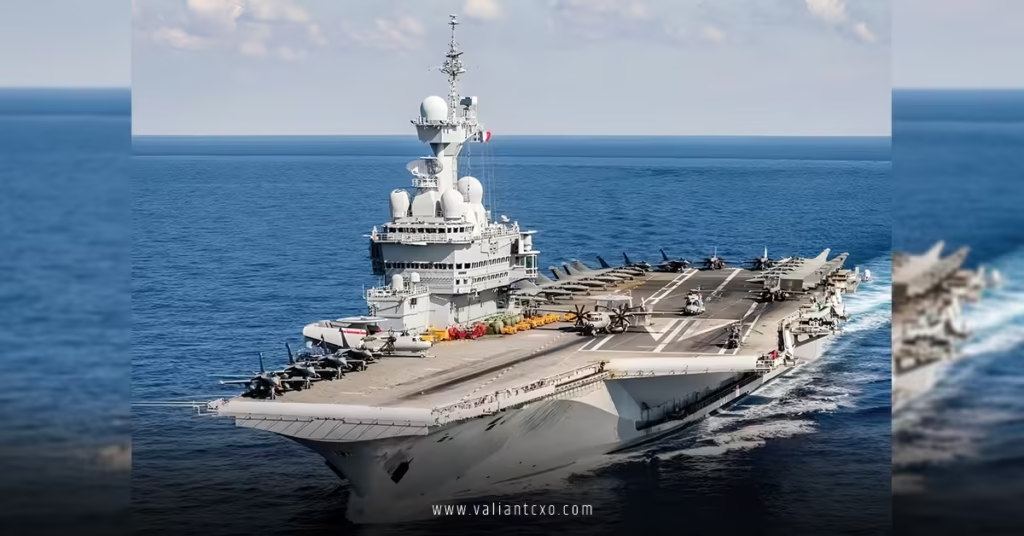
The USS Abraham Lincoln struck by ballistic missiles episode highlights evolving threats to carrier groups. Ballistic missiles, especially anti-ship variants, challenge traditional dominance at sea. Nations like Iran, China, and Russia invest heavily in “carrier killer” tech to deter US intervention.
Yet, it also showcases resilience. The US Navy’s layered defenses, combined with superior intelligence and mobility, make successful strikes rare. Carriers don’t just float—they’re mobile airbases backed by a fleet that projects power far beyond their decks.
This event underscores why diplomacy, deterrence, and de-escalation matter so much. One miscalculation could spiral into wider conflict, affecting global shipping lanes, oil prices, and alliances.
Looking Ahead: Stability in Volatile Waters
As of early March 2026, the USS Abraham Lincoln remains operational, continuing its mission without interruption. No confirmed damage has been reported, and operations against threats persist. The incident serves as a reminder of how quickly narratives can form in modern conflicts—often faster than the missiles themselves.
Conclusion
So, wrapping this up: the claim that USS Abraham Lincoln struck by ballistic missiles was loudly proclaimed by Iranian sources but firmly rejected by the US as a complete miss—literally. The carrier stayed in the fight, underscoring the strength of American naval power amid escalating regional tensions. Events like this remind us how fragile peace can be in hotspots like the Middle East, where propaganda, advanced weapons, and superpower interests collide. Stay informed, question bold claims, and remember that truth often emerges after the initial noise dies down. What do you think—could this be a turning point, or just another chapter in ongoing brinkmanship?
FAQs
Was the USS Abraham Lincoln struck by ballistic missiles in March 2026?
No, according to US Central Command. Iran claimed four ballistic missiles hit the carrier, but CENTCOM stated the missiles didn’t come close, and the ship sustained no damage.
What did Iran claim about USS Abraham Lincoln struck by ballistic missiles?
Iran’s IRGC said they successfully struck the USS Abraham Lincoln with four ballistic missiles as retaliation, describing it as a major blow in their ongoing operations against US forces.
How did the US respond to claims of USS Abraham Lincoln struck by ballistic missiles?
CENTCOM directly called it a “lie,” confirming the Lincoln was unharmed and continued launching aircraft in support of missions.
Why is the USS Abraham Lincoln a key asset in discussions of USS Abraham Lincoln struck by ballistic missiles?
As a Nimitz-class nuclear supercarrier, it supports massive air operations and was actively involved in strikes, making any alleged attack symbolically significant.
Are there verified images or evidence of USS Abraham Lincoln struck by ballistic missiles?
No credible evidence exists. Circulating videos were debunked as old or fabricated, with official US statements and lack of independent confirmation supporting no hit occurred.