Warm Homes Plan heat pump grant eligibility 2026 is grabbing attention across the UK right now, and for good reason. Imagine slashing your heating bills while making your home cozier and greener—without the full sting of upfront costs. That’s the promise behind the government’s ambitious Warm Homes Plan, which ramps up support for heat pumps and other low-carbon upgrades in 2026. Whether you’re a homeowner tired of skyrocketing energy prices or just curious about switching from your old gas boiler, understanding warm homes plan heat pump grant eligibility 2026 could unlock thousands in funding.
The UK government has poured serious money into this—think billions committed to warmer, cheaper-to-run homes. Heat pumps sit at the heart of it all, pulling warmth from the air or ground to heat your space efficiently. But who actually qualifies for these grants in 2026? Let’s break it down step by step so you can see if this fits your situation.
What Is the Warm Homes Plan and How Does It Tie into Heat Pump Grants?
Picture the Warm Homes Plan as a big umbrella covering multiple schemes to tackle fuel poverty, cut emissions, and boost energy efficiency. Launched with fresh momentum after the 2024 Autumn Budget and detailed further in early 2026, it builds on existing programs while introducing new ones.
At its core, the plan commits around £15 billion over several years to help millions upgrade their homes. This includes insulation, solar panels, batteries, and crucially, heat pumps. For 2026 specifically, funding flows through streams like the Boiler Upgrade Scheme (BUS), Warm Homes: Local Grant, and others targeting low-income households.
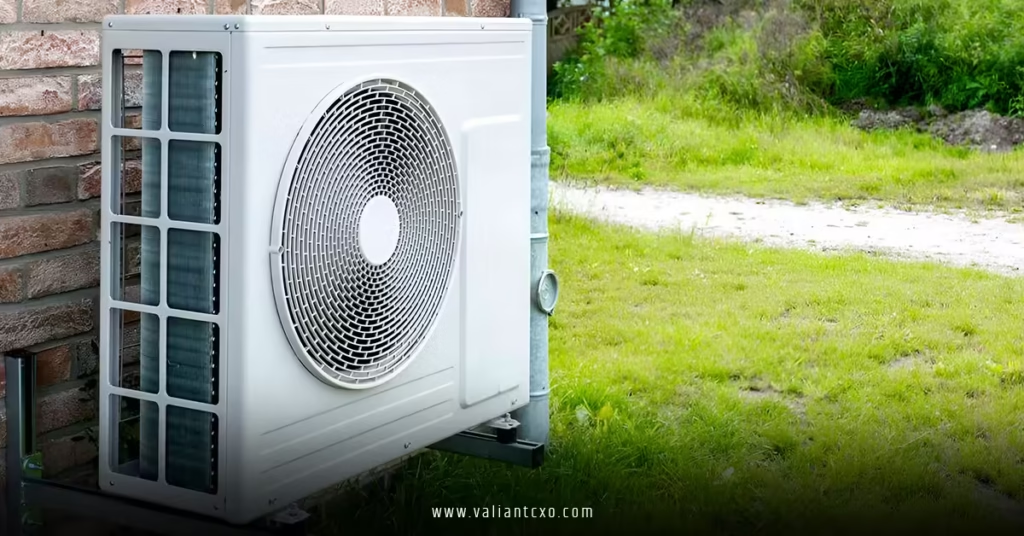
The standout for heat pumps? A universal £7,500 grant via the Boiler Upgrade Scheme for air-source or ground-source installations in England and Wales. Some expansions even add support for air-to-air models (great for cooling in summer too). Meanwhile, the Warm Homes: Local Grant offers up to £15,000 specifically for low-carbon heating like heat pumps, often paired with energy performance upgrades.
Why does this matter in warm homes plan heat pump grant eligibility 2026? Because the plan shifts focus toward “carrots” like generous incentives rather than strict bans on gas boilers, making 2026 a prime time to switch.
Key Heat Pump Grant Schemes Under the Warm Homes Plan in 2026
Let’s zoom in on the main players you’ll encounter when checking warm homes plan heat pump grant eligibility 2026.
Boiler Upgrade Scheme (BUS): The Go-To for Most Homeowners
This scheme remains a cornerstone, extended and boosted into 2026 and beyond. You get £7,500 off an air-source or ground-source heat pump installation (with potential additions like £2,500 for air-to-air units in some cases).
It’s straightforward: the grant deducts directly from your installer’s quote. No income tests here—it’s open to most properties. Funding jumped significantly for 2025/26 and carries momentum into 2026, supporting tens of thousands of installations.
Think of it like a universal discount code for going green. If your home runs on gas, oil, or another fossil fuel system, this could cover a big chunk of the switch.
Warm Homes: Local Grant – Targeted Help for Low-Income Households
For those on tighter budgets, this grant shines. Delivered by local authorities in England, it provides free upgrades—including heat pumps—up to £15,000 for low-carbon heating (and another £15,000 pot for things like insulation or solar).
Eligibility often hinges on:
- Household income below £36,000 (or equivalised based on family size)
- Receipt of means-tested benefits (like Universal Credit, Pension Credit, or Housing Benefit)
- Or living in deprived postcode areas (Indices of Multiple Deprivation deciles 1-2)
Your home typically needs an EPC rating of D-G. The council arranges a survey, picks suitable measures (like an air-source heat pump if it fits), and covers the costs—no out-of-pocket for you.
This is where warm homes plan heat pump grant eligibility 2026 gets really accessible for vulnerable families, potentially transforming draughty homes into efficient ones.
Other Supporting Elements in the Plan
The Warm Homes Plan also includes:
- Low-cost loans for those who can afford contributions
- “Innovative finance” options like green mortgages
- Boosts for social housing upgrades
While these don’t always focus solely on heat pumps, they complement the grants, especially when combining with solar or batteries for maximum savings.
Who Qualifies? Breaking Down Warm Homes Plan Heat Pump Grant Eligibility 2026
So, does your household make the cut for warm homes plan heat pump grant eligibility 2026? Here’s the real talk.
For the Boiler Upgrade Scheme:
- You own the home (or are a landlord) in England or Wales
- You’re replacing a fossil fuel heating system (gas, oil, electric storage heaters, etc.)
- The property has a valid EPC
- It’s not a new-build (with rare self-build exceptions)
- No existing low-carbon heating system in place
- Installer must be MCS-certified
Hybrids (heat pump + gas boiler) have limited eligibility in some cases, but pure heat pumps get the full nod.
For Warm Homes: Local Grant and similar low-income streams:
- Private owner or renter in England
- Low income or on qualifying benefits
- EPC D-G rating
- Often postcode-based priority for deprived areas
Scotland, Wales, and Northern Ireland have separate but similar schemes (like Home Energy Scotland or Nest in Wales), so check locally if you’re outside England/Wales.
One common hurdle? Your home needs decent insulation first for optimal heat pump performance. Many grants encourage (or require) upgrades like loft or cavity wall insulation alongside the heat pump.
Ever wondered why? Heat pumps work best in well-insulated homes—like wearing a cozy sweater instead of shivering in a drafty room. Poor insulation means the pump works harder, reducing savings.
How to Apply and What to Expect in 2026
Applying is easier than you think—no endless paperwork mountains.
For BUS: Find an MCS-certified installer, get a quote, and they handle the grant application. You pay the reduced amount. Simple.
For Local Grant: Contact your local council or check gov.uk for openings (some portals reopen in spring 2026). They’ll survey your home, propose measures, and organize everything if approved.
Expect surveys to assess suitability—heat pumps aren’t one-size-fits-all. Off-gas-grid homes often benefit most from big bill drops.
Timelines? Funding is time-limited, so act early in 2026 to avoid missing out as pots fill up.
Benefits: Why Bother with a Heat Pump in 2026?
Beyond the grant cash, heat pumps deliver real wins.
Lower bills: Efficient models can cut heating costs by 30-50% compared to gas, especially with rising fossil fuel prices.
Comfort: Even heat distribution, no cold spots.
Eco perks: Slash your carbon footprint—vital as the UK pushes net-zero.
Future-proofing: With electricity getting greener and potential policy shifts, you’re ahead of the curve.
It’s like trading an old gas-guzzler for an electric car—smoother ride, less hassle long-term.
Potential Challenges and Tips for Success
Not everything’s perfect. Upfront costs (even after grants) can sting, and installations take days, not hours. Noise from outdoor units or garden space for ground-source models matter too.
Tips:
- Get multiple quotes from certified installers
- Check your EPC first—boost it with cheap fixes like draught-proofing
- Combine with solar if possible for near-zero bills
- Ask about warranties and maintenance
Patience pays off—the savings compound over years.
Conclusion: Take the Next Step Toward Warmer, Cheaper Living
Warm Homes Plan heat pump grant eligibility 2026 opens doors for countless households to embrace cleaner, more affordable heating. From the £7,500 BUS grant for broader access to targeted Local Grant support for those in need, the government’s push makes 2026 a turning point. You’ll cut bills, boost comfort, and contribute to a greener future—all while leveraging substantial public funding.
Don’t wait for energy prices to bite harder. Check your eligibility today, talk to an installer or your local council, and see how warm homes plan heat pump grant eligibility 2026 could transform your home. The warmth (and savings) are waiting.
FAQs About Warm Homes Plan Heat Pump Grant Eligibility 2026
What is the main grant amount for heat pumps under warm homes plan heat pump grant eligibility 2026?
The Boiler Upgrade Scheme offers £7,500 for air- or ground-source heat pumps in England and Wales, with potential extras for air-to-air models. Low-income schemes like the Warm Homes: Local Grant can provide up to £15,000 specifically for low-carbon heating.
Who is typically eligible for warm homes plan heat pump grant eligibility 2026 through the Boiler Upgrade Scheme?
Most homeowners and landlords in England or Wales qualify if replacing a fossil fuel system, with a valid EPC, and using an MCS-certified installer. No strict income test applies here.
How does low-income eligibility work for warm homes plan heat pump grant eligibility 2026?
Via the Warm Homes: Local Grant in England, you often need household income under £36,000, qualifying benefits, or residence in deprived postcodes, plus an EPC D-G rating. Your council delivers free upgrades including heat pumps.
Can renters access heat pumps through warm homes plan heat pump grant eligibility 2026?
Yes, private renters can qualify for schemes like the Warm Homes: Local Grant if the landlord agrees and criteria are met. Social housing has separate funding streams.
What happens if my home isn’t insulated—does that affect warm homes plan heat pump grant eligibility 2026?
Many grants prioritize or require basic insulation for best results, but you can often install it as part of the package. Poor insulation reduces efficiency, so upgrades are commonly recommended or bundled.