WASPI women compensation decision January 2026 has left many feeling heartbroken and angry. On January 29, 2026, the UK government officially reaffirmed its stance: no financial compensation will be paid to the millions of women affected by changes to the state pension age. This announcement, delivered by Work and Pensions Secretary Pat McFadden in Parliament, came after a fresh review sparked by new evidence late in 2025. Imagine planning your retirement around turning 60, only to have the goalposts moved without clear warning— that’s the reality for these women, many now in their 60s and 70s, who have fought tirelessly through the WASPI campaign.
The WASPI women compensation decision January 2026 isn’t just another policy update; it’s a pivotal moment in a long-running saga of injustice, hope, and disappointment. Let’s break it down step by step so you can understand exactly what happened, why it matters, and what might come next.
What Is the WASPI Campaign? A Quick Background
The WASPI movement—short for Women Against State Pension Inequality—began in 2015. It represents women born in the 1950s who faced sudden and steep increases in their state pension age. Under the Pensions Act 1995 and later accelerations in 2011, the pension age for women rose from 60 to 65 (to equalize with men), and then further toward 66 and beyond for some.
Many of these women claim they received inadequate notice. Some learned about the changes only when it was too late to adjust their life plans—savings depleted, jobs quit in anticipation of retirement, or caring responsibilities upended. The campaign argues this amounted to maladministration by the government.
In March 2024, the Parliamentary and Health Service Ombudsman (PHSO) agreed, finding fault in how the changes were communicated and recommending compensation. Yet, despite this independent ruling, the government has repeatedly said no.
The Road to the WASPI Women Compensation Decision January 2026
The story didn’t end with the 2024 ombudsman report. In December 2024, the government first rejected compensation outright, sparking outrage. They accepted maladministration occurred—an apology was issued for delayed letters—but argued most women knew about the changes through public campaigns and media.
Then, in November 2025, a previously unseen document surfaced, prompting Work and Pensions Secretary Pat McFadden to promise a rethink for fairness and transparency. Campaigners hoped this could shift the tide.
But on January 29, 2026, McFadden told Parliament the review led to the same conclusion: no payouts. He cited costs—up to £10.3 billion for a flat-rate scheme—and impracticality in targeting only those truly harmed. The WASPI women compensation decision January 2026 emphasized that the vast majority of 1950s-born women were aware of the shifts, so broad compensation wouldn’t be “right or fair.”
Key Details of the WASPI Women Compensation Decision January 2026
The government’s position boils down to a few core points:
- Acknowledgment of maladministration in communication delays.
- Apology for not sending individual letters sooner.
- Rejection of financial redress because no direct financial loss stemmed from the delay (per the ombudsman).
- Impracticality of individualized assessments for millions.
- Estimated £10bn+ cost for blanket payments.
Campaigners, including WASPI chair Angela Madden, called it “utter contempt” and a “disgraceful political choice.” Opposition parties like the Liberal Democrats labeled it a “hammer blow,” while others accused the government of betrayal.
Have you ever felt like the system let you down when you needed it most? For many WASPI women, this feels exactly like that—a promise of justice dangled, then snatched away.
Impact on Affected Women: Stories Behind the Numbers
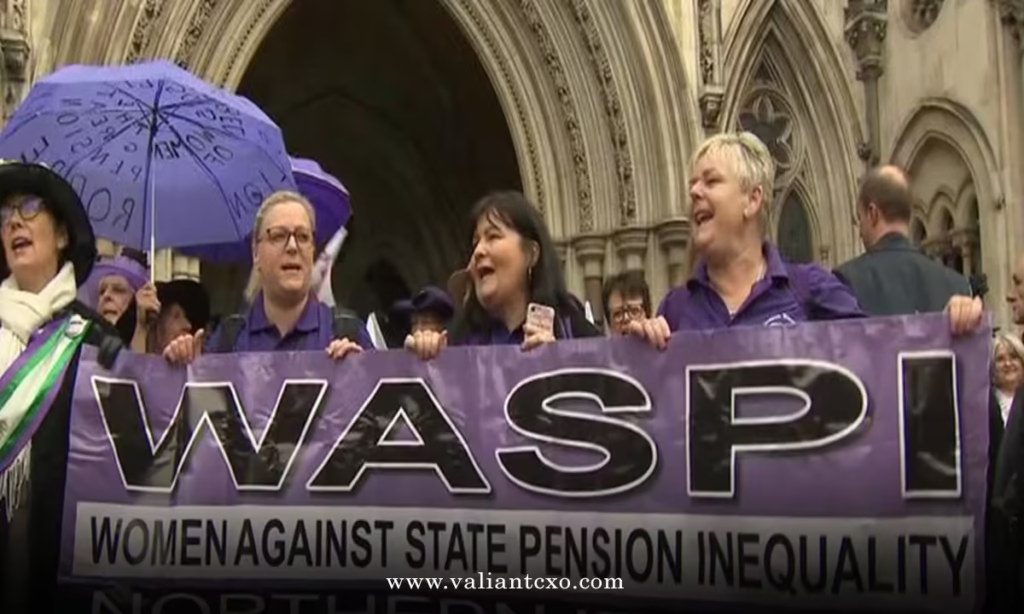
Up to 3.6 million women born in the 1950s are impacted. Some waited years longer for their pension, facing financial hardship, health issues, or forced continued work. One woman shared how she expected retirement at 60 but ended up working into her late 60s, dealing with rising living costs without the expected support.
The ombudsman once suggested levels of £1,000 to £2,950 per person for injustice from poor communication. But without government action, these remain recommendations only. The WASPI women compensation decision January 2026 has deepened feelings of injustice, especially as women argue the changes disrupted life plans built on outdated rules.
Why the Government Says No: Fairness vs. Feasibility
Ministers argue a universal payout would reward those already informed, creating unfairness. Setting up a scheme to verify individual awareness? Too complex, time-consuming, and costly. They point to historical ads and announcements as sufficient notice.
Critics counter that an apology without action is hollow. If maladministration is admitted, why not remedy it? The debate highlights tensions between fiscal responsibility and moral duty.
Reactions and Next Steps After the WASPI Women Compensation Decision January 2026
The backlash was swift. WASPI vows to explore “every avenue,” including legal options. Parliament could still act, though unlikely soon. Support groups urge writing to MPs, keeping pressure on.
Political voices across parties condemned the move, calling it a betrayal of vulnerable women. The fight continues—WASPI isn’t giving up.
For more official insights, check these trusted sources:
- The Guardian’s coverage of the WASPI ruling
- BBC News on the ministers’ rejection
- Women Against State Pension Inequality official site
Conclusion: Where Do We Go from Here?
The WASPI women compensation decision January 2026 marks another chapter of disappointment for millions who sought fairness after years of campaigning. The government has stood firm on no compensation, prioritizing cost and practicality over redress, despite admitting communication failures. Yet the resilience of these women inspires— their story reminds us how policy changes can ripple through lives, and how advocacy matters. If you’re affected or know someone who is, stay informed, connect with support networks, and keep pushing for justice. Change often comes slowly, but persistence can shift even the firmest decisions.
FAQs About the WASPI Women Compensation Decision January 2026
What exactly is the WASPI women compensation decision January 2026?
The WASPI women compensation decision January 2026 refers to the UK government’s January 29, 2026, announcement rejecting financial payments to women affected by state pension age rises, following a review of new evidence.
Why did the government reject compensation in the WASPI women compensation decision January 2026?
They cited high costs (up to £10.3bn), impracticality of targeted schemes, and belief most women knew about changes, despite admitting maladministration in communications.
How many women are affected by the WASPI women compensation decision January 2026?
Up to 3.6 million women born in the 1950s face impacts from the pension age changes and the lack of compensation.
Can WASPI women still get compensation after the January 2026 decision?
Currently no, but the campaign continues exploring legal and parliamentary routes—nothing is final forever.
What was the ombudsman’s role in the lead-up to the WASPI women compensation decision January 2026?
The Parliamentary and Health Service Ombudsman ruled in 2024 that maladministration occurred and recommended compensation of £1,000–£2,950, but the government rejected this in the 2026 decision.