What is TSA Gold+ airport screening and how does it affect travelers 2026? It’s the latest push to modernize U.S. airport security through deeper private-sector involvement. Launched in 2026 as an expansion of the existing Screening Partnership Program (SPP), it lets airports opt in for private contractors to run both the screening workforce and the technology at checkpoints.
TSA still sets the rules and oversees everything. The goal: faster innovation, smoother lines, and cutting-edge gear without waiting on federal budget cycles.
- Private operators handle staff and tech: Contractors manage screeners and deploy advanced screening systems.
- Voluntary for airports: Only participating airports switch. Most U.S. travelers won’t see immediate changes.
- Same security standards: Federal rules apply everywhere. No loosening of prohibited items or procedures.
- Potential perks for flyers: Newer tech could mean quicker throughput and less hassle at checkpoints.
- Why it matters now: Amid rising travel volumes and past funding headaches, it promises efficiency gains.
Here’s the thing. If your usual airport joins, you might notice fresher equipment and slightly different uniforms. But the liquids rule, shoe removal (unless PreCheck), and pat-downs stay consistent.
What Exactly Is TSA Gold+?
TSA Gold+ builds directly on the SPP, which already has private companies screening passengers at about 20 airports like San Francisco (SFO) and Kansas City (MCI). The “Gold+” twist hands contractors control over technology procurement, deployment, and maintenance too—not just hiring screeners.
Think of it like upgrading from a government fleet that moves slow to a private partner who can swap in the latest models quickly. TSA maintains strict oversight, outcome-based metrics, and covert testing to keep standards high.
Airports opt in voluntarily. They work with TSA and vendors to tailor solutions to their layout and passenger flow. The pitch? Faster tech refreshes, better passenger experience, and new revenue possibilities without extra cost to the airport.
In my experience covering security programs over the years, these shifts rarely flip the traveler experience overnight. What usually happens is incremental improvements at participating spots while the rest of the country sticks with standard TSA operations.
How TSA Gold+ Affects Travelers in 2026
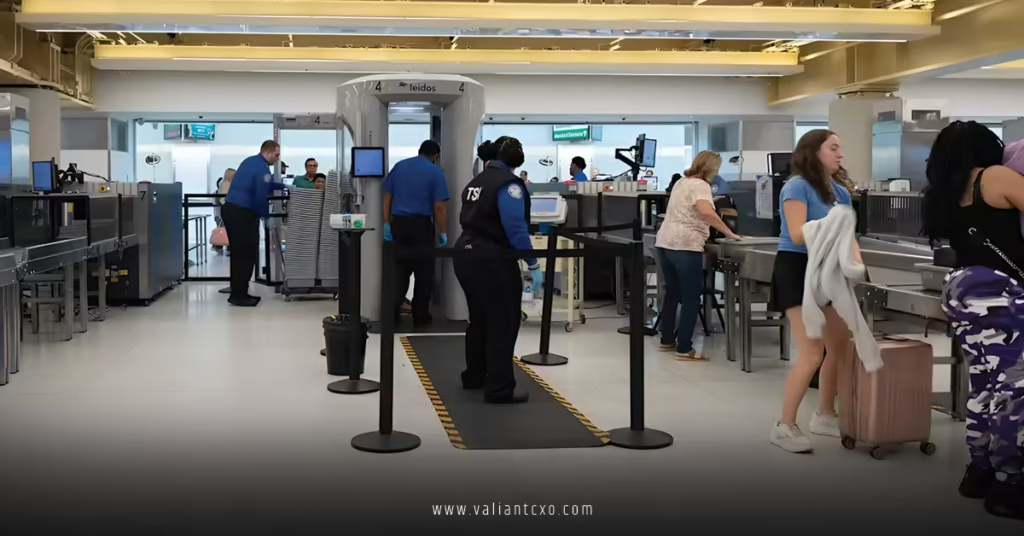
For most people, daily security feels familiar. Same ID check. Same bins. Same TSA PreCheck lanes where available.
The differences show up in execution. Private teams often emphasize customer service training. Newer CT scanners or AI-assisted detection could cut false alarms and secondary screenings. Lines might move quicker at opt-in airports.
The kicker is consistency. Federal standards don’t change by operator. A TSA Gold+ checkpoint follows the same rules as a traditional one.
Travelers with TSA PreCheck, CLEAR, or Global Entry still get the usual benefits. These programs layer on top regardless of who runs the checkpoint.
Rhetorical question: Ever stood in a security line wondering why the machine keeps beeping on everyone? Gold+ airports aim to fix that friction with modern tools.
TSA Gold+ vs Traditional Screening: Side-by-Side
| Aspect | Traditional TSA | TSA Gold+ (Opt-in Airports) | What It Means for You |
|---|---|---|---|
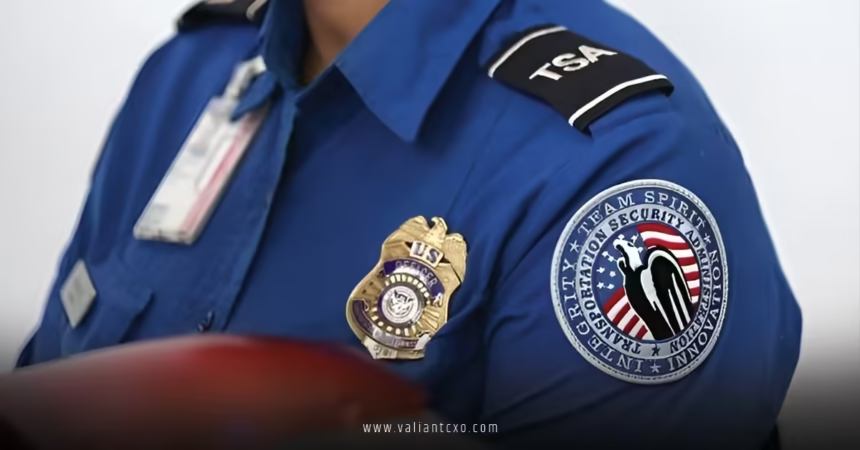
| Operator | Federal TSA officers | Private contractor under TSA oversight | Different uniforms, potentially more service focus |
| Technology | TSA-procured, slower refresh | Contractor-managed, faster innovation | Newer scanners possible sooner |
| Security Standards | Federal rules | Same federal rules + TSA oversight | No change in what’s allowed |
| Line Speed | Varies by staffing | Aimed at higher throughput | Potentially shorter waits |
| Cost to Traveler | No direct cost | No direct cost | Same fees for PreCheck etc. |
| Availability (2026) | Most airports | Select opt-in airports | Check your departure airport |
This table shows the core mechanics. Real-world results will depend on which airports sign up and how well contractors deliver.
Step-by-Step: How to Prepare as a Traveler
- Check your airport — Before booking, see if your departure or arrival airport has opted into TSA Gold+. Visit the airport’s website or TSA.gov for updates.
- Enroll in trusted traveler programs — TSA PreCheck remains your best bet for speed. Combine with CLEAR where offered for even smoother entry. Learn more about TSA PreCheck.
- Pack smart — Follow the 3-1-1 liquids rule and known traveler rules. Gold+ doesn’t relax these.
- Arrive early anyway — Even with upgrades, peak times and random secondary checks happen everywhere.
- Download apps — Use your airline app and airport apps for real-time checkpoint wait times.
- Give feedback — Post-travel surveys or apps help operators improve. Private contractors often track satisfaction closely.
What I’d do if flying from a potential Gold+ airport: Sign up for PreCheck renewal early, test the new lanes on a low-stakes trip first, and keep 3-4 hours buffer on international departures until the program matures.
Common Mistakes & How to Fix Them
Mistake 1: Assuming all airports will switch immediately.
Fix: Only select airports opt in. Most continue with standard TSA. Confirm specifics for your route.
Mistake 2: Ignoring uniforms and assuming lower standards.
Fix: Remember TSA sets and enforces the rules. Private screeners undergo similar training and certification.
Mistake 3: Over-relying on “faster lines” hype.
Fix: Treat it like any airport—show up prepared. Technology helps, but volume and random selections still matter.
Mistake 4: Forgetting PreCheck eligibility.
Fix: Many credit cards reimburse the fee. Families can add kids for free in some cases. It stacks with whatever screening model your airport uses.
Mistake 5: Complaining without context.
Fix: If something feels off, note the operator and report via official channels. Oversight remains federal.
Key Benefits and Potential Drawbacks
Proponents highlight accelerated tech like better imaging and remote screening options that reduce manual pat-downs. Private investment sidesteps budget delays that have plagued upgrades for years.
Critics worry about profit motives potentially pressuring staffing or consistency across airports. Like any big change, results will vary by location and management.
One analogy that fits: It’s like moving from a single government contractor building your house to a specialized team that also picks the smart appliances—faster updates, but you still need the building inspector (TSA) to sign off.
Key Takeaways
- TSA Gold+ lets private companies manage both people and screening tech at participating airports while TSA keeps oversight.
- Security rules stay identical nationwide—no shortcuts on safety.
- Travelers may see newer equipment and smoother processes at opt-in airports.
- Programs like TSA PreCheck and CLEAR continue delivering their usual value.
- Check airport status before travel as adoption rolls out selectively in 2026 and beyond.
- Preparation beats prediction—pack right and enroll in trusted traveler options.
- Early days mean monitor real passenger feedback from the first wave of airports.
- Overall, it aims for efficiency without compromising the core mission of safe skies.
Bottom line: TSA Gold+ represents a pragmatic evolution in how America screens air travelers. For the average flyer, it’s less revolution and more refinement. Know your airport, leverage your PreCheck status, and focus on what you control. Safer, smoother travel starts with staying informed.
What is TSA Gold+ airport screening and how does it affect travelers 2026 remains a developing story. As more airports evaluate the opt-in, passenger experiences will reveal what works.
FAQs
What is TSA Gold+ airport screening and how does it affect travelers who don’t fly from participating airports?
It has zero direct impact. You’ll go through standard TSA screening with federal officers and equipment as usual. Only opt-in airports switch to the enhanced private partnership model.
Does TSA Gold+ replace TSA PreCheck or change eligibility?
No. PreCheck works the same way across all airports—Gold+ or not. It’s a trusted traveler program layered on top of whatever screening operation your airport uses.
Will TSA Gold+ make airport security lines shorter in 2026?
Potentially at participating airports through faster tech and optimized operations. But results depend on adoption, implementation quality, and daily passenger volume. Always build in buffer time.