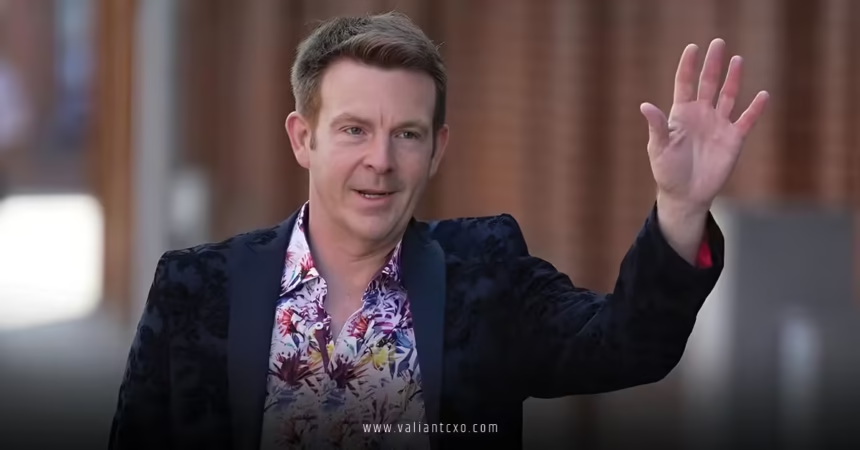
Why was Alex Belfield sent back to prison 2026? Alex Belfield was recalled to prison in February 2026 by the probation service after violating the terms of his license release. Originally sentenced to 5.5 years for stalking charges in September 2022, he was released early in June 2025 but returned to his controversial online activities, prompting authorities to send him back to serve the remainder of his sentence.
Here’s what happened and why it matters:
- License Violation: Belfield breached probation conditions by continuing controversial YouTube content
- Probation Intervention: Authorities banned him from internet publishing in late 2025
- Recall Decision: February 2026 – probation service sent him back to complete his sentence
- Time Remaining: Approximately 2.5 years left to serve in prison
- Legal Consequences: Additional court case scheduled for April 2026
The Original Conviction That Started It All
Let’s rewind to understand how we got here.
Alex Belfield, the former BBC Radio Leeds presenter turned YouTuber, wasn’t your typical media personality. In September 2022, he was convicted on four counts of stalking at Nottingham Crown Court. The judge described his actions as a “vicious and continued campaign of abuse.”
The victims included:
- BBC Radio Northampton presenter Bernie Keith
- Theatre videographer Ben Hewis
- TV broadcaster Jeremy Vine
- Theatre blogger Philip Dehaney
The stalking wasn’t physical. Instead, Belfield weaponized the internet—using emails, YouTube videos, and social media to harass his targets. The court found that he caused “serious alarm or distress” to his victims through his relentless online campaign.
His original sentence? Five and a half years in prison.
Why Was Alex Belfield Released Early in 2025?
Here’s where the UK’s license system comes into play.
In the British justice system, prisoners can be released on “license” after serving part of their sentence—typically halfway through. It’s not freedom, though. Think of it as supervised release with strict conditions.
Belfield walked out of prison in June 2025 after serving 2 years and 9 months. But he wasn’t free to do whatever he wanted. The probation service kept a close eye on him, and for good reason.
License conditions typically include:
- Regular check-ins with probation officers
- Restrictions on certain activities
- Compliance with rehabilitation programs
- Avoiding behavior that could lead to reoffending
The Comeback That Went Wrong
Here’s the kicker: Belfield seemed to pick up exactly where he left off.
After his release, he returned to YouTube with controversial commentary. He planned live tours. He maintained his own website with regular content updates. To many observers, it looked like business as usual.
But the probation service wasn’t having it.
The Warning Signs
By August 2025, Belfield himself acknowledged the writing on the wall. He publicly stated it was “very likely” he’d be recalled to prison. Smart money would’ve suggested keeping a lower profile, but that’s not how Belfield operates.
The probation service grew increasingly concerned that he was exhibiting the same behaviors that landed him in prison initially. Their job? Prevent reoffending and protect the public.
The Internet Ban That Changed Everything
In late 2025, authorities dropped the hammer.
Belfield was told he could no longer:
- Release YouTube videos
- Publish content on his website
- Share anything on the internet
- Continue his planned live tour
Since online content was his primary income source, this was devastating. But it was also a clear signal: change course or face the consequences.
He didn’t change course.
February 2026: Back Behind Bars
The probation service had seen enough.
In February 2026, they exercised their authority to recall Belfield to prison. Their statement was crystal clear: “We do not hesitate to send offenders back to prison if they break the rules.”
Why Alex Belfield was sent back to prison 2026 boiled down to:
- License Violations: Failing to comply with probation conditions
- Risk Assessment: Showing patterns of behavior similar to original offenses
- Public Safety: Protecting potential victims from further harassment
- System Integrity: Demonstrating that license conditions aren’t suggestions

Understanding the UK License System
| Aspect | Details |
|---|---|
| Eligibility | Usually after serving 50% of sentence |
| Supervision | Probation service oversight required |
| Conditions | Customized based on offense and risk |
| Violations | Can result in immediate return to prison |
| Duration | Until original sentence completion date |
The system exists for rehabilitation, but it requires genuine cooperation. Belfield’s case demonstrates what happens when someone treats license conditions as optional guidelines rather than legal requirements.
What Happens Next for Alex Belfield?
The timeline isn’t pretty for the former broadcaster.
He’ll serve approximately 2.5 years in prison—the remainder of his original sentence. That means no internet presence until around March 2028, based on his September 2022 sentencing date.
But prison time isn’t his only worry. Philip Dehaney, one of his stalking victims, has a civil case scheduled for April 29, 2026. This could result in significant financial damages on top of his criminal penalties.
Key Takeaways: Lessons from the Belfield Case
- License conditions aren’t suggestions—they’re legally binding requirements with serious consequences
- Early release is a privilege that can be revoked if terms are violated
- Pattern recognition matters—authorities watch for behaviors that mirror original offenses
- Online harassment has real consequences in both criminal and civil courts
- The probation service prioritizes public safety over individual convenience
- Financial consequences extend beyond criminal penalties through civil lawsuits
- Supervision periods can last years, requiring long-term compliance
- Media attention doesn’t provide legal protection from standard justice processes
Common Mistakes People Make About License Conditions
Understanding why Alex Belfield was sent back to prison 2026 requires grasping what many people get wrong about early release:
Mistake #1: Thinking license equals freedom Fix: License is supervised release with strict conditions, not liberty
Mistake #2: Believing past behavior doesn’t matter Fix: Authorities specifically watch for patterns matching original offenses
Mistake #3: Assuming warnings are empty threats Fix: Probation services have real authority and will use it
Mistake #4: Thinking public profile provides protection Fix: Celebrity status doesn’t exempt anyone from standard legal processes
Mistake #5: Ignoring the financial implications Fix: Civil cases can proceed alongside criminal penalties
Step-by-Step: How License Recall Actually Works
For anyone wondering about the process that sent Alex Belfield back to prison:
- Monitoring Phase: Probation officers observe behavior and compliance
- Concern Identification: Red flags trigger increased scrutiny
- Warning Period: Offender may receive warnings about problematic behavior
- Risk Assessment: Formal evaluation of reoffending likelihood
- Decision Making: Senior probation officials decide on recall
- Immediate Action: Recall can happen within hours of decision
- Return to Prison: Offender serves remainder of original sentence
- Review Process: Limited opportunities to challenge recall decision
This process prioritizes public safety over individual convenience—exactly as designed.
The Broader Impact on Online Harassment Cases
Belfield’s case sets important precedents for internet-based stalking prosecutions.
The UK government’s approach to online harassment has evolved significantly since his original conviction. His recall demonstrates that authorities take license violations seriously, especially when they involve potential victims of the original crimes.
The case also highlights how traditional probation supervision adapts to digital-age offending. When someone’s weapon of choice is the internet, restricting online access becomes a legitimate protective measure.
For victims of online harassment, Belfield’s recall sends a clear message: the justice system will intervene when license conditions are violated, even if the original sentence seemed lenient.
Financial and Professional Consequences
Beyond the prison time, Belfield faces substantial financial ruin.
His online content was his primary income source. The internet ban eliminates that revenue stream until 2028. Meanwhile, legal costs from both criminal and civil proceedings continue mounting.
The BBC’s March 2025 apology to staff members who were stalked by Belfield also suggests potential additional civil exposure. When major organizations issue formal apologies, they’re often preparing for legal action.
For someone who built their brand on controversy, Belfield discovered that some boundaries have concrete consequences.
Looking Forward: What This Means for Online Content Creators
The Belfield case offers sobering lessons for digital creators operating near legal boundaries.
Platform popularity doesn’t provide legal immunity. Thousands of subscribers and viral content can’t override criminal law or license conditions.
Harassment is harassment, regardless of medium. Using YouTube, social media, or email to target individuals can result in serious criminal charges.
Early release comes with genuine restrictions. License conditions aren’t performative—they’re enforceable legal requirements with immediate consequences for violations.
The Online Safety Act continues expanding legal frameworks around digital behavior. Content creators who push boundaries need to understand that online actions have offline consequences.
Conclusion
Why was Alex Belfield sent back to prison 2026? The answer is straightforward: he violated the terms of his early release by continuing the same online behaviors that got him convicted initially.
The probation service gave him multiple warnings. They restricted his internet access. They made clear that compliance wasn’t optional. When he continued pushing boundaries, they sent him back to complete his sentence.
This case demonstrates that the UK’s license system has teeth. Early release is a privilege requiring genuine behavioral change, not just time served. For Belfield, the price of testing that system is 2.5 additional years behind bars.
Your next step? If you’re interested in online harassment law or license conditions, understanding this case provides crucial insight into how digital-age justice actually works.
The internet might feel anonymous, but the consequences are very real.
Frequently Asked Questions
Q: How long will Alex Belfield remain in prison after being sent back in 2026?
A: Alex Belfield must serve approximately 2.5 years—the remainder of his original 5.5-year sentence from September 2022. This means he’ll likely remain imprisoned until around March 2028, assuming no further complications.
Q: Can Alex Belfield appeal his recall to prison?
A: While there are limited review processes for license recalls, the probation service’s decision is typically final when based on genuine license violations. Given the documented warnings and his continued controversial online activity, a successful appeal would be extremely difficult.
Q: What specific license conditions did Alex Belfield violate that led to his 2026 recall?
A: The probation service cited his return to controversial YouTube content, planned live tours, and continued online commentary that mirrored behaviors from his original stalking conviction. Essentially, he resumed the same activities that caused his imprisonment initially.
Q: Will Alex Belfield face additional criminal charges for violating his license?
A: License violation itself typically doesn’t result in new criminal charges—the consequence is serving the remainder of the original sentence. However, he does face a civil lawsuit from Philip Dehaney scheduled for April 2026, which could result in substantial financial damages.
Q: Why was Alex Belfield sent back to prison 2026 instead of receiving another warning?
A: The probation service had already issued multiple warnings and restrictions, including a complete internet ban in late 2025. When someone continues violating license conditions after clear warnings, recall to prison becomes the standard response to protect public safety and maintain system integrity.