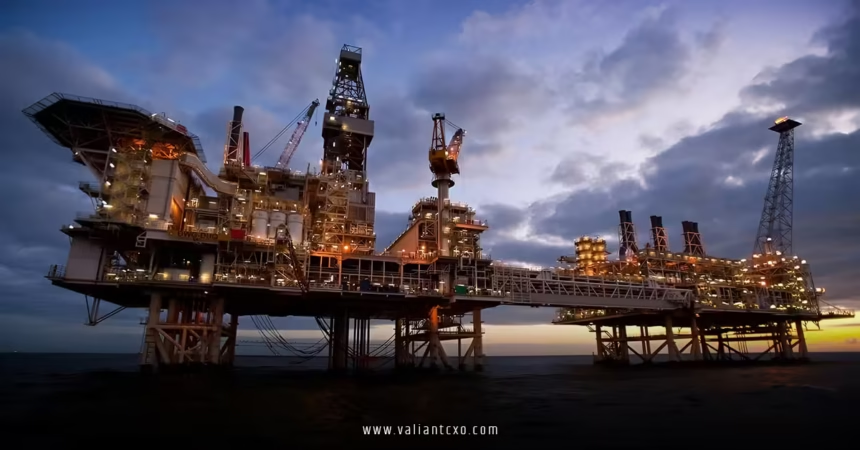
Petrofac administration filing October 2025 impact on North Sea jobs has hit the headlines like a rogue wave crashing over an oil rig, leaving everyone in the energy sector scrambling for solid footing. Imagine this: a company that’s been a staple in the choppy waters of the North Sea for decades suddenly files for administration, and overnight, thousands of livelihoods hang in the balance. As someone who’s followed the ups and downs of the oil and gas world for years, I can’t help but feel a knot in my stomach thinking about the skilled hands that keep those platforms humming—rigger, engineers, welders—who now face an uncertain horizon. But let’s not just stare at the storm clouds; we’ll break it down together, from the why behind this bombshell to what it really means for those North Sea jobs, and hey, even spot a few glimmers of hope amid the turbulence.
What Sparked the Petrofac Administration Filing October 2025?
You know how a single crack in a pipeline can lead to a full-blown gusher? That’s kind of how Petrofac’s story unfolded leading up to its administration filing in October 2025. This isn’t some fly-by-night outfit; Petrofac’s been in the game since 1981, starting out in Texas and growing into a global powerhouse for engineering, procurement, and construction in oil, gas, and even renewables. They’ve built facilities that power cities, managed projects that stretch across deserts and seas. But lately? It’s been more leaks than leads.
The tipping point came on October 27, 2025, when the company pulled the trigger on administration for its holding entity. Picture this: they’re in the midst of a high-stakes restructuring dance—trying to shuffle debts, cut costs, and secure fresh funding—when Dutch grid operator TenneT yanks a massive offshore wind contract. Poof! There goes a key pillar of their recovery plan, and suddenly, the whole structure wobbles. But this wasn’t a bolt from the blue; it’s the culmination of years of mounting pressures that have squeezed Petrofac like a vice.
The Shadow of the Bribery Scandal
Let’s rewind to 2017, shall we? That’s when the UK’s Serious Fraud Office (SFO) dropped a bombshell investigation on Petrofac, alleging the company shelled out £57 million in bribes to snag contracts in hotspots like Iraq, Saudi Arabia, and the UAE. Ouch. Fast-forward through the trials, and by 2021, they’re hit with a £70 million fine, plus another £7 million in legal fees. It’s not just the cash burn; the reputational scorch marks them out of bidding on new UK government gigs. You have to wonder: how do you rebuild trust when your name’s synonymous with scandal? For Petrofac, it meant a scramble to pivot, but the damage lingered like oil residue on a deck.
This mess didn’t just dent their wallet; it rippled through operations. Contracts dried up, partners got skittish, and the company’s market value plummeted from a heady £6 billion peak in 2012 to a measly £20 million by May 2025, when shares got suspended. In the North Sea context, where relationships are as tight-knit as a crew on a stormy night shift, that kind of baggage weighs heavy. Local teams in Aberdeen and beyond started feeling the pinch early—delayed payments trickling in like a faulty pump, forcing belt-tightening that hit morale hard.
Financial Headwinds and Contract Nightmares
Fast-forward to the here and now, and Petrofac’s been battered by a perfect storm of profit warnings, soaring costs, and dud deals. Take their Thai clean energy project: a supposed green beacon that turned into a black hole, bleeding cash without a return in sight. Add in global inflation jacking up material prices and labor rates—hello, post-pandemic hangover—and you’ve got a recipe for red ink everywhere you look.
The Petrofac administration filing October 2025 impact on North Sea jobs stems partly from these global woes filtering down to UK shores. North Sea ops, while resilient, aren’t immune. Delays in payments from clients meant cash flow sputtered, and with debts piling up like unsecured cargo, restructuring talks hit a wall. That TenneT cancellation? It was the final shove, unraveling a deal that could’ve injected vital liquidity. Now, as administrators step in, the focus shifts to salvaging what’s viable—but not without fallout.
Demystifying Administration: It’s Not the End, But It’s Close
Okay, let’s pause for a breath. If you’re picturing administration as some corporate grim reaper, think again—it’s more like hitting the emergency brake on a runaway rig. In the UK, when a company files for administration, it hands the reins to licensed pros who swoop in to stabilize the ship, protect assets, and ideally, steer it toward rescue or sale. For Petrofac’s holding company, this kicked off on October 27, 2025, but crucially, subsidiaries—like those humming away in the North Sea—keep chugging along.
What does this mean in plain speak? Operations don’t screech to a halt overnight. Clients like BP and Shell, who’ve relied on Petrofac for platform maintenance and engineering wizardry, aren’t left high and dry. The admins’ mandate? Maximize value, which often translates to keeping the lights on while shopping the pieces around. Could mean a buyout by a bigger fish, a breakup into sellable chunks, or even a phoenix rising as a leaner entity. But here’s the rub: uncertainty breeds anxiety, especially when paychecks are on the line.
In the grand scheme, administration buys time—maybe 8-12 weeks—to negotiate with creditors and explore lifelines. Petrofac’s brass has been vocal: they’re laser-focused on minimizing disruption for employees and clients alike. Yet, with 7,600 folks worldwide on the payroll, the stakes feel personal. And for us peeking in from the North Sea sidelines, it’s a stark reminder of how interconnected this industry is—one filing, and the dominoes start tipping.
The Petrofac Administration Filing October 2025 Impact on North Sea Jobs: The Human Side
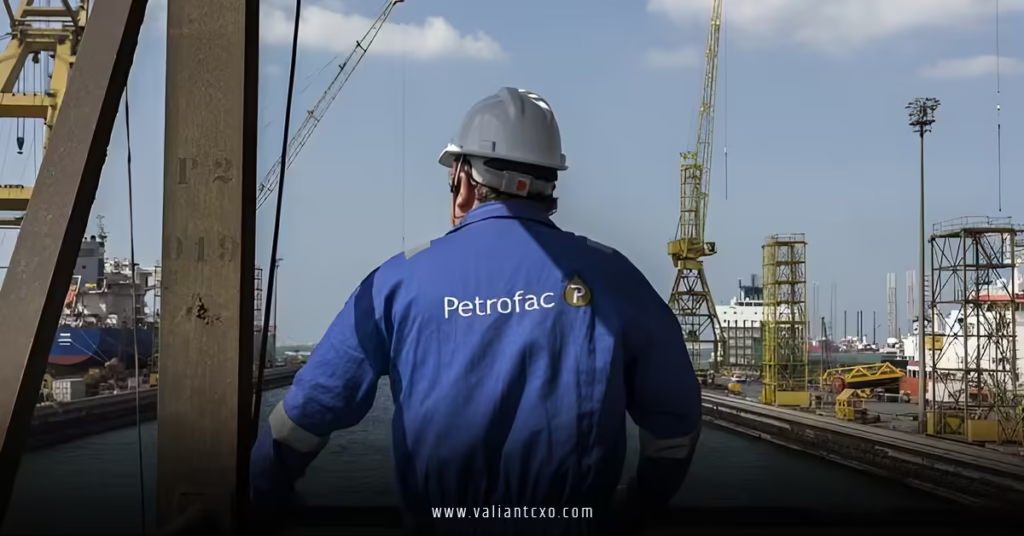
Alright, let’s get to the heart of it—the Petrofac administration filing October 2025 impact on North Sea jobs. This isn’t abstract boardroom drama; it’s real people in hard hats, staring down foggy mornings in Aberdeen, wondering if their next shift is their last. Petrofac employs around 2,000 souls in Scotland alone, many tethered to the North Sea’s relentless rhythm. That’s welders sealing hulls against the Atlantic’s fury, engineers plotting pipeline paths, and logistics whizzes ensuring parts arrive before the weather turns nasty. These aren’t just jobs; they’re lifelines for families, communities, and the entire supply chain ecosystem.
How Many Jobs Are Really on the Chopping Block?
Zoom in on the numbers, and it’s sobering: of those 2,000 Scottish roles, a hefty chunk orbits the North Sea. Offices in Aberdeen, London, Woking, and Great Yarmouth form the backbone, supporting everything from decommissioning old rigs to installing wind turbines in the push toward net zero. Administration doesn’t spell instant layoffs, mind you—the company’s pledged continuity for ongoing contracts. But whispers from insiders suggest up to 7,300 global positions could be at risk if restructuring falters. In the North Sea, where oil and gas still pump £15 billion into the UK economy yearly, losing even a fraction of that expertise could echo loudly.
Think about it: a rigger with 20 years under their belt doesn’t pivot to barista overnight. Retraining? Sure, but it’s like swapping a drill for a keyboard—jarring and slow. The Petrofac administration filing October 2025 impact on North Sea jobs amplifies existing strains; the sector’s already shed 10,000 roles since 2015 amid the energy transition. This filing? It could accelerate that bleed, forcing talent to scatter to competitors or, worse, abroad.
Ripple Effects: Beyond Petrofac’s Payroll
But hold on— the Petrofac administration filing October 2025 impact on North Sea jobs isn’t confined to direct employees. It’s a seismic event for the supply chain, where subcontractors and smaller firms lean on Petrofac like vines on a trellis. Picture a web: delay one contract, and weld shops in Dundee idle, fabricators in Great Yarmouth furlough crews, and catering services for offshore rotations slash hours. The Aberdeen and Grampian Chamber of Commerce nailed it, calling this “deeply concerning” for the fragile energy ecosystem.
Rhetorical question time: What happens when the big player stumbles? The little guys tumble harder. We’ve seen it before—Harbour Energy’s tweaks last year sent shivers through independents. Now, with Petrofac’s North Sea ops in flux, expect bidding wars for remaining work to heat up, squeezing margins for survivors. On the flip side, it spotlights the urgency for diversified skills; those versatile in both fossil fuels and renewables might weather the gale better.
Worse still, communities feel the quake. Aberdeen, the “Oil Capital of Europe,” has clawed back from slumps before, but another hit tests resilience. House prices dip, pubs empty out on paydays, and schools lose families to migration. Scotland’s First Minister John Swinney didn’t mince words: it’s “incredibly concerning,” urging a rethink on that 78% windfall tax strangling profits. Meanwhile, UK Energy Minister Michael Shanks pushes back, insisting the UK arm’s thriving despite global woes. Politics aside, the human toll? Undeniable.
Industry Echoes: Who’s Speaking Out on the Petrofac Shake-Up?
No crisis goes uncommented in the energy world, and the Petrofac administration filing October 2025 impact on North Sea jobs has folks from Edinburgh to Westminster piping up. It’s like a town hall on a drilling platform—voices overlapping, opinions clashing, but all circling the same fear: instability.
Scottish Conservative energy spokesman Douglas Lumsden blasted both governments for “abandoning” oil and gas workers, demanding a lifeline for the sector’s beating heart. Unions like Unite echoed that, rallying for job protections and slamming the “race to the bottom” in costs. On the client side, majors like Shell and BP are in wait-and-see mode, but insiders hint at contingency plans—shifting work to rivals like Wood or TechnipFMC if Petrofac falters.
Then there’s the green angle. Environmental groups? They’re not shedding tears, viewing this as karma for Petrofac’s fossil-heavy past. But pragmatists point out the irony: the company’s renewables pivot—like that ill-fated TenneT deal—was meant to bridge to a cleaner future. Losing that expertise now hampers the very transition we need. As one Aberdeen engineer told me off the record, “We’re the ones installing the wind farms tomorrow—cut us loose, and who foots the bill?”
For deeper dives, check out BBC’s coverage on the filing or Bloomberg’s analysis of the job risks. And for restructuring insights, Reuters has the latest.
Navigating the Storm: Advice for North Sea Workers Facing Petrofac’s Turbulence
So, if you’re knee-deep in this—maybe a Petrofac hand or a supplier watching nervously—what’s next? First off, breathe. The Petrofac administration filing October 2025 impact on North Sea jobs is daunting, but you’ve got grit forged in harsher seas than this.
Start by tapping resources: the government’s Jobcentre Plus offers tailored support for energy workers, from CV tweaks to upskilling grants. Ever thought about that offshore wind certification? It’s gold right now, blending your rig know-how with green tech. Networks like the Oil & Gas UK forum are buzzing with leads—join in, swap stories, land gigs before they’re posted.
On the practical side, stash that emergency fund if you haven’t; three months’ expenses is your lifeboat. And don’t sleep on mental health—talking it out with mates or pros keeps the fog at bay. Remember, sectors rebound; the North Sea’s done it through oil crashes and Brexit bites. Your skills? They’re portable treasure—demand’s there in hydrogen hubs or carbon capture pilots.
For employers eyeing the chaos, step up: transparent comms build loyalty, and cross-training keeps teams versatile. The Petrofac saga screams diversification—don’t put all eggs in one basket, or one contract cancellation sinks the lot.
Peering Through the Fog: Future Scenarios Post-Petrofac Filing
Crystal balls are scarce in energy, but let’s game this out. Best case? A swift rescue—maybe a consortium swoops in, snaps up North Sea assets, and jobs stabilize by Q1 2026. Petrofac’s pipeline’s packed; that backlog could fund a slimmed-down revival.
Worst case? Fragmentation, with prized contracts auctioned off, scattering teams and eroding local expertise. Legal overhangs—like Supreme Court battles over old fines—could drag feet further.
Yet, silver linings: this jolt might accelerate innovation. Struggling giants often birth disruptors; think how Enron’s ashes fed renewables boom. For the North Sea, it underscores the hybrid future—oil sustaining while wind and hydrogen surge. Policymakers, take note: slash that tax, pump in transition funds, and watch jobs flourish.
The Petrofac administration filing October 2025 impact on North Sea jobs? It’s a wake-up call, not a death knell. By blending old-school resilience with forward-thinking bets, we chart calmer waters.
In wrapping this up, the Petrofac administration filing October 2025 impact on North Sea jobs underscores a brutal truth: even titans totter in turbulent times. From bribery scars to contract casualties, the path here was paved with pitfalls, threatening 2,000 Scottish livelihoods and the broader supply chain’s pulse. Yet, amid the anxiety, there’s agency—workers sharpening skills, leaders rethinking taxes, and the sector’s unyielding spirit. Don’t just weather this; seize it to build a sturdier tomorrow. What’s your move? Hit the comments, share your take—let’s keep the conversation drilling deep.
FAQs
What exactly triggered the Petrofac administration filing October 2025 impact on North Sea jobs?
The filing stemmed from a failed restructuring after TenneT canceled a key offshore wind contract, compounding years of fines, debts, and cost overruns. It puts North Sea operations under scrutiny but aims to preserve ongoing work.
How many North Sea jobs are directly affected by the Petrofac administration filing October 2025?
Around 2,000 roles in Scotland, many North Sea-focused, face uncertainty. While immediate layoffs aren’t planned, global ripples could touch up to 7,300 positions if no rescue emerges.
Will the Petrofac administration filing October 2025 impact on North Sea jobs lead to immediate shutdowns?
No—subsidiaries keep trading normally, with administrators prioritizing client delivery. Think of it as a pause button, not a power switch, buying time for potential sales or revamps.
What support is available for workers hit by the Petrofac administration filing October 2025 impact on North Sea jobs?
UK Jobcentre programs offer retraining, and unions push for protections. Focus on versatile skills like renewables to pivot smoothly in this shifting energy landscape.
Could the Petrofac administration filing October 2025 impact on North Sea jobs actually boost the sector long-term?
Possibly— it highlights the need for diversification, potentially spurring investment in green tech and policy tweaks to safeguard jobs amid the energy transition.
For More Updates !! : valiantcxo.com