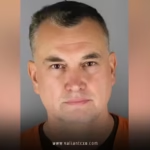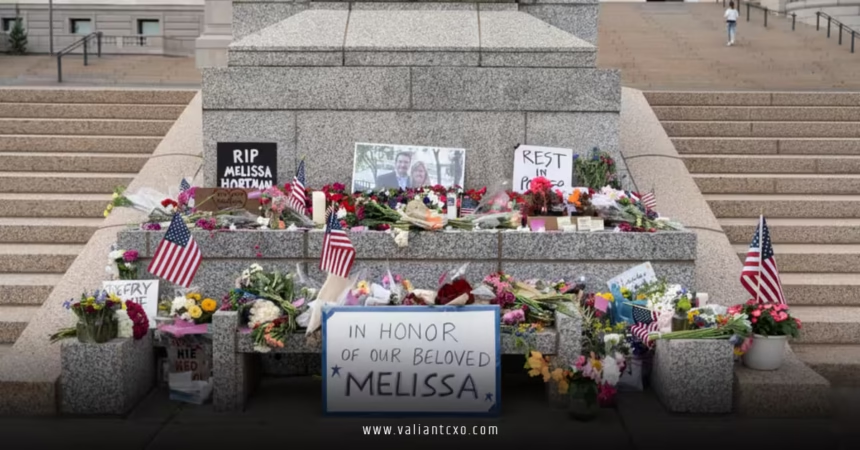
Political violence in Minnesota has long been rare in a state celebrated for its “Minnesota nice” culture and tradition of civil discourse. Yet, recent events have shattered that illusion, thrusting the North Star State into the national spotlight for all the wrong reasons. Who would have thought that targeted attacks on elected officials could happen here, in neighborhoods where people wave at strangers and debate politics over hotdish? But as we grapple with political violence in Minnesota, one incident stands out as a chilling wake-up call – and for the full story on that tragedy, check out our in-depth piece on the Melissa Hortman assassination Vance Boelter.
The Historical Context of Political Violence in Minnesota
Let’s rewind a bit. Political violence in Minnesota isn’t entirely new, but it’s historically been tied to broader social upheavals rather than direct assaults on politicians. Think back to the 1960s – the Plymouth Avenue riots in North Minneapolis in 1967 saw rock-throwing, arson, and clashes with police amid tensions over racial inequality and poverty. It was chaotic, with fires and arrests, but more about community frustration boiling over than ideological hits on leaders.
Fast-forward to 2020, and the murder of George Floyd ignited massive protests that sometimes turned violent. Looting, arson, and property damage exceeded $500 million in the Twin Cities alone – the second-most destructive civil unrest in U.S. history after the 1992 LA riots. Buildings burned, businesses shattered, and the National Guard rolled in. Was it political violence in Minnesota? Absolutely, in the sense of unrest challenging systemic issues, but it wasn’t assassins targeting lawmakers at home.
Rhetorical question: Could anyone have predicted that by 2025, political violence in Minnesota would evolve into something far more personal and deadly?
Rare but Notable Past Incidents
Minnesota has dodged the bullet – pun unintended – on high-profile political assassinations for decades. Unlike states with infamous killings of senators or governors, our history leans toward protests and riots rather than lone actors with hit lists. Threats against officials existed, sure, but nothing like the coordinated terror we’ve seen lately. That changed dramatically, highlighting how political violence in Minnesota mirrors a troubling national trend.

The 2025 Turning Point: Political Violence in Minnesota Reaches New Heights
Enter June 14, 2025 – a date that will live in infamy for political-violence in Minnesota. In the early hours, a gunman disguised as a police officer launched attacks on Democratic lawmakers’ homes. The result? Devastating loss and a stark reminder that no state is immune.
This wasn’t random; authorities called it targeted political extremism. A manifesto, weapons cache, and a list of dozens of names pointed to ideological fury. The aftermath? Bipartisan outrage, canceled events out of fear, and a statewide reckoning. Political violence in Minnesota suddenly felt real, invasive, hitting suburban doorsteps like a thunderclap.
Why Minnesota? The Erosion of Civility
Minnesota prides itself on bipartisanship – think moderate Republicans and progressive DFLers finding common ground. But national polarization seeped in. Heated rhetoric online, echo chambers, and framing opponents as “evil” created fertile ground. Analogy: It’s like a slow leak in a dam – small cracks ignored until the flood hits.
Experts note a surge in threats against officials nationwide since 2016, with political-violence in Minnesota now part of that wave. Coarsening discourse, misinformation, and a sense of existential stakes turned disagreements deadly.
Broader Impacts of Political Violence in Minnesota
The ripple effects? Profound. Lawmakers beefed up security, some reconsidered public service. Families lived in fear – imagine answering your door at night wondering if it’s safe. Political violence in Minnesota chilled free speech; rallies scaled back, debates toned down.
Nationally, it echoed other attacks: attempts on presidents, assaults on spouses, threats to judges. In Minnesota, it prompted soul-searching. Governor Walz and leaders from both parties condemned it unanimously. Vigils, resolutions, and calls for unity followed. But questions linger: How do we heal?
Rising Threats and Extremism
Data paints a grim picture. Threats against state lawmakers spiked, with political-violence in Minnesota reflecting far-right extremism in many cases. Abortion rights, LGBTQ+ protections – hot-button issues fueled rage. Yet, most Minnesotans reject this; it’s fringe hatred amplified by algorithms.
What fuels it? Dehumanizing language from influencers, social media radicalization, and a feeling that “the system” fails. Metaphor: Like dry tinder in a forest – one spark, and wildfire erupts.
Preventing Future Political Violence in Minnesota
So, what now? Prevention starts with us. Leaders must model civility – condemn vitriol swiftly, bridge divides. Communities: Foster dialogue, report threats early. Law enforcement: Better intelligence on extremists.
Education too – teach media literacy, empathy in schools. And security: More resources for protecting officials without militarizing democracy.
Political-violence in Minnesota doesn’t define us, but ignoring it could. By recommitting to “Minnesota nice” – respectful debate, shared values – we reclaim our legacy.
Conclusion: Reclaiming Civility Amid Political Violence in Minnesota
Political-violence in Minnesota, once unthinkable, now demands action. From historical unrest to the shocking 2025 attacks, we’ve seen hatred’s cost – lives lost, trust eroded, democracy strained.
But hope endures. Bipartisan responses show unity possible. Remember the victims, honor their service, and choose persuasion over intimidation. In facing political violence in Minnesota head-on, we strengthen our state and nation. Let’s talk, listen, and vote – not fear or fight. The ballot box, not bullets, decides our future. What will you do to help?
Frequently Asked Questions (FAQs)
What are the main causes of political violence in Minnesota?
Political violence in Minnesota often stems from national polarization, extremist ideologies, and heated rhetoric, exacerbated by issues like abortion rights and social policies.
How has political violence in Minnesota changed in recent years?
Political violence in Minnesota has escalated from protest-related unrest to targeted attacks on officials, marking a shift toward personal ideological assaults.
Was the 2025 incident the worst case of political violence in Minnesota?
Yes, the 2025 attacks represented the deadliest targeted political violence in Minnesota in decades, highlighting a new level of threat.
What measures are being taken against political violence in Minnesota?
Increased security for officials, bipartisan condemnations, and calls for de-escalating rhetoric are key responses to political violence in Minnesota.
How does political violence in Minnesota compare to national trends?
Political violence in Minnesota mirrors a U.S.-wide rise since 2016, with threats and attacks on public figures reaching levels not seen since the 1970s.