
UK Government Pavement Parking Consultation Response 2026 Local Authority Powers :
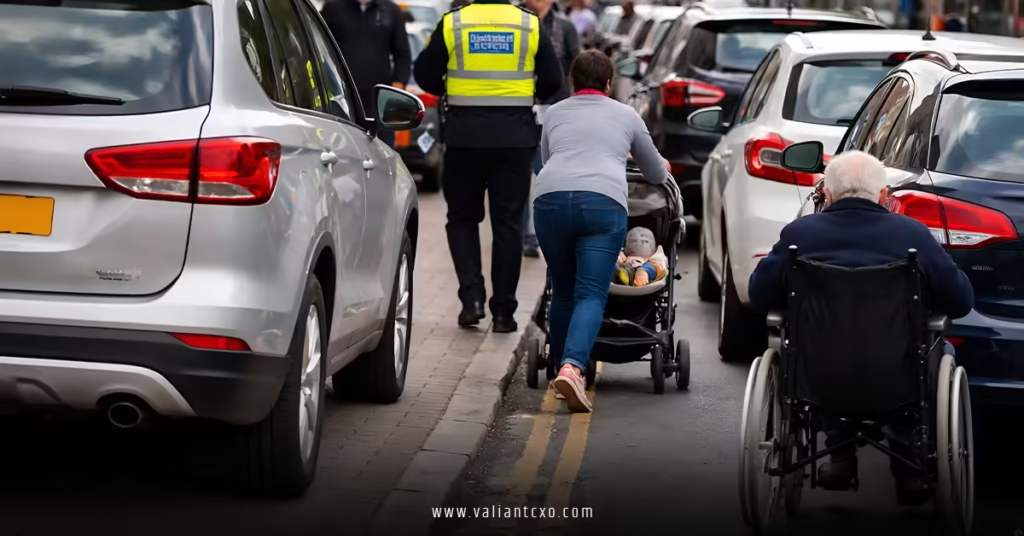
UK government pavement parking consultation response 2026 local authority powers marks a pivotal shift in how England tackles one of the most frustrating urban issues: cars hogging sidewalks. Imagine pushing a stroller down a busy street, only to find your path blocked by a poorly parked SUV—forcing you into the road with oncoming traffic. That’s the daily reality for many, and finally, the UK government is stepping up with meaningful changes.
Published on January 8, 2026, by the Department for Transport (DfT), this response comes after years of anticipation following the 2020 consultation. Rather than a blanket nationwide ban, the approach empowers local leaders to take charge. It’s a balanced, community-focused strategy that prioritizes safety without ignoring the nuances of different neighborhoods. Let’s dive into what this means for you, whether you’re a driver, pedestrian, or parent navigating crowded streets.
Understanding the Background of Pavement Parking Issues in the UK
UK Government Pavement Parking Consultation Response 2026 Local Authority Powers : Pavement parking—where vehicles mount the curb to park partially or fully on the sidewalk—has long been a thorn in the side of UK communities. Why does it happen? Often, it’s born out of necessity on narrow residential streets where on-road parking would block emergency vehicles or traffic flow. But the downsides? They’re massive.
Think about it: a wheelchair user suddenly confronted by a bumper protruding into their path, or a visually impaired person tapping their cane only to hit a tire. These aren’t rare scenarios; they’re everyday hazards that erode independence and safety. Parents with prams, elderly folks with mobility aids, and even kids walking to school face unnecessary risks. And don’t get me started on the damage—vehicles crush curbs, crack pavements, and rack up repair bills for councils.
Outside London, where a ban has existed since 1974, pavement parking was largely permitted unless specifically prohibited via Traffic Regulation Orders (TROs). These TROs? They’re bureaucratic beasts—time-consuming and costly, often limited to single streets. No wonder so many areas stayed stuck in a gray zone.
The 2020 Consultation: What Did People Say?
Fast forward to 2020, when the DfT launched “Pavement Parking: Options for Change.” Over 15,000 responses poured in, painting a clear picture: this issue touches everyone.
Three options were on the table:
- Option 1: Streamline the existing TRO process for easier local bans.
- Option 2: Allow councils with civil enforcement powers to ticket “unnecessary obstruction” of pavements.
- Option 3: A nationwide ban with local exemptions.
Individuals and organizations overwhelmingly backed Option 3 for its simplicity. Local authorities, however, leaned toward Option 2, citing cost concerns with a full ban. Overall, a whopping 82% of people and 96% of groups flagged pavement parking as a problem. The message? Action needed, but tailored to local realities.
Key Highlights from the UK Government Pavement Parking Consultation Response 2026 Local Authority Powers
Here’s where the UK government pavement parking consultation response 2026 local authority powers gets exciting. Rejecting a one-size-fits-all national ban, the DfT opted for devolution—putting power in the hands of those who know their streets best.
Empowering Local Transport Authorities
At the heart of the response: new powers enabling local transport authorities (LTAs) to prohibit pavement parking across entire areas, not just street-by-street. In strategic authority areas (outside London), this falls to the strategic authority. Elsewhere, it’s unitary authorities, metropolitan districts, or county councils.
This isn’t just tweaking old rules; it’s a game-changer for responsive planning. Councils can now enforce broader restrictions while keeping flexibility for spots where partial pavement parking keeps roads clear without causing harm.
Interim Measures: Tackling Unnecessary Obstruction
While waiting for primary legislation, secondary legislation rolls out in 2026. This lets councils with civil parking enforcement powers issue Penalty Charge Notices (PCNs) for “unnecessary obstruction” of pavements—spotted by enforcement officers on patrol.
It’s a practical bridge: no need for signs everywhere, just targeted action against blatant blockers.
Statutory Guidance on the Horizon
The DfT promises guidance later in 2026 to ensure fair, proportionate use of these powers. Expect advice on assessing obstruction, exemptions, and balancing driver needs with pedestrian safety.
How New Local Authority Powers Will Change Everyday Life
UK Government Pavement Parking Consultation Response 2026 Local Authority Powers : Picture this: your local council declares a pavement parking prohibition in residential zones plagued by issues. Suddenly, enforcement officers can act swiftly, freeing up sidewalks for safe passage. No more dodging into traffic or lifting prams over wheels.
For drivers? Most park thoughtfully anyway, as surveys show. But inconsiderate ones face deterrents. In narrow streets, councils might allow controlled pavement parking to avoid gridlock—proving this isn’t anti-car, but pro-common sense.
Vulnerable groups stand to gain most. Disability advocates have long highlighted how blocked pavements isolate people, limiting access to shops, work, or social life. With UK government pavement parking consultation response 2026 local authority powers, councils can prioritize inclusivity.
Comparing Approaches: England vs. London and Scotland
London’s longstanding ban works well in a dense, public-transport-heavy city. Scotland went nationwide in recent years, with exemptions. England’s hybrid? It borrows the best: local control like London’s enforcement muscle, without Scotland’s rigid uniformity.
Why avoid a national ban? Streets vary wildly—from rural lanes to urban terraces. A blanket rule could spark backlash in areas where pavement parking prevents worse problems. Devolution respects that diversity.
Potential Challenges and Criticisms
No policy is perfect. Some campaigners wanted a full ban for crystal-clear messaging. Delays since 2020 frustrated many—five years is a long wait when safety’s at stake.
Implementation hurdles loom: Will councils have resources for enforcement? How quickly will guidance appear? And what about appeals or defining “unnecessary”?
Yet, the response addresses these head-on with phased rollout and support. It’s pragmatic progress over rushed perfection.
Implications for Drivers, Pedestrians, and Councils
Drivers: Park responsibly or risk fines. Check local rules—apps or signs will help.
Pedestrians: Safer walks ahead. Report issues confidently, knowing councils have tools.
Councils: More autonomy, but responsibility too. Expect community consultations to shape restrictions.
Overall, UK government pavement parking consultation response 2026 local authority powers fosters collaboration for livable streets.
The Road Ahead: Timeline and Next Steps
- 2026: Secondary legislation for obstruction enforcement; guidance published.
- Future: Primary legislation for area-wide prohibitions.
Stay tuned—your council might consult soon. Get involved; your voice matters.
In wrapping up, the UK government pavement parking consultation response 2026 local authority powers delivers a thoughtful, empowering framework. By handing tools to local authorities, it promises safer, more accessible pavements without alienating drivers. It’s about balance: protecting the vulnerable while acknowledging real-world parking pressures. If you’ve ever cursed a blocked sidewalk or worried as a parent, this change could transform your daily journeys. Let’s embrace it—clear pavements mean freer movement for all. What do you think—will your area go for prohibitions?
FAQs
1. What exactly does the UK government pavement parking consultation response 2026 local authority powers entail for enforcement?
The response introduces interim powers in 2026 for councils to ticket unnecessary pavement obstruction civilly, plus future ability for broader prohibitions—making enforcement easier and more consistent.
2. Will there be a nationwide pavement parking ban following the UK government pavement parking consultation response 2026 local authority powers?
No nationwide ban; instead, local transport authorities get powers to implement area-wide restrictions, allowing tailored solutions over a uniform rule.
3. How do the new powers in the UK government pavement parking consultation response 2026 local authority powers affect disabled pedestrians?
They significantly help by enabling councils to clear obstructions, reducing barriers for wheelchair users, visually impaired people, and others—promoting independence and safety.
4. When will councils start using powers from the UK government pavement parking consultation response 2026 local authority powers?
Interim obstruction enforcement via secondary legislation in 2026; full area prohibitions await primary legislation, with guidance supporting rollout later that year.
5. Can drivers still park on pavements after the UK government pavement parking consultation response 2026 local authority powers?
Yes, where councils deem it acceptable (e.g., narrow streets without obstruction). Otherwise, expect restrictions and fines in problem areas.