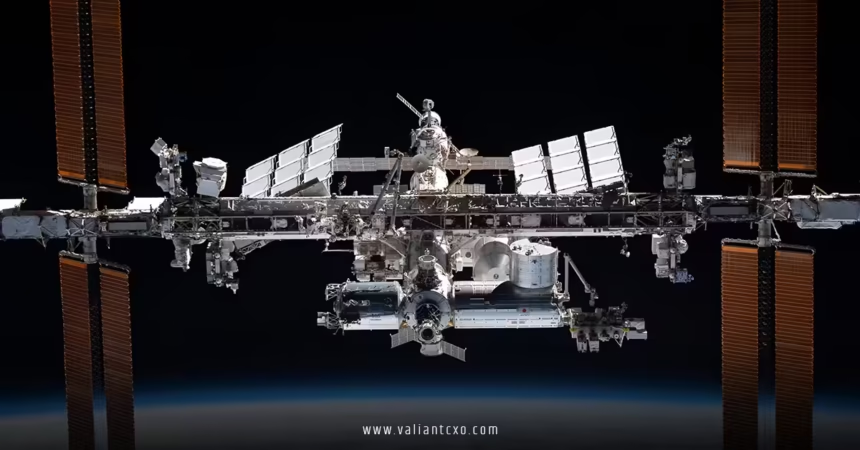
International Space Station Medical Protocols :
Have you ever wondered how astronauts stay healthy when they’re hundreds of miles above Earth with no hospital in sight? The International Space Station medical protocols form a sophisticated, multi-layered safety net designed to handle everything from minor ailments to rare serious conditions. These protocols have been rigorously tested over more than 25 years of continuous human presence on the ISS—and they recently faced one of their toughest real-world challenges during the NASA Crew-11 astronauts early return medical evacuation January 2026.
In this comprehensive guide, we’ll explore how these protocols work, from onboard equipment to ground support, and why they prioritize caution above all else.
Why Robust International Space Station Medical Protocols Matter
Living in microgravity isn’t just about floating—it’s physiologically demanding. Fluids shift upward, bones lose density, muscles weaken, vision can change, and radiation exposure increases risks. Add isolation, confined spaces, and delayed communication during certain orbits, and you see why the International Space Station medical protocols are non-negotiable.
These protocols aren’t reactive; they’re built into every mission phase. NASA and its international partners (including Roscosmos, ESA, JAXA, and CSA) follow strict guidelines from the Multilateral Medical Operations Panel (MMOP). The goal? Prevent issues where possible and manage them effectively when they arise. As recent events showed, sometimes the safest path is bringing astronauts home early—like in the historic NASA Crew-11 astronauts early return medical evacuation January 2026.
The Role of the Crew Medical Officer (CMO) in ISS Medical Protocols
Every ISS expedition designates at least one Crew Medical Officer (CMO)—typically a non-physician astronaut or cosmonaut trained extensively in emergency medicine.
The CMO receives advanced, mission-specific training focused on:
- Stabilizing patients
- Performing diagnostics (like ultrasounds)
- Administering treatments
- Coordinating with Earth-based doctors
All crew members get basic emergency medical training as backup. Think CPR in zero-g, starting IVs, or using a defibrillator while floating. Former astronauts describe this training as hands-on and intense, preparing them for scenarios where seconds count.
This system proved vital during the NASA Crew-11 astronauts early return medical evacuation January 2026, where fellow crew members immediately assisted the affected astronaut before ground teams stepped in.
Onboard Medical Equipment and Capabilities Under ISS Medical Protocols
The ISS isn’t a full hospital, but it’s surprisingly well-equipped for a remote outpost. Key elements include:
- Advanced Diagnostic Tools — Ultrasound machines, ECG monitors, blood analyzers, and dental kits
- Pharmacy and Medications — A robust supply for pain, infections, allergies, and emergencies (including blood thinners, as seen in past cases)
- Surgical and Trauma Gear — Restraint systems for procedures in microgravity, airway management tools, and IV supplies
- Telemedicine Setup — Secure video/audio links for private consultations with flight surgeons
These tools allow CMOs to handle minor issues independently and stabilize serious ones until help arrives. In 2019, an astronaut successfully managed a blood clot diagnosis and treatment using onboard resources and ground guidance—highlighting how effective these International Space Station medical protocols can be.
Telemedicine and Ground Support: The Backbone of ISS Medical Protocols
No doctor flies full-time on the ISS, so real-time communication with Earth is crucial. Flight surgeons at NASA’s Johnson Space Center (and partner centers) provide 24/7 support.
- Private medical conferences happen regularly
- Doctors guide procedures step-by-step
- Real-time data (vitals, images) flows down
This “telemedicine in space” setup mimics a high-end remote consultation—except the patient is orbiting at 17,500 mph! When diagnostics exceed onboard limits, protocols shift to contingency planning, including early return options.
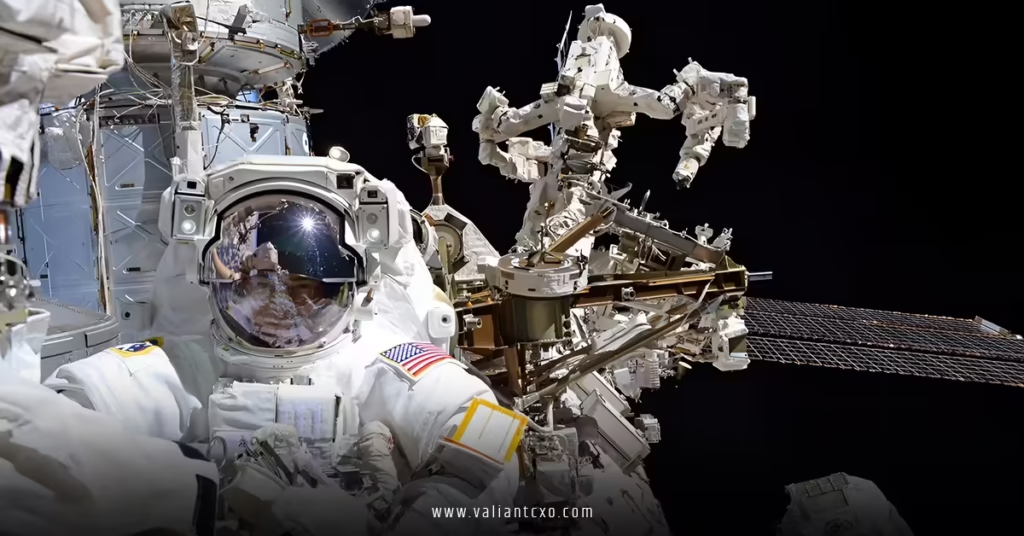
Emergency Response and Contingency Plans in International Space Station Medical Protocols
ISS medical emergencies fall into tiers:
- Minor Conditions — Treated onboard (colds, injuries)
- Moderate Issues — Stabilized with telemedicine
- Severe Cases — Activate contingency return using attached spacecraft (Soyuz or Crew Dragon as “lifeboats”)
The NASA Crew-11 astronauts early return medical evacuation January 2026 marked the first time NASA executed a full controlled medical evacuation for the entire crew. Though the astronaut was stable, the undiagnosed condition in microgravity tipped the scales toward caution. NASA emphasized: “We always err on the side of the astronaut’s health.”
This event underscores a core principle—better safe on Earth than uncertain in orbit.
Lessons from the NASA Crew-11 Astronauts Early Return Medical Evacuation January 2026
The NASA Crew-11 astronauts early return medical evacuation January 2026—announced after a medical concern surfaced on January 7, 2026—became a landmark moment. The Crew-11 team (including commander Zena Cardman, veteran Mike Fincke, JAXA’s Kimiya Yui, and Roscosmos’ Oleg Platonov) returned early via SpaceX Dragon, splashing down safely.
This first-of-its-kind action validated decades of planning:
- Quick crew response
- Seamless ground coordination
- Prioritizing health over mission timeline
It also reminded everyone that while ISS technology is advanced, human physiology remains the ultimate variable.
Future of International Space Station Medical Protocols for Artemis and Beyond
As NASA eyes longer missions to the Moon and Mars, International Space Station medical protocols are evolving. Research focuses on greater autonomy (limited comms delays), advanced diagnostics, and even AI-assisted tools.
The ISS serves as the ultimate testbed—every procedure refined here informs future exploration. Events like the NASA Crew-11 astronauts early return medical evacuation January 2026 provide invaluable data, ensuring safer journeys ahead.
Conclusion
The International Space Station medical protocols blend rigorous training, smart equipment, telemedicine, and cautious contingency planning to protect astronauts in one of the harshest environments imaginable. The recent NASA Crew-11 astronauts early return medical evacuation January 2026 proved these systems work—even when the unexpected happens. They remind us that space exploration is as much about human resilience and careful preparation as it is about rockets and stars. Whether you’re a space enthusiast or just curious about life beyond Earth, these protocols show NASA’s unwavering commitment: astronauts come home safe, every time.
FAQs
1. What is a Crew Medical Officer in International Space Station medical protocols?
A CMO is a designated astronaut or cosmonaut trained in advanced emergency medicine to handle onboard health issues, supported by all crew members’ basic training.
2. How did the NASA Crew-11 astronauts early return medical evacuation January 2026 test ISS medical protocols?
It demonstrated the protocols’ contingency layer—when onboard care isn’t sufficient, NASA activates an early return for full medical evaluation on Earth.
3. What medical equipment is available under International Space Station medical protocols?
Tools include ultrasounds, ECGs, defibrillators, IV supplies, medications, and telemedicine links for diagnostics and treatment.
4. Why was the entire Crew-11 team returned early in January 2026?
NASA prioritized caution; the stable but undiagnosed condition made continued orbital stay riskier than a controlled return.
5. Are International Space Station medical protocols being updated for future missions?
Yes—lessons from events like the NASA Crew-11 astronauts early return medical evacuation January 2026 inform greater autonomy for lunar and Mars missions.