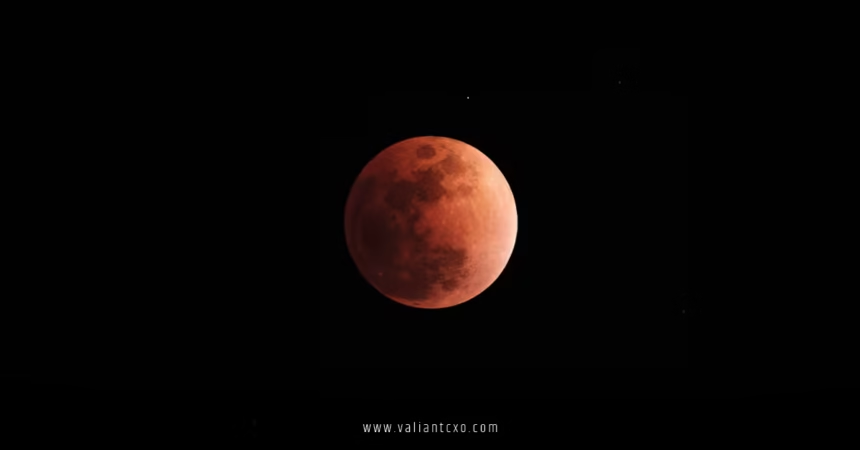
Have you ever stared at a blood-red Moon during a total lunar eclipse and thought, “I wish I could freeze this moment forever”? You’re not alone. Total lunar eclipses — those magical “blood moon” events — offer some of the most rewarding astrophotography opportunities out there. Whether you’re using a DSLR, mirrorless camera, smartphone, or even a basic point-and-shoot, the right approach turns a simple sky-watching night into gallery-worthy images.
In this guide, we’ll walk through practical total lunar eclipse photography tips that actually work. I’ll draw from real-world techniques used by photographers during recent events, including the unforgettable blood moon total lunar eclipse March 3 2026 photos that lit up feeds worldwide. Let’s get you ready to nail your own shots next time an eclipse rolls around.
Why Total Lunar Eclipses Are Perfect for Photography
Unlike solar eclipses that demand special filters and happen in a flash, lunar eclipses unfold slowly over hours. The Moon gradually darkens, slips into Earth’s shadow, and glows that signature coppery red during totality — often lasting 30 minutes to over an hour. This gives you plenty of time to experiment with settings, compositions, and even creative foregrounds.
The challenge? The Moon’s brightness changes dramatically. What starts as a bright full Moon requiring fast shutter speeds ends up dim enough during totality that you need longer exposures. Mastering this transition is the key to great results.
Essential Gear for Total Lunar Eclipse Photography
You don’t need a fortune in equipment, but a few basics make a huge difference.
- Tripod: Non-negotiable. Any shake ruins sharpness, especially during longer exposures.
- Camera: DSLR or mirrorless gives full manual control. Smartphones work surprisingly well in pro/manual mode.
- Lenses:
- Telephoto (200mm–600mm+) for close-ups of the Moon’s details and craters.
- Wide-angle (14–35mm) for landscapes with the eclipsed Moon as a dramatic element.
- Extras: Remote shutter release or self-timer to avoid camera shake, extra batteries (cold nights drain them fast), and a headlamp with red light mode to preserve night vision.
- Tracker (optional but game-changing): For high-magnification shots longer than a few seconds, an equatorial star tracker keeps stars pin-sharp and prevents Moon trailing.
Pro tip: Practice on regular full moons. Familiarity with your gear under similar conditions builds confidence.
Planning Your Shoot: Location, Timing, and Weather
Great total lunar eclipse photography tips start long before sunset.
Check eclipse timings for your exact location using reliable sites like TimeandDate or NASA. Know when partial phases begin, when totality starts and ends, and maximum eclipse time.
Scout dark locations with low light pollution — rural areas, parks, or high spots away from city glow. For creative shots, find foregrounds like trees, mountains, or water that frame the Moon beautifully.
Weather is everything. Clear skies are ideal, but check forecasts obsessively. If clouds threaten, have a backup spot or accept that sometimes nature wins.
For the March 3, 2026 event, western viewers got prime morning views — many stunning blood moon total lunar eclipse March 3 2026 photos came from those clear Pacific and western U.S. skies.
Best Camera Settings for Each Phase
Settings change as the eclipse progresses. Shoot in manual mode and RAW for maximum editing flexibility.
Before Eclipse (Bright Full Moon Phase)
Treat it like a regular Moon shot.
- ISO: 100–400
- Shutter: 1/125 to 1/500 second
- Aperture: f/8–f/11 (for sharpness)
Partial Phases
As the shadow creeps in, the bright part stays intense while the shadowed area darkens.
- ISO: 200–800
- Shutter: 1/60 to 1/250 second
- Aperture: f/5.6–f/8
Bracket exposures (±1 to ±2 stops) to capture both bright and dark areas without blowing highlights.
Totality (Blood Moon Phase)
The Moon dims dramatically — now it’s like photographing a faint sunset-lit object.
- ISO: 800–3200 (start at 800–1600, go higher if needed)
- Shutter: 0.5–4 seconds (experiment; 1–2 seconds often sweet spot)
- Aperture: Wide open or near (f/2.8–f/5.6) for more light
Use your histogram — avoid clipping highlights on the brighter lunar limb. Bracketing remains helpful: shoot sequences at different exposures (e.g., 0.5s, 1s, 2s) and blend later if one frame nails it.
White balance: Daylight or custom around 5500K works well — the red tones come from Earth’s atmosphere, not your camera.
Focus: Switch to manual. Use live view, magnify 10x on the Moon, and fine-tune until craters look tack-sharp. Tape the focus ring if you’re worried about bumps.
Creative Composition Ideas
Close-ups are cool, but storytelling shots win hearts.
- Isolated Moon: Telephoto for crater details and color gradients in the umbra.
- Landscape Integration: Wide-angle with foreground — think blood moon rising over a silhouette tree line or reflecting in a lake.
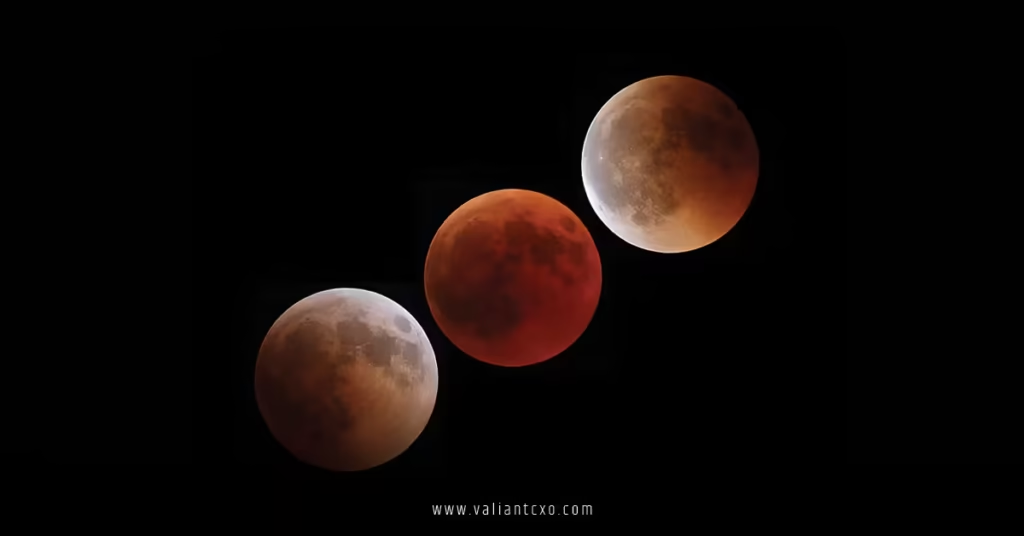
- Sequence Shots: Take regular intervals (every 5–10 minutes) and composite into a single image showing progression.
- People in Frame: Add scale with friends watching in awe — turns a celestial photo into a shared memory.
During the 2026 eclipse, many photographers blended twilight colors with the red Moon for extra drama.
Smartphone-Specific Total Lunar Eclipse Photography Tips
No fancy camera? No problem — modern phones shine here.
- Use pro/manual mode if available (iPhone via third-party apps, Android often built-in).
- Stabilize: Tripod adapter or prop against something solid.
- Avoid digital zoom — use optical (2x–5x on many phones) and crop later.
- Clean lens, shoot RAW if possible, and bracket exposures.
- For totality, increase exposure time and ISO manually — phones handle noise better than you think.
Many viral blood moon total lunar eclipse March 3 2026 photos came straight from smartphones propped on car hoods or fences.
Post-Processing Magic
RAW files give you room to play.
- Boost contrast and vibrance to emphasize red hues without overcooking.
- Reduce noise from higher ISOs.
- For sequences, stack or composite in Photoshop/Lightroom.
- Dodge and burn to bring out subtle shadow details on the Moon.
Keep edits natural — the real beauty is in the event itself.
Common Mistakes to Avoid
- Forgetting to refocus during long sessions.
- Using auto mode (it underexposes totality badly).
- No tripod = blurry mess.
- Ignoring cold battery drain.
- Shooting only totality — miss the dramatic partial phases.
Wrapping Up: Get Out There and Shoot
Total lunar eclipse photography tips boil down to preparation, patience, and play. Plan your spot, know your gear, adapt settings as the light changes, and enjoy the show. The next total lunar eclipse won’t arrive until late 2028, so use these techniques to build skills now.
Whether you end up with intimate Moon portraits or epic landscapes, capturing that red glow feels special every time. Check out inspiring blood moon total lunar eclipse March 3 2026 photos for motivation — then go create your own masterpieces. The night sky is waiting. Clear skies!
Here are some high-authority resources for more eclipse photography guidance:
- Space.com: How to Photograph a Lunar Eclipse
- AstroBackyard: How to Photograph Lunar Eclipse
- Photography Life: How to Photograph a Lunar Eclipse
FAQs
What are the most important total lunar eclipse photography tips for beginners?
Start with a sturdy tripod, manual mode, and practice on full moons. Adjust exposure as the Moon darkens — brighter settings early, longer exposures during totality.
Which lens works best for total lunar eclipse photography tips?
A telephoto 200mm+ for detailed close-ups, or wide-angle for creative landscapes. Many pros mix both during the event.
How do camera settings change during a total lunar eclipse according to photography tips?
Partial phases: ISO 200–400, fast shutter (1/125+). Totality: ISO 800–3200, 0.5–4 seconds shutter. Bracket and check histogram constantly.
Can I get good photos of a blood moon using only a smartphone with total lunar eclipse photography tips?
Yes! Use manual/pro mode, stabilize the phone, shoot RAW if possible, and bracket exposures — many stunning shots from recent eclipses came from phones.
Where can I find examples of great blood moon total lunar eclipse March 3 2026 photos to inspire my own shots?
Search social media or astronomy sites — look for compositions with foregrounds, sequences, and varied red tones from different locations.