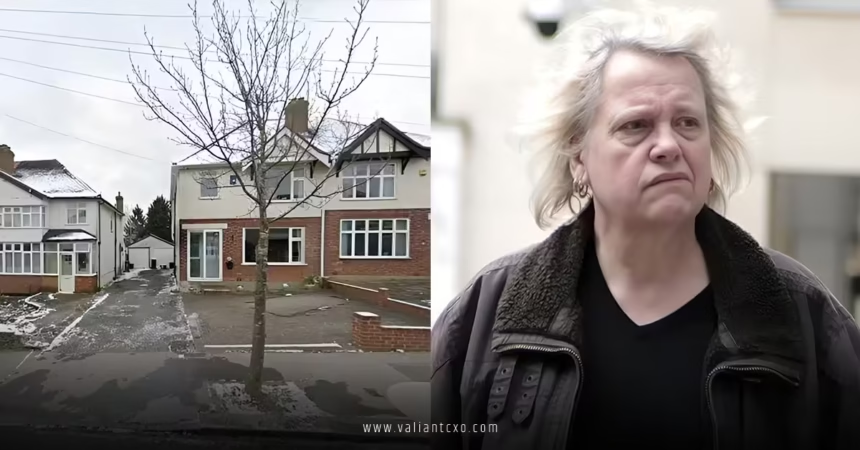
Marie Potter loses court fight to reclaim home 2026 – a headline that has shocked many and serves as a stark reminder of how quickly neighborly disagreements can spiral into life-altering consequences. In March 2026, a 75-year-old pensioner from Croydon saw her final bid to regain her beloved family home dashed in London’s High Court. What started as a seemingly minor parking spat over a shared driveway escalated into a years-long legal nightmare, costing her a property once valued at £575,000 and forcing her into rented accommodation. Have you ever argued with a neighbor over something small, like where a car sits? Imagine that tiny friction snowballing into losing your entire home. That’s exactly what happened here, and it’s a story worth unpacking.
The Origins of the Dispute: How a Simple Parking Issue Ignited a Firestorm
Let’s rewind to 1998. Marie Potter moved into her house on Bennett’s Avenue in Shirley, Croydon, next door to Kirsten McGowan. At first, things were friendly – the families got along, as neighbors often do in quiet suburban streets. But over time, tensions built around a shared driveway and access to garages. The core issue? How Marie parked her Ford Focus.
What might sound trivial – perhaps blocking part of the drive or encroaching slightly – grew into a full-blown feud. These kinds of disputes are more common than you think. Think of them like a slow-burning fuse: one small spark, ignored for too long, and suddenly the whole thing explodes. Marie ended up suing her neighbor at Bromley County Court, but things didn’t go her way.
The First Major Blow: The 2020 County Court Ruling
In August 2020, after hearings that dragged on, Kirsten McGowan successfully countersued. The court awarded her around £30,000 in damages plus legal costs, pushing the total debt Marie owed to roughly £70,000. That’s a huge sum for anyone, especially a retiree.
A charging order followed in December 2020, securing that debt against Marie’s home – the very asset she’d lived in for over two decades. It’s like putting a lien on your house; the property becomes collateral. If unpaid, the creditor can force a sale. Marie couldn’t clear the debt, and by 2023, the court issued an order for possession and sale. In April 2023, she was evicted. Her belongings? Packed up and stored – at her expense, of course.
This phase alone highlights a harsh reality: legal battles over property rights can drain finances faster than you expect. One day you’re defending your parking spot; the next, you’re homeless.
Marie Potter Loses Court Fight to Reclaim Home 2026: The High Court Appeal
Fast-forward to 2026. The property hadn’t sold yet – reportedly damaged by floods and disrepair, its value dropping to around £425,000. Marie, now living in rented accommodation in Bromley, wasn’t ready to give up. She launched a countersuit in London’s High Court, arguing the original county court order was invalid and beyond its powers. She sought the return of her home and over £250,000 in damages for her losses.
Representing herself (with help from a retired solicitor from her church – a testament to her determination and community support), Marie appeared before Judge David Halpern KC. She claimed procedural flaws made the charging order and sale unenforceable.
But in March 2026, the judge ruled against her. The order was lawful, he said. Marie Potter loses court fight to reclaim home 2026 became the definitive outcome. The judge even called it “yet another cautionary tale about the financial consequences of neighbour disputes for those without deep pockets.” Ouch. Those words sting because they’re true – deep pockets often decide who wins in court, not necessarily who’s right.

Why Did This Escalate So Dramatically? Lessons from the Driveway War
Neighbor disputes like this aren’t rare, but they rarely end this catastrophically. What turned a parking disagreement into eviction?
First, escalation. Small issues fester when communication breaks down. Second, legal costs. Court fees, solicitors, and time add up quickly. Marie’s £70,000+ bill snowballed from the initial fight. Third, property as collateral. Once a charging order hits, your home is on the line.
It’s like playing chess with your house as the king – one wrong move, and checkmate. Many people underestimate how vicious these battles become. Mediation or compromise early on might have saved everything, but pride, principle, or stubbornness often gets in the way.
The Human Cost: Life After Losing the Home
Imagine being 75, uprooted from the home you’ve known since 1998. Marie now rents in Bromley, her possessions in storage, paying fees she can ill afford. The emotional toll? Incalculable. Homes aren’t just bricks; they’re memories, security, identity.
This case echoes broader issues in UK property law. Charging orders protect creditors but can devastate debtors, especially vulnerable ones like pensioners. Critics argue the system favors those who can afford prolonged litigation.
Broader Implications: What Marie Potter Loses Court Fight to Reclaim Home 2026 Teaches Us
Marie Potter loses court fight to reclaim home 2026 isn’t just one woman’s tragedy – it’s a warning. Neighbor rows over fences, noise, or parking claim thousands of court hours yearly. Most fizzle out, but some destroy lives.
Key takeaways? Talk first. Document everything. Seek mediation before court. And if litigation starts, get advice early – free legal aid or community resources can help.
Property disputes remind us: your home is your castle, but defending it can bankrupt you. Prevention beats cure every time.
Marie Potter Loses Court Fight to Reclaim Home 2026: Could It Have Been Avoided?
Hindsight is 20/20, but let’s speculate. Early dialogue might have resolved the parking issue. A boundary agreement or shared driveway rules could have prevented escalation. Even after the first ruling, settling the debt (perhaps through payment plans) might have halted the sale order.
But once emotions run high, reason often flees. This story urges de-escalation – walk away if needed. Your peace of mind is worth more than being “right.”
Conclusion: A Sobering End to a Long Battle
Marie Potter loses court fight to reclaim home 2026 marks the close of a heartbreaking chapter. From a friendly neighborhood to eviction and failed appeal, this saga shows how disputes can devastate lives. The High Court’s ruling upheld the original order, leaving Marie without her home of nearly 30 years.
It motivates us to handle conflicts wisely – communicate, mediate, and know when to compromise. Life’s too short for grudges that cost everything. If you’re in a similar spot, seek help early. Stories like this don’t have to repeat.
FAQs
What exactly happened in Marie Potter loses court fight to reclaim home 2026?
In March 2026, Marie Potter’s High Court appeal failed. Judge David Halpern KC ruled the original charging order and sale order were valid, meaning she couldn’t reclaim her Croydon home lost over a neighbor parking dispute.
Why did Marie Potter lose her home initially?
A long-running dispute over parking on a shared driveway led to a 2020 Bromley County Court ruling against her. She owed around £70,000 in costs and damages, which became a charging order on her £575,000 property, leading to eviction in 2023 when unpaid.
Can someone appeal after losing their home in a neighbor dispute like Marie Potter loses court fight to reclaim home 2026?
Yes, appeals are possible, as Marie attempted in the High Court. However, success requires proving significant legal errors in the original ruling. In her case, the judge found no invalidity, so the appeal failed.
What are the financial risks in neighbor disputes similar to Marie Potter loses court fight to reclaim home 2026?
Costs can skyrocket – legal fees, damages, and storage add up. A charging order risks your home if debts go unpaid. Many experts call these “cautionary tales” because ordinary people without resources often lose big.
Has the property from Marie Potter loses court fight to reclaim home 2026 been sold yet?
As of the 2026 ruling, no – it remained unsold, reportedly damaged and worth less (£425,000). The case highlights how delays and disrepair can further complicate outcomes.