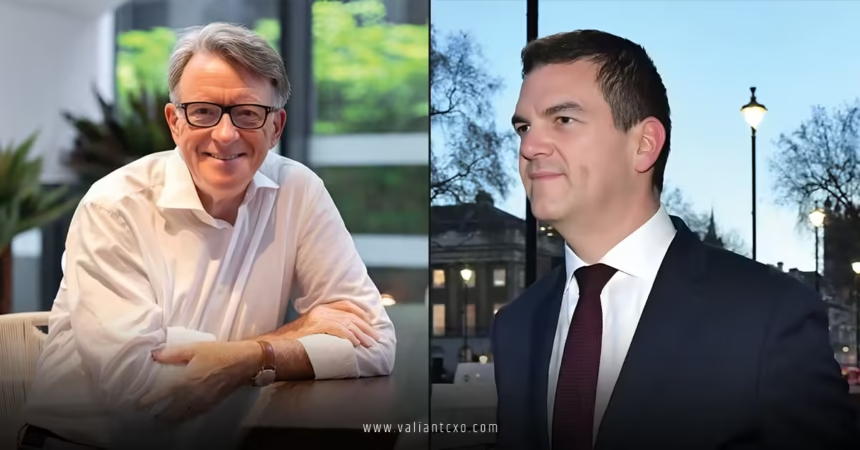
Olly Robbins Mandelson vetting scandal 2026 centers on the abrupt exit of Sir Olly Robbins, the UK Foreign Office’s top civil servant, after his department overruled security vetting that failed Peter Mandelson for the role of UK ambassador to the United States. The government insists Prime Minister Keir Starmer and ministers knew nothing about the override until days before the story broke. Critics call it a classic case of political favoritism clashing with national security protocols.
Here’s the quick rundown:
- Peter Mandelson failed “developed vetting” (a rigorous UK security clearance) in late January 2025, yet still took up the Washington post in December 2024.
- Foreign Office officials, under Robbins’ leadership as permanent secretary, overruled the rejection from UK Security Vetting.
- Robbins, only three weeks into the top job, was forced out late on April 16 after Starmer and Foreign Secretary Yvette Cooper lost confidence in him.
- The episode adds fuel to existing scrutiny over Mandelson’s past associations, including an ongoing police investigation into alleged document leaks linked to Jeffrey Epstein.
The whole mess raises sharp questions about accountability in high-stakes appointments. Who really calls the shots when vetting says “no” but politics says “yes”?
What Exactly Happened in the Olly Robbins Mandelson Vetting Scandal 2026?
Let’s cut through the noise. Developed vetting—often called DV—is no light check. It digs deep into finances, relationships, foreign contacts, and personal history for roles handling top-secret material. Mandelson reportedly didn’t clear it back in early 2025.
The Foreign Office decided to push ahead anyway. Robbins’ department green-lit the appointment despite the red flag. Fast-forward to April 2026: The Guardian drops the story revealing the override. Within hours, Downing Street distances itself, claiming Starmer and ministers were kept in the dark until “earlier this week.”
By evening, Robbins is out. Not a quiet retirement—sources describe it as a straight-up loss of confidence from the prime minister and foreign secretary.
Here’s the kicker: Mandelson had already been serving as ambassador. The scandal didn’t just embarrass the government; it spotlighted cracks in how sensitive appointments get handled at the highest levels.
Key Players and Their Roles
- Sir Olly Robbins: Veteran diplomat, former Brexit negotiator under Theresa May. Appointed permanent secretary at the Foreign, Commonwealth and Development Office (FCDO) shortly before the override decision. Now the highest-profile casualty.
- Peter Mandelson: Labour heavyweight, twice a cabinet minister, EU commissioner, and peer. Known for sharp political instincts—and a complicated personal history that vetting apparently flagged.
- Keir Starmer and Yvette Cooper: The political leadership. They maintain they were unaware of the failed vetting until recently and have signaled zero tolerance for the breakdown in process.
- UK Security Vetting (UKSV): The independent body that conducts and recommends on clearances. Its “fail” recommendation was overruled internally.
This isn’t some minor HR hiccup. The US ambassador post is one of Britain’s most sensitive diplomatic jobs—constant access to classified intel shared with Washington.
Why the Override Matters: Security vs. Politics
Vetting exists for a reason. It’s the guardrail against risks—financial vulnerabilities, foreign influence, or past indiscretions that could be exploited. When officials bypass it, trust erodes fast.
In this case, the decision to overrule came from career civil servants, not elected ministers (according to the government line). That creates a dangerous precedent: unelected officials making calls that carry huge national security weight, then apparently failing to loop in the people who’ll take the political heat.
Critics argue it smells of “one rule for insiders, another for everyone else.” Supporters of the appointment point to Mandelson’s experience as valuable in a tense transatlantic moment. But experience doesn’t erase vetting concerns.
Think of it like this: Vetting is the bouncer at the most exclusive club in town. If the club owner’s friend gets waved in after the bouncer says “no,” word spreads. Sooner or later, the wrong people notice.
Comparison: Standard Vetting Process vs. What Happened Here
| Aspect | Standard Developed Vetting Process | What Occurred in the Mandelson Case |
|---|---|---|
| Recommendation | UKSV conducts checks and issues clear pass/fail advice | Failed vetting in Jan 2025 |
| Decision Authority | Usually followed; overrides require strong justification and ministerial sign-off | Overruled internally by Foreign Office officials |
| Ministerial Awareness | Ministers typically briefed on high-risk appointments | Government claims Starmer/Cooper unaware until April 2026 |
| Timeline | Clearance completed before appointment | Appointment proceeded despite failure; served months |
| Accountability | Clear paper trail and responsibility | Robbins held accountable and removed |
This table shows the gap. Normal process has built-in checks. Here, the checks were sidestepped, then the fallout landed on one senior official.
How UK Security Vetting Actually Works (Beginner-Friendly Breakdown)
Don’t worry if this feels opaque—it’s designed to be. Here’s the simple version:
- Application — Candidate submits detailed personal, financial, and travel history.
- Checks — Interviews, database searches, referee conversations, credit review, and sometimes polygraph elements for highest levels.
- Risk Assessment — UKSV evaluates potential for blackmail, espionage, or unreliability.
- Recommendation — Pass, fail, or conditional. For ambassador roles, developed vetting is non-negotiable.
- Final Decision — Department can technically overrule, but it’s rare and usually documented with ministerial direction.
In the Olly Robbins Mandelson vetting scandal 2026, step 5 went off-script without the usual visibility.
What I’d Do Differently (Real-World Take from the Trenches)
If I were advising a government handling a similar high-profile pick, here’s the no-BS playbook:
- Get the vetting done and signed off before any public announcement. No exceptions.
- If concerns arise, document every discussion. Paper trails save careers.
- Loop in ministers early on any override—don’t let civil servants carry the can alone.
- Have a clear escalation protocol for politically sensitive appointments.
What usually trips people up? Assuming “it’ll be fine” because the candidate is experienced or connected. Experience helps, but vetting flags exist for a reason. Context always matters—different roles carry different risk tolerances—but the US ambassadorship isn’t one where you gamble.
Common Mistakes in High-Level Appointments (And How to Fix Them)
- Mistake: Treating vetting as a box-ticking exercise.
Fix: Treat every flag as a serious discussion point. Ask hard questions upfront. - Mistake: Poor communication between officials and ministers.
Fix: Mandate written briefings on any deviation from standard process. - Mistake: Appointing first, vetting later.
Fix: Reverse it. Always secure clearance before the person starts sensitive work. - Mistake: Scapegoating one official when systemic issues exist.
Fix: Review the whole chain—processes, training, and oversight.
These aren’t theoretical. I’ve seen similar blow-ups in corporate and public sector gigs where shortcuts came back to bite.
Step-by-Step Action Plan: What Beginners Should Learn from This
If you’re new to understanding government processes or even just following political news, use this as a lens:
- Identify the core issue — Here: conflict between security advice and appointment decision.
- Map the timeline — When did vetting happen? When was the appointment? When did the public find out?
- Check accountability — Who knew what, and when? Look for official statements versus leaks.
- Assess impact — National security risk? Political damage? Precedent for future appointments?
- Look for patterns — Is this isolated or part of broader governance questions?
Apply this framework to any big scandal. It cuts through spin.
Key Takeaways from the Olly Robbins Mandelson Vetting Scandal 2026
- Security vetting isn’t optional theater—it’s a serious safeguard.
- Overruling expert advice without transparency creates massive headaches.
- Even senior civil servants can become collateral when political confidence evaporates.
- Public trust hinges on clear lines between officials and elected leaders.
- High-profile roles demand extra scrutiny, not less.
- Timing matters: revelations months after the fact amplify damage.
- Governments that move fast to restore confidence (like removing Robbins) still face lingering questions.
Wrapping It Up
The Olly Robbins Mandelson vetting scandal 2026 boils down to one uncomfortable truth: processes exist to protect the system from human shortcuts and favoritism. When those processes get bypassed, someone pays the price—here, a veteran civil servant’s career.
For the UK government, the next step is straightforward: tighten oversight on vetting overrides, ensure better information flow to ministers, and rebuild credibility on national security appointments. For the rest of us watching, it’s a reminder that even at the highest levels, the basics still matter.
Pay attention to how this unfolds. Real accountability looks like systemic fixes, not just one head rolling.
FAQs
1. What is the Mandelson vetting scandal about?
The scandal centers on Peter Mandelson, who was appointed UK ambassador to the U.S. despite failing a top-level security vetting check. Officials in the Foreign Office reportedly overrode the negative vetting decision, allowing the appointment to go ahead.
2. Why is Olly Robbins involved?
Olly Robbins, the top civil servant in the Foreign Office, became a central figure because the override decision happened under his department.
He resigned (or was removed) after losing political confidence
He was seen as accountable for the breakdown in the vetting process
3. Did Prime Minister Keir Starmer know about the failed vetting?
According to Downing Street, Starmer was not informed that Mandelson had failed vetting at the time of appointment.
However, the controversy escalated because Starmer had previously stated Mandelson had been properly cleared, leading to accusations he misled Parliament.
4. Why did the scandal become so serious?
It raised national security and political integrity concerns:
A senior diplomat allegedly lacked proper clearance
Internal safeguards were bypassed by officials
Mandelson was also linked to separate investigations, intensifying scrutiny
This triggered calls for resignations and comparisons to past political crises.
5. What are the political consequences so far?
The fallout has been significant:
Olly Robbins stepped down / was dismissed
Keir Starmer faces pressure to resign
A formal review into the vetting system and override powers is underway
The scandal has become a major threat to the government’s credibility