Iran Sudan military cooperation history stretches back decades, rooted in shared Islamist leanings and strategic needs. It has ebbed and flowed through diplomatic rifts, civil wars, and renewed arms flows — including recent drone deliveries that shifted battle lines in Sudan’s brutal ongoing conflict.
Here’s the fast overview:
- Ties kicked off strongly after Sudan’s 1989 coup, with Iran providing military training, equipment, and help building Sudan’s own arms industry.
- Cooperation peaked in the 1990s–2000s with joint factories, naval visits, and weapons transfers before breaking in 2016 over regional rivalries.
- Relations restarted in late 2023 amid Sudan’s civil war; Iran quickly supplied Mohajer-6 and Ababil drones plus other munitions to the Sudanese Armed Forces (SAF).
- These supplies helped the SAF reclaim territory like parts of Omdurman, highlighting how external arms keep fueling the fight.
- Recent cases, such as the shamim mafi iran arms deal sudan 70 million contract, show how alleged middlemen continue trying to move Iranian weapons toward Sudan despite sanctions.
This long partnership isn’t just about guns and drones. It’s about influence in the Red Sea, proxy leverage, and survival in tough neighborhoods. For beginners, it shows how distant countries link up when isolated. For those with some background, it reveals patterns in how sanctions get tested and wars get prolonged.
Early Roots: 1989 Onward – Shared Ideology Meets Practical Help
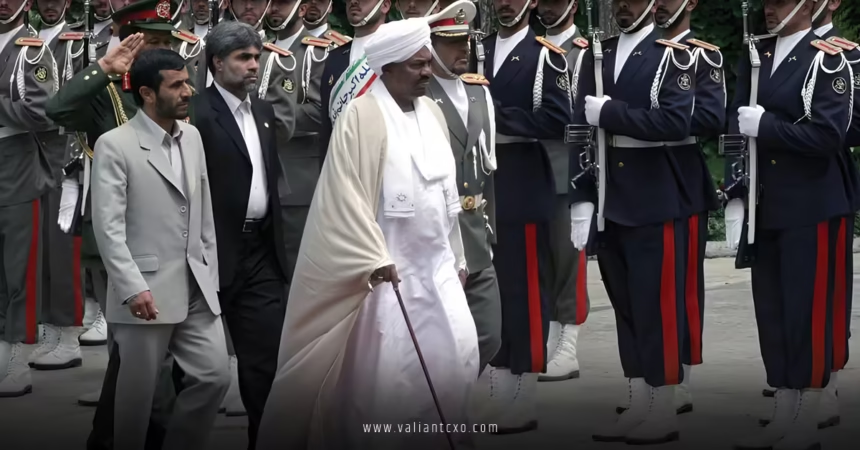
Sudan’s Omar al-Bashir coup in 1989 aligned the country with revolutionary Iran. Tehran saw a fellow Islamist government and jumped in with support. Iran sent Revolutionary Guard trainers. Sudanese forces started modeling parts of their structure after Iran’s.
By the mid-1990s, Iran delivered armored cars, heavy artillery, and radar gear. A 1995 Iranian military delegation assessed Sudan’s needs. The next year brought a formal agreement to expand cooperation.
Here’s the thing: Iran didn’t stop at hardware. They helped Sudan build its Military-Industrial Complex. The Yarmouk factory near Khartoum, for example, got Iranian ownership stakes, staffing, and technical know-how. Sudan gained local production capacity. Iran gained a partner in Africa and a potential route for other shipments.
In 2008, the two defense ministers signed another military cooperation pact. Naval vessels from Iran even docked at Sudanese Red Sea ports. It felt like a solid alliance.
The Break and the Freeze (2016)
Ties snapped in 2016. Sudan sided with Saudi Arabia in its rift with Iran and cut diplomatic relations. The move isolated Khartoum from Tehran but aligned it with Gulf money for a while.
During the break, Sudan’s military still relied on older Iranian-designed systems and joint-production leftovers. But direct flows stopped. No new big drone batches. No fresh trainers.
Sudan’s 2019 revolution ousted Bashir, adding more uncertainty. Then came the 2023 civil war between the Sudanese Armed Forces (led by Gen. Abdel Fattah al-Burhan) and the Rapid Support Forces (RSF, led by Mohamed Hamdan Dagalo, or Hemedti). The SAF found itself outgunned in urban fights and short on modern aerial capabilities.
That desperation set the stage for reconnection.
Revival in 2023–2024: Drones Enter the Chat
By late 2023, Sudan and Iran restored diplomatic ties. Ambassadors were exchanged by July 2024. Within weeks, Iranian cargo flights — tracked by open-source researchers — started landing in Port Sudan, the SAF’s wartime hub.
Reports point to at least seven military cargo flights from Iran between December 2023 and mid-2024, carrying components and complete systems. The star players? Mohajer-6 armed reconnaissance drones and Ababil variants.
These weren’t toys. Mohajer-6 drones carry guided munitions, provide real-time intelligence, and strike targets. Videos and wreckage analysis showed them in action as early as January 2024. SAF forces used them to spot RSF positions, direct artillery, and conduct strikes that helped retake districts in Omdurman and push back in Khartoum areas.
The kicker? These deliveries came despite a UN arms embargo on Sudan. Both Iran and others stand accused of violations, but proof often relies on satellite images, flight data, and battlefield captures.
Timeline of Iran-Sudan Military Cooperation
| Period | Key Developments | Impact |
|---|---|---|
| 1989–1995 | Post-coup training, initial arms shipments | Built foundational trust and skills |
| 1990s–2000s | Yarmouk factory support, naval visits, 2008 agreement | Sudan develops local arms production |
| 2016 | Diplomatic break over Saudi-Iran tensions | Freeze in direct cooperation |
| 2023 | Ties restored amid civil war | Quick pivot to new supplies |
| 2024–2025 | Mohajer-6 & Ababil drone deliveries, cargo flights | SAF gains aerial edge in key battles |
| 2026 | Alleged brokering cases surface (e.g., Shamim Mafi) | Highlights ongoing sanctions-evasion risks |
This table cuts through the fog. You see the pattern: ideology first, then hardware, then pragmatism when war hits.
Why Iran Keeps Coming Back – Strategy Over Sentiment
Iran gains a Red Sea foothold without direct naval bases (though rumors swirl about potential access). Sudan gets affordable, battle-proven drones when other suppliers hesitate or cost too much.
Tehran also tests export versions of its UAVs in real combat. Success stories help market them elsewhere. For the SAF, facing UAE-linked accusations of RSF support, Iranian help balances the scales — at least on paper.
But the human cost piles up. Sudan’s war has displaced millions, triggered famine warnings, and killed tens of thousands. More capable weapons on either side rarely shorten conflicts. They often stretch them.
For context on U.S. policy toward such transfers, check the U.S. Department of State’s Arms Export Control resources. For sanctions background, the U.S. Treasury’s Iran sanctions page lays out the rules clearly.
Modern Examples and the Shamim Mafi Link
Fast-forward to 2026. The shamim mafi iran arms deal sudan 70 million contract case illustrates how cooperation can involve third-party brokers. A U.S. permanent resident was arrested at LAX, accused of arranging Mohajer-6 drone sales and other munitions worth over $70 million, plus bomb fuses and ammunition, routed through an Oman-registered company.
Whether that specific deal closed or not, it shows the persistent demand and the networks that try to satisfy it. Iranian weapons keep appearing on Sudanese battlefields through various channels — official flights, intermediaries, or older stockpiles.
This isn’t unique to Iran-Sudan. Proxy arms flows happen in many conflicts. What stands out here is the consistency over 35+ years.
Common Mistakes When Following This History
- Treating every drone sighting as brand-new proof of fresh deals. Some systems trace back to pre-2016 joint production.
- Ignoring the RSF’s own external links. The war has multiple backers; focusing on only one side distorts the picture.
- Assuming restored ties equal full alliance. Sudan’s leaders balance multiple powers carefully to avoid over-dependence.
- Overlooking the embargo. Supplies continue despite restrictions, showing enforcement gaps.
Fix? Cross-reference open-source intelligence, UN reports, and satellite data where available. Read primary flight-tracking analyses rather than single headlines.
Step-by-Step: How to Track Future Iran-Sudan Military Moves (Beginner-Friendly)
- Monitor diplomatic news — Watch for ambassador swaps, defense minister visits, or joint statements.
- Track cargo flights — Tools like flightradar or open-source groups flag suspicious routes to Port Sudan or other SAF hubs.
- Check battlefield evidence — Videos of drones, wreckage photos, and serial numbers often reveal origins.
- Review sanctions updates — U.S. or UN announcements flag new designations or violations.
- Read humanitarian reports — Groups documenting the war’s impact show how arms affect civilians on the ground.
- Connect the dots to broader strategy — Ask: Does this give Iran Red Sea access? Does it counter Gulf influence?
Do this and patterns emerge instead of isolated shocks.
Key Takeaways
- Iran-Sudan military ties began in 1989 with training and equipment, evolving into factory-building help.
- A 2016 break lasted until the 2023 civil war forced a pragmatic restart.
- Drones like the Mohajer-6 became game-changers for the SAF starting in early 2024.
- Recent alleged deals, including the shamim mafi iran arms deal sudan 70 million contract, highlight continued interest despite legal risks.
- Cooperation serves Iran’s regional ambitions and Sudan’s immediate battlefield needs.
- External arms rarely bring quick peace — they tend to extend suffering.
- Always separate confirmed deliveries from allegations and watch multiple sources.
- History here repeats with variations: isolation breeds partnerships.
Conclusion
Iran Sudan military cooperation history proves how quickly old friends reconnect when survival demands it. From Revolutionary Guard trainers in the 1990s to Mohajer-6 drones reshaping 2024 offensives, the thread remains consistent — mutual benefit amid isolation.
The real winners are rarely the people caught in the crossfire. Next step: If you’re following Sudan’s war or arms trade patterns, start with official timelines and verified open-source evidence. Stay skeptical of easy narratives.
FAQs
1. When did Iran–Sudan military cooperation begin?
Iran and Sudan began developing close military ties after the 1989 Sudanese coup. In the 1990s, Iran supported Sudan with arms, training, and military advisory assistance, including funding weapons purchases and deploying Iranian military personnel to assist Sudan’s armed forces.
2. What type of military support did Iran provide to Sudan in the 1990s and 2000s?
Iran supplied Sudan with a wide range of military aid including:
Ground-attack aircraft and armored vehicles
Artillery and radar systems
Training for Sudanese officers and intelligence units
Financial backing for arms procurement (including Chinese weapons)
Iran also helped shape parts of Sudan’s military structure through training and advisory missions.
3. Did Iran and Sudan ever sign formal military cooperation agreements?
Yes. A major military cooperation agreement was signed in 2008, covering defense technology, training, intelligence exchange, and joint military commissions.
This agreement marked a formal expansion of long-standing informal military collaboration.
4. Why did Iran–Sudan military cooperation decline after 2016?
In 2016, Sudan cut diplomatic ties with Iran due to regional tensions, especially its alignment with Saudi Arabia during the Iran–Saudi rivalry. This led to a pause in military cooperation and arms transfers for several years.
5. Has Iran–Sudan military cooperation resumed in recent years?
Yes. Since diplomatic ties were restored in 2023–2024, reports indicate renewed cooperation, including:
Supply of Iranian-made drones (e.g., Mohajer and Ababil types)
Intelligence sharing and military training support
Possible logistical support for Sudan’s armed forces in the ongoing civil conflict
This renewed cooperation has been linked to Sudan’s internal war dynamics.