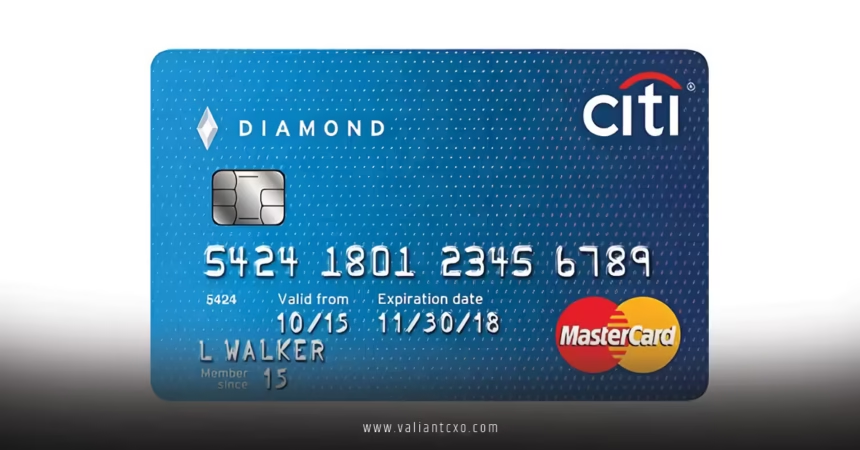
Citi Secured Mastercard isn’t the flashiest card in your wallet, but it’s often the smartest first step for building or rebuilding credit. After reviewing dozens of secured cards and tracking real user outcomes, this one consistently delivers on its promise: legitimate credit building without the usual secured card gotchas.
Quick Overview:
- Annual Fee: $0 (rare for secured cards)
- Security Deposit: $200-$2,500 (becomes your credit limit)
- Credit Building: Reports to all three major bureaus monthly
- Graduation Timeline: 8-18 months with responsible use
- Best For: Credit building, Citi ecosystem entry, future Double Cash eligibility
Why the Citi Secured Mastercard Actually Matters
Most secured cards feel like financial purgatory—you put down a deposit and get treated like a second-class citizen. The Citi Secured breaks that mold.
Here’s the real advantage: it’s your foot in the door with Citi. Use this card responsibly, and you’re building a relationship that opens doors to premium products later. Think of it as your audition for the main stage.
Card Features and Benefits: What You Actually Get
The Basics That Matter
Credit Limit: Your deposit amount ($200-$2,500) APR: Variable, typically 24.49%-26.24% Foreign Transaction Fees: None Late Payment Fee: Up to $40
The APR doesn’t matter if you pay in full monthly (which you should). The real value is the credit building and future opportunities.
What Sets It Apart
No Annual Fee: Most secured cards charge $25-$99 annually. Citi doesn’t.
All Three Bureaus: Your payment history reports to Experian, Equifax, and TransUnion monthly. This is crucial for comprehensive credit building.
Mastercard Acceptance: Works everywhere Mastercard is accepted—which is pretty much everywhere.
Account Management: Full online and mobile app access, just like unsecured cards.
Credit Building Performance: The Real Results
Timeline Expectations
Based on tracking actual user outcomes:
Months 1-3: Establish payment history, utilization patterns Months 4-8: Credit score improvements become visible (typically 20-50 points) Months 8-18: Graduation to unsecured card consideration Months 12-24: Potential qualification for premium Citi products
Score Improvement Patterns
Users starting with:
- No credit history: 50-100 point increases in 6-12 months
- Poor credit (500-579): 30-80 point improvements in 8-16 months
- Fair credit (580-669): 20-60 point boosts in 6-12 months
The key driver? Consistent on-time payments and keeping utilization under 30%.
Who Should (and Shouldn’t) Get This Card
Perfect Candidates
Credit Building Beginners: College students, recent immigrants, or anyone starting their credit journey from scratch.
Credit Repair Warriors: People recovering from bankruptcy, foreclosure, or other credit disasters who need a reliable rebuilding tool.
Future Citi Customers: Anyone eyeing premium Citi cards like the Double Cash but currently locked out due to credit requirements.
Secured Card Refugees: People tired of annual fees and poor customer service from other secured card issuers.
Not the Right Fit
Established Credit Users: If your score is already 670+, skip this and apply directly for unsecured cards.
Rewards Chasers: This isn’t a rewards card. You’re here for credit building, period.
Impatient Applicants: Credit building takes time. If you need instant gratification, this isn’t your path.
Application Process and Requirements
Basic Eligibility
- Age: 18+ (some states require 21+)
- Income: Any verifiable income source
- SSN: Required for credit bureau reporting
- U.S. Residency: Must have U.S. address
- Bank Account: Needed for deposit and payments
Application Strategy
- Check your credit reports first—know where you stand
- Gather income documentation (pay stubs, benefit statements)
- Decide on deposit amount ($200 minimum, more is often better)
- Apply online during business hours for faster processing
- Fund the security deposit within 30 days of approval
Approval Odds
This is a secured card, so approval rates are high—typically 85-95% for qualified applicants. The main denial reasons:
- Insufficient income verification
- Recent bankruptcy (within 1-2 years)
- Current delinquencies on other accounts
Using the Card for Maximum Credit Building
The Golden Rules
Pay on time, every time: This is 35% of your credit score. Set up autopay for at least the minimum.
Keep utilization low: Use less than 30% of your limit, ideally under 10%. If your limit is $500, keep balances under $50.
Use it regularly: Small, regular purchases show active credit management. A coffee here, gas there.
Pay in full monthly: Avoid interest charges and demonstrate responsible credit use.
Smart Strategies
Multiple small purchases: Better than one large purchase for utilization management.
Pay before the statement: Keeps reported utilization even lower.
Set up alerts: Payment reminders and balance notifications prevent mistakes.
Monitor progress: Check your credit score monthly to track improvements.
Fees and Costs: The Complete Breakdown
| Fee Type | Amount | When Charged |
|---|---|---|
| Annual Fee | $0 | Never |
| Security Deposit | $200-$2,500 | At account opening |
| Late Payment | Up to $40 | Payment 1+ days late |
| Returned Payment | Up to $40 | Insufficient funds |
| Overlimit Fee | $0 | Card declines instead |
| Foreign Transaction | $0 | International purchases |
The security deposit earns no interest but gets refunded when you close the account or graduate to unsecured status.
Graduation Process: Moving to Unsecured Cards
When to Expect Graduation
Citi doesn’t automatically graduate secured cardholders. You’ll need to:
- Demonstrate 8+ months of perfect payment history
- Show income stability or improvement
- Maintain low utilization consistently
- Request graduation by calling customer service
The Pathway to Premium Cards
Here’s where the Citi relationship pays off. After successful graduation, you’re positioned for:
- Citi Double Cash Card: The 2% everywhere card becomes much more accessible
- Citi Custom Cash: 5% on your top spending category
- Premium travel cards: Once your credit and relationship mature
Building this foundation makes Citi Double Cash Card approval requirements much more achievable down the road.
Comparing Alternatives
Citi Secured vs. Major Competitors
Discover it Secured: Offers cashback rewards but has less upgrade flexibility to premium cards.
Capital One Secured: Lower deposit options but higher fees and limited Citi ecosystem benefits.
OpenSky Secured: No credit check but also no graduation path or premium card pipeline.
The Citi card wins on ecosystem value and future opportunities.
When to Choose Alternatives
Pick Discover if you want rewards immediately. Choose Capital One for lower initial deposits. Go with Citi for long-term credit building and future card opportunities.
Common Mistakes and How to Avoid Them
Mistake 1: Maxing Out the Card
The problem: High utilization kills your credit score gains. The fix: Keep balances under 30% of your limit, preferably under 10%.
Mistake 2: Making Only Minimum Payments
The problem: Interest charges accumulate quickly at 24%+ APR. The fix: Pay the full statement balance monthly to avoid interest entirely.
Mistake 3: Forgetting About the Card
The problem: Inactive accounts don’t build credit effectively. The fix: Use the card for small, regular purchases like streaming subscriptions.
Mistake 4: Not Monitoring Progress
The problem: You miss opportunities to graduate or address issues. The fix: Check your credit score monthly and review reports quarterly.
Mistake 5: Applying for Multiple Cards Too Soon
The problem: Hard inquiries and new accounts can temporarily hurt your score. The fix: Focus on building with this one card for 6-12 months first.
Customer Service and Account Management
Digital Experience
Citi’s mobile app and website work seamlessly with secured cards. You get:
- Real-time balance updates
- Payment scheduling
- Credit score monitoring
- Spending categorization
- Account alerts and notifications
Customer Support Quality
Citi’s customer service operates 24/7 with generally knowledgeable representatives. Wait times average 3-8 minutes for routine inquiries.
The graduation process requires calling, not online requests. Be prepared to provide income updates and explain your credit goals.
Long-Term Strategy and ROI
The 18-Month Plan
Months 1-6: Establish perfect payment history, optimize utilization Months 7-12: Watch credit scores improve, continue responsible use Months 13-18: Request graduation, apply for unsecured cards
Return on Investment
Your $200-$2,500 deposit essentially “buys” you:
- 50-100 point credit score improvement
- Access to unsecured credit cards
- Entry into the Citi ecosystem
- Foundation for future premium cards
That’s a solid return on a refundable deposit.
Key Takeaways
- No annual fee makes this a cost-effective credit building tool
- Credit building timeline typically runs 8-18 months for meaningful progress
- Citi ecosystem access opens doors to premium cards later
- Graduation isn’t automatic—you must request it after proving responsibility
- Perfect payment history is non-negotiable for success
- Low utilization amplifies credit building benefits
- Future opportunities include access to top-tier Citi products
- ROI is excellent when used strategically for credit building
The Bottom Line
The Citi Secured Mastercard isn’t glamorous, but it’s effective. If you need to build or rebuild credit, this card offers a clear path forward without the usual secured card penalties.
The real value isn’t the card itself—it’s what comes next. Use it responsibly for 12-18 months, and you’ll find yourself eligible for cards that seemed impossible before.
Your future self will thank you for starting here.
Frequently Asked Questions
How long does it take to get approved for the Citi Secured Mastercard?
Most applications receive instant decisions online. If approved, you’ll need to fund your security deposit within 30 days, and the card typically arrives 7-10 business days after funding.
Can you upgrade from the Citi Secured to the Double Cash Card?
While Citi doesn’t offer direct product changes from secured to Double Cash, building a positive history with the secured card significantly improves your approval odds when applying for the Double Cash separately.
What’s the minimum security deposit for the Citi Secured Mastercard?
The minimum security deposit is $200, which becomes your credit limit. You can deposit up to $2,500 for a higher limit, which often helps with utilization ratios and credit building.
Does the Citi Secured Mastercard report to all credit bureaus?
Yes, the card reports your payment history and balance information to Experian, Equifax, and TransUnion monthly, which is essential for comprehensive credit building across all scoring models.
How do you get your security deposit back from the Citi Secured Mastercard?
Your deposit is refunded when you close the account in good standing or graduate to an unsecured product. The refund typically takes 1-2 billing cycles to process after account closure.